
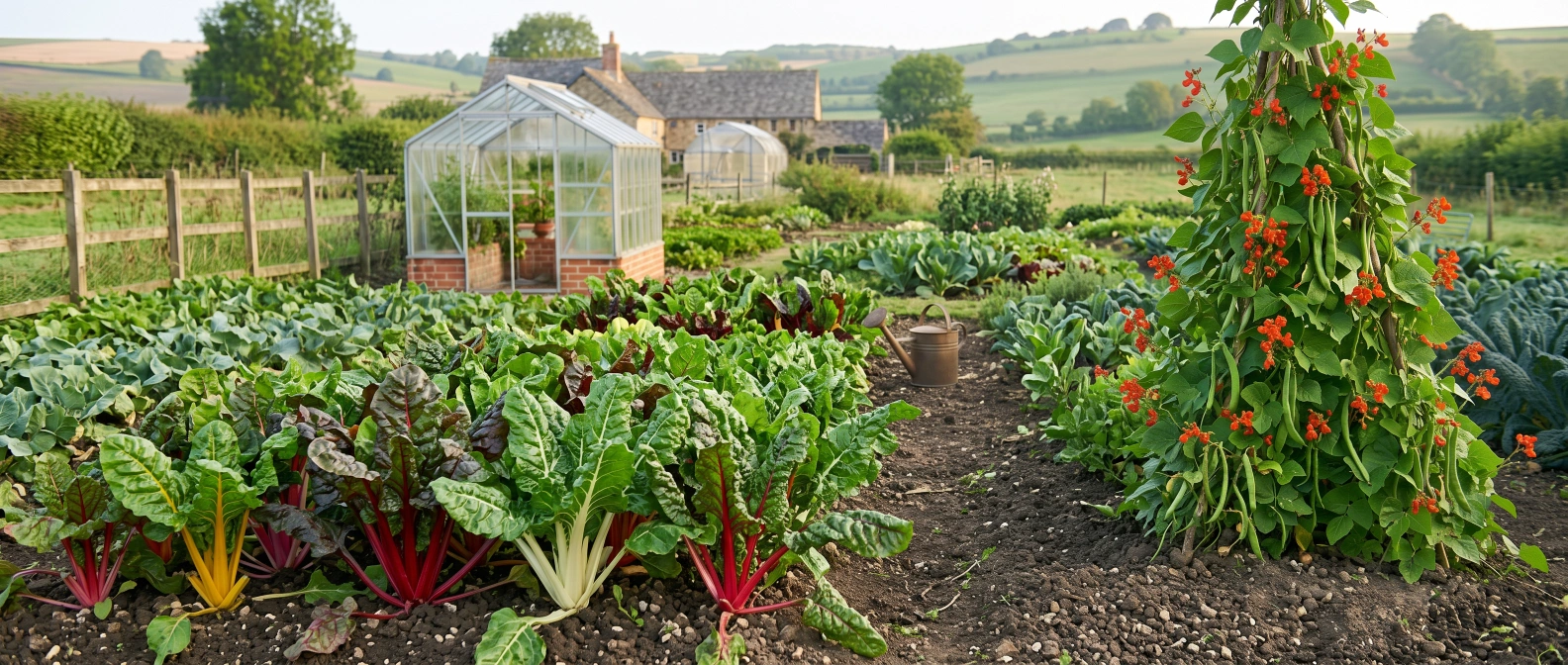
Chard and beetroot are the same species grown for different parts of the plant -- one for its leaves, one for its root -- which means if you grow both and let them flower in the same season, you'll get an unpredictable cross rather than true seed from either.
New to terms like isolation distance or outcrossing? See the Seed-Saving Glossary.
Seed-Saving Difficulty
●
Difficult
High crossing risk
How It's Pollinated
Wind-pollinated (high outcrossing)
(High crossing risk)
Scientific name: Beta vulgaris
Domestic Crops It Can Cross With
- Other chard varieties
- Beet / beetroot -- same species (Beta vulgaris) and will cross freely if both are allowed to flower nearby
Wild Relatives & Feral Species
- Wild sea beet grows on some coastlines and can cross if present nearby
Separation Distances Required
Minimum: 500m between varieties
Recommended: 800m-1km for reliable purity
Strict: Bag and hand-pollinate flower spikes for guaranteed purity
Seed-Saving Strategies
- Biennial -- overwinter roots (mild zones) or lift and store, replant in spring
- Allow seed spikes to dry brown on the plant
- Strip seed clusters by hand once fully dry
- Store dry -- viable 4-5 years