
Sweet corn, popcorn, flour corn, flint corn and dent corn look and taste completely different, but they're all one species -- Zea mays -- and every one of them will cross with every other if allowed to flower nearby. Corn is wind-pollinated and produces enormous amounts of pollen that travels far further than insect-carried pollen, which makes it one of the highest crossing-risk crops on this site. Learn which corn types cross with each other, isolation distances, and the hand-pollination technique that solves the problem in a small garden below.
New to terms like isolation distance or outcrossing? See the Seed-Saving Glossary.
Corn Types Covered by This Guide
All of these are Zea mays and will cross with each other if flowering at the same time:
A cross between sweet corn and a starchy type (flour, flint, dent, pop) is especially noticeable -- it shows up immediately as tough, starchy kernels on what should be a sweet cob. If you grow sweet corn for eating and a starchy corn for grain or popping in the same season, treat them exactly like two varieties that need full isolation.
Seed-Saving Difficulty
How It's Pollinated
Wind-pollinated (monoecious -- separate male tassel and female silk on the same plant)
(Very high crossing risk)
Scientific name: Zea mays
Domestic Crops It Can Cross With
- Any other corn variety or type flowering at the same time -- sweet, pop, flour, flint, dent and ornamental corn all cross freely
- Neighbouring gardens or farms growing corn within pollen range, not just your own plot
Wild Relatives & Feral Species
- Teosinte (Zea mays ssp. parviglumis and relatives), corn's wild ancestor, can cross where it grows -- rare outside its native range in Mexico and Central America
- Field/grain corn grown commercially nearby is a much more common practical risk than any true wild relative -- its pollen can travel well over a kilometre
Separation Distances Required
Minimum: 200m between corn types or varieties
Recommended: 500m+ for reliable purity
Strict / small gardens: Bag tassels and silks and hand-pollinate for guaranteed purity, regardless of distance
Time isolation works too: stagger sowing dates by 2-3 weeks so tasseling and silking don't overlap between types.
Seed-Saving Strategies
- Grow a block of at least 20-30 plants, not a single row, for good pollination and genetic diversity
- To hand-pollinate: bag the emerging silk shoot and a ripe tassel the evening before, then shake pollen from the bagged tassel directly onto the bagged silk the next morning
- Leave cobs on the plant well past eating stage until husks turn brown and papery
- Pick, peel back husks, and finish drying somewhere airy for several weeks
- Store dry kernels off the cob -- viable 2-3 years
Why Corn Is One of the Hardest Crops to Isolate
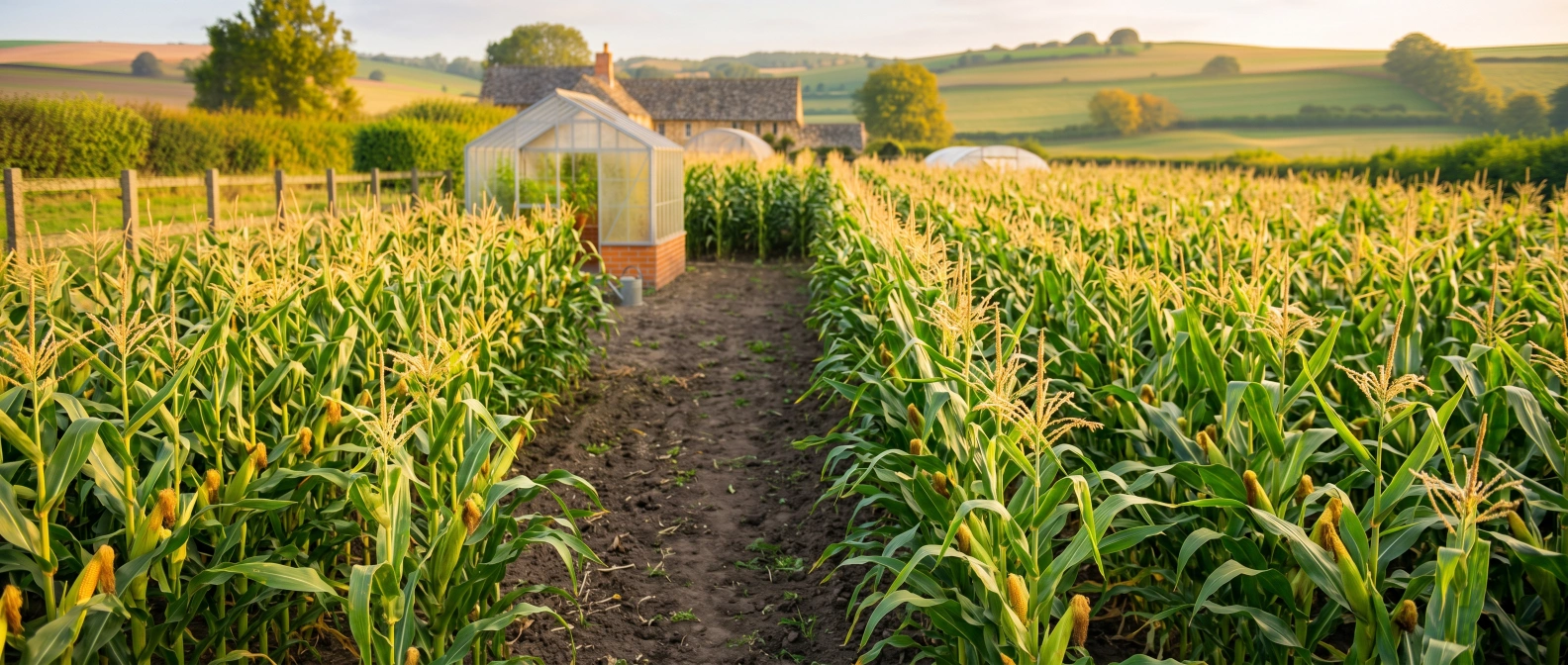
Most vegetables that need isolation are working against bees, which don't tend to fly hundreds of metres between flowers if there's food closer to hand. Corn is different: it's wind-pollinated, each tassel releases millions of pollen grains, and wind carries that pollen far beyond what any insect would travel. That's why corn's isolation distances are among the largest on this site, and why hand-pollination -- bagging the silks and tassel, then transferring pollen yourself -- is so often the practical answer for anyone growing more than one corn type in a normal-sized garden.