
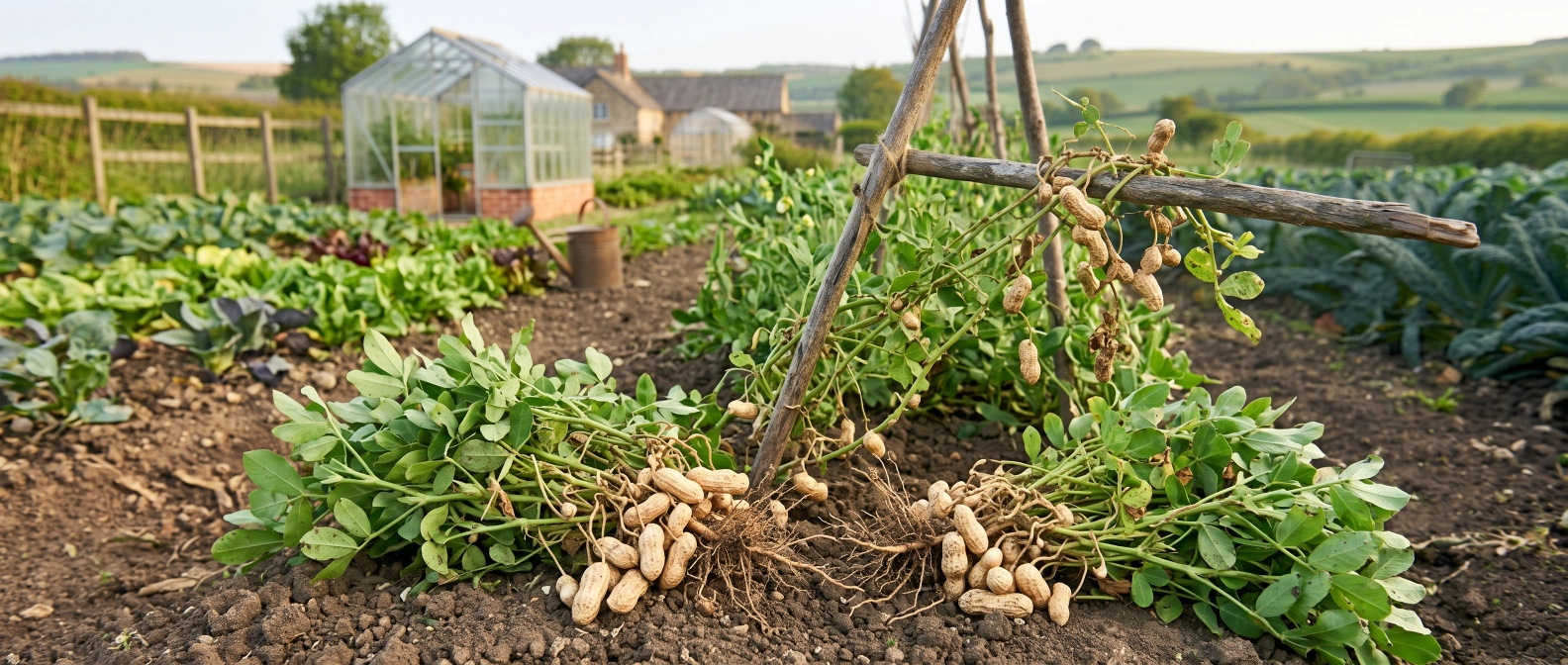
Peanut is about as self-contained as seed saving gets -- the flower pollinates itself, then the fertilised stalk grows downward and buries the developing pod underground, well out of reach of any stray pollen.
New to terms like isolation distance or outcrossing? See the Seed-Saving Glossary.
Seed-Saving Difficulty
✓
Safe to Save
Very low crossing risk
How It's Pollinated
Self-pollinating (flowers fertilise before burying themselves to form pods underground)
(Very low crossing risk)
Scientific name: Arachis hypogaea
Domestic Crops It Can Cross With
- Essentially none -- peanut flowers self-pollinate before the pod-forming stalk (the "peg") even reaches the soil
Wild Relatives & Feral Species
- No significant wild relatives in most home garden regions
Separation Distances Required
Minimum: Minimal -- a few metres is generally sufficient
Recommended: Not usually needed
Strict: Not usually needed
Seed-Saving Strategies
- Allow plants to die back naturally before lifting
- Dig the whole plant and let pods cure/dry attached for 1-2 weeks
- Remove pods and dry further before shelling
- Store dry, unshelled if possible -- viable 3-5 years