
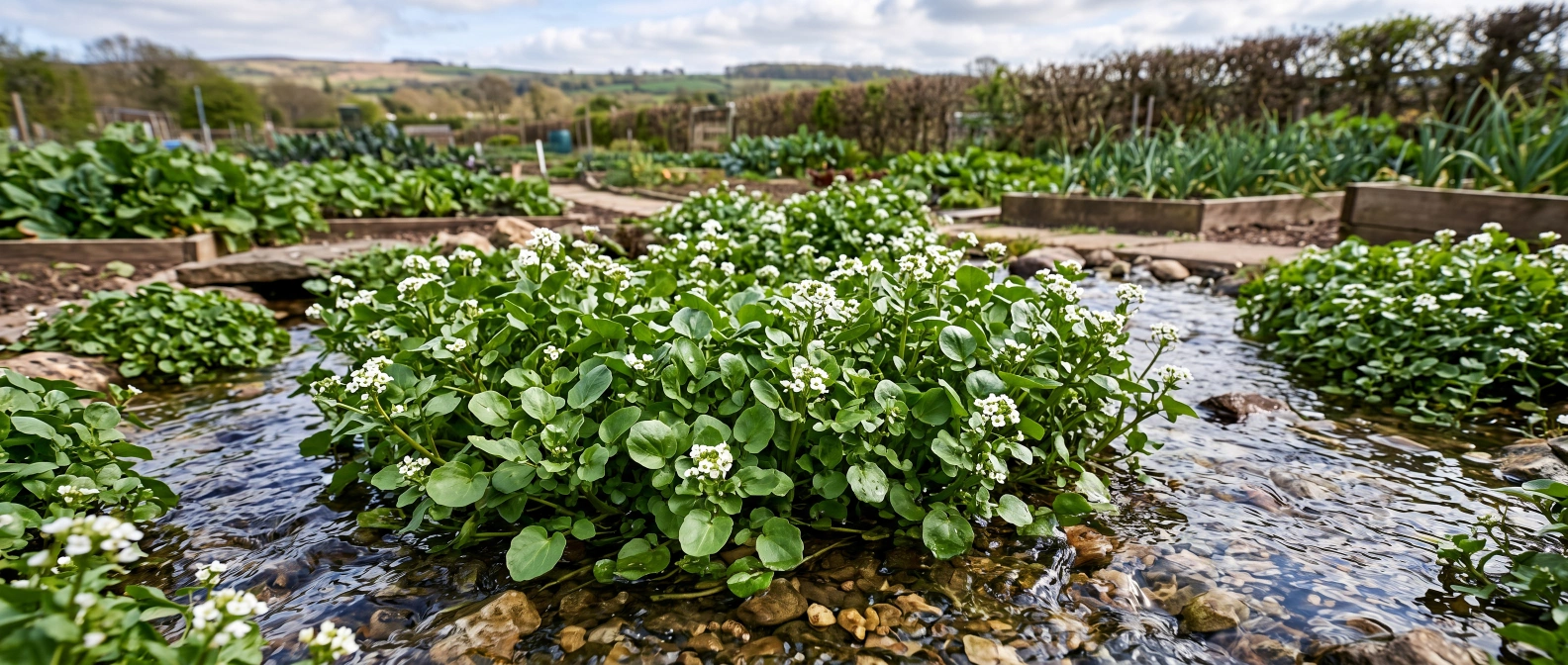
Watercress grown near a stream or ditch faces a crossing risk most vegetables never have to worry about: truly wild watercress, the same species, often grows in exactly the kind of waterway many gardeners are tempted to grow their crop beside.
New to terms like isolation distance or outcrossing? See the Seed-Saving Glossary.
Seed-Saving Difficulty
●
Moderate Difficulty
Moderate crossing risk.
How It's Pollinated
Insect-pollinated, self-fertile to some degree
(Moderate crossing risk)
Scientific name: Nasturtium officinale
Domestic Crops It Can Cross With
- Other watercress varieties flowering at the same time
- Does not cross with land cress or cabbage-family brassicas -- different genera
Wild Relatives & Feral Species
- Wild watercress growing in streams and waterways is the same species and will cross readily if your crop is grown near a natural population
Separation Distances Required
Minimum: 200m between varieties or from wild watercress
Recommended: 400m for reliable purity
Strict: Bag flower heads for guaranteed purity
Seed-Saving Strategies
- Semi-aquatic -- most home growers use trays or containers with wet compost rather than running water
- Allow flowering stems to dry and turn brown
- Pods release tiny seed once fully dry -- collect promptly
- Store dry -- viable 3-4 years