
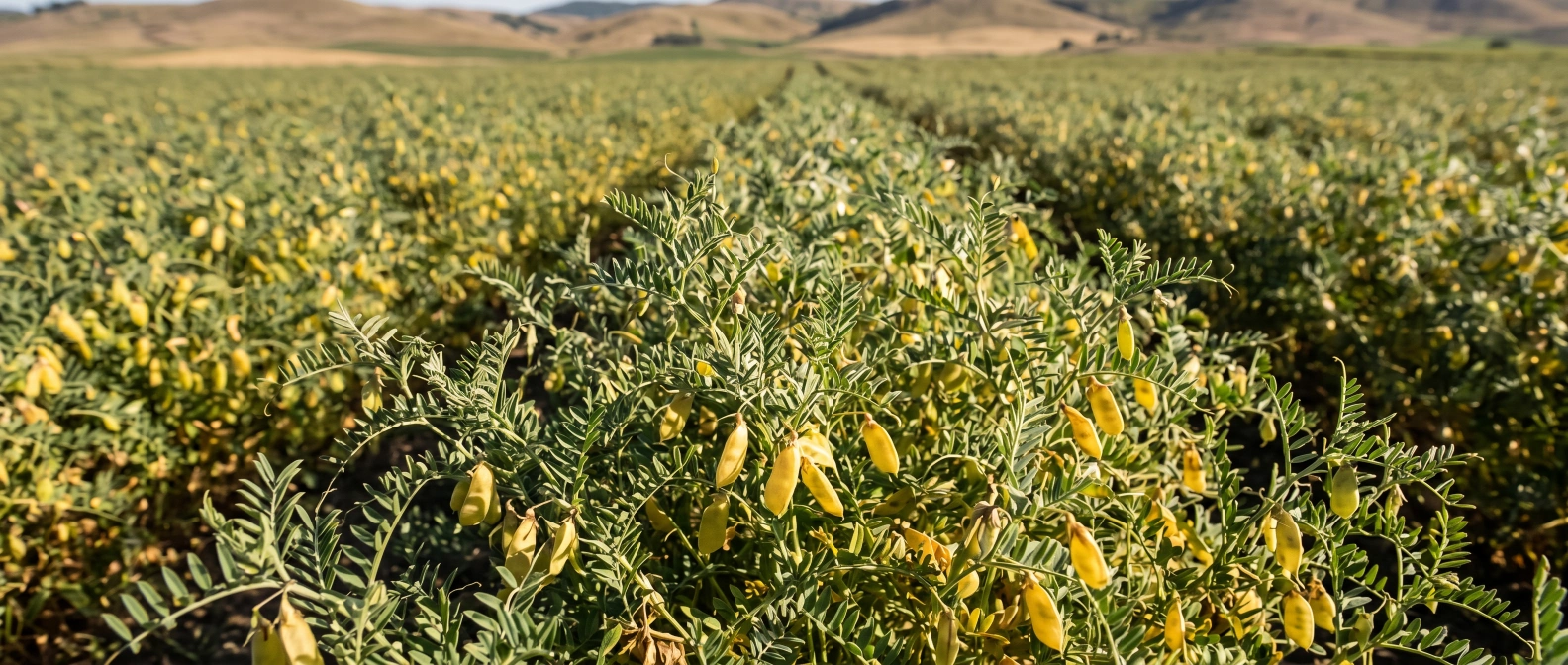
Per the crop database: a cool season crop, harvested when pods turn yellow, with good drought tolerance. Lentil (Lens culinaris) is strongly self-pollinating, so isolation for pure seed is barely a concern, and it's genuinely frost-tolerant while young -- often sown much earlier than most other legumes on this site to take advantage of cool, moist spring conditions. Like other legumes, it fixes its own nitrogen as it grows.
Water need
Genuinely good drought tolerance per the crop database -- water while establishing, then let dry conditions finish the ripening.
Calories at a glance
3,530 kcal/kg dried -- in the same league as wheat and the site's other dried pulses (scale is log-based across all 55 crops in the calculator).
Temperature Range by Month
Month on the bottom, temperature up the side. The pale green background is what the plant can survive at all -- fatal above or below it, labelled directly on the chart where that applies to your zone. The coral band is its ideal range, and only fades in during the months this zone would actually have the crop in the ground -- reusing the exact same sowing/harvesting data as the calendar further down the page. The blue line is real monthly climate data (not a modelled estimate) for a representative rural/agricultural location in this zone -- a small farming town or agricultural research station rather than a major city, to avoid the warmer bias city weather stations have. For the actual verdict on how well this crop does in your zone, see the badge at the top of the page -- that's based on the site's own researched yield figures, not this chart.
Quick Start: Sowing to Storage
- Sow direct early in the season. Sow direct, and sow early -- lentil genuinely tolerates cool, frosty conditions while young, far more than most other legumes on this site.
- Let the crop establish through cool, moist weather. Cool, moist conditions early on suit lentil well and its good drought tolerance takes over as the season warms and dries.
- Watch for pods turning yellow. Per the crop database, harvest when pods turn yellow -- that colour change is the genuine signal the crop is ready, not a fixed date.
- Pull plants once pods rattle. Pull whole plants once the pods are dry and rattle with the seed loose inside, rather than picking pods individually.
- Thresh, dry further and store airtight. Thresh out the seed, spread it somewhere warm and airy for a final week of drying, then store in an airtight container.
Sowing & Harvesting Calendar
Pick your zone under "Temperature Range by Month" above and this updates too. Lentil is viable in every zone on this site, including Boreal and Alpine where it's challenging rather than easy -- notice how much earlier its sowing window sits compared to most other legumes here.
Calories & Yield
Lentil is a genuine calorie staple when dried at 3,530 kcal per kg -- in the same league as wheat. Mediterranean gives the best yield here, and it's the only crop in this batch that's at least somewhat viable in all 8 zones.
| Climate Zone | Yield per plant | Calories per plant | Viability |
|---|---|---|---|
| Tropical / Humid | 2.0 kg | 7060 kcal | Viable |
| Subtropical | 2.0 kg | 7060 kcal | Viable |
| Mediterranean | 2.5 kg | 8825 kcal | Viable -- best yield |
| Temperate Maritime | 0.6 kg | 2118 kcal | Challenging (60% yield) |
| Temperate Continental | 1.8 kg | 6354 kcal | Viable |
| Cool / Boreal | 0.6 kg | 2118 kcal | Challenging (60% yield) |
| Arid / Semi-Arid | 2.0 kg | 7060 kcal | Viable |
| Highland / Alpine | 0.6 kg | 2118 kcal | Challenging (60% yield) |
Figures per plant sown, dried weight, from the site's own crop database. Maritime, Boreal and Alpine already reflect the 60% penalty applied to challenging zones.
Varieties Worth Knowing
Lentil varieties differ mainly in colour and whether they hold their shape when cooked. All the varieties below are open-pollinated (OP), meaning seed saved from them breeds true and is worth keeping under this site's seed-saving approach; none are F1 hybrids.
Seed Saving -- Quick Guide
Lentil is mostly self-pollinating with very low crossing risk. The main skill is harvest timing -- pods ready when dry, tan and rattling.
SERVINGS, NOT DAILY CALORIES This works out plate-sized servings of lentil from your seed during its fresh harvest window only, not your group's full daily calorie needs. For that, use the main calculator.
Estimated for your selected zone above, using this site's own germination, loss and yield figures for lentil -- a helping is roughly what you'd put on a plate as part of a meal with other veg. Treat it as a planning estimate, not a promise.
Storage & Preservation
Lentil is grown here specifically for dried storage -- whole plants are pulled once the pods are dry and rattle, then threshed and given a final week of airing indoors before going into an airtight container.
Stored this way in a cool, dry place, dried lentils keep for a genuinely long time -- years rather than months, the same storage league as wheat, oats and this site's other dried staples.
Growing Lentils Without Bought Inputs
Genuinely one of the more trouble-free legumes on this site -- aphids are about the main pest worth watching for, and even they rarely cause serious damage.
Good weeding while plants are young matters more than pest control -- lentil's small stature means it's easily outcompeted by weeds early on, before its own canopy fills in.
Lentil fixes its own nitrogen via bacteria in root nodules, genuinely improving the soil for whatever's grown there next -- factor that into a wider rotation plan, not just a calorie one.
Frequently Asked Questions
How old is lentil as a domesticated crop?
Genuinely ancient -- lentil is one of the oldest domesticated crops in human history, cultivated in the Fertile Crescent for more than 8,000 years. Few crops on this entire site have a longer track record of feeding people.
How early can lentil be sown?
Very early -- lentil is genuinely frost-tolerant while young, and it's often sown much earlier in the season than most other legumes on this site, taking advantage of cool, moist spring conditions before the drier weather it needs to ripen arrives.
Does lentil need isolation for pure seed?
Very little -- lentil is strongly self-pollinating, so outcrossing is rare even without deliberate isolation. The only real cross-partner risk is other lentil varieties, and even that risk is low.