
This closing chapter steps back from any single season to the bigger picture: what composting, done consistently, can actually do to mountain soil over years rather than months. It's also the closing chapter of the entire eight-zone guide, and the hardest climate deserves an honest answer, not a borrowed one.
Why Mountain Soil Starts So Thin
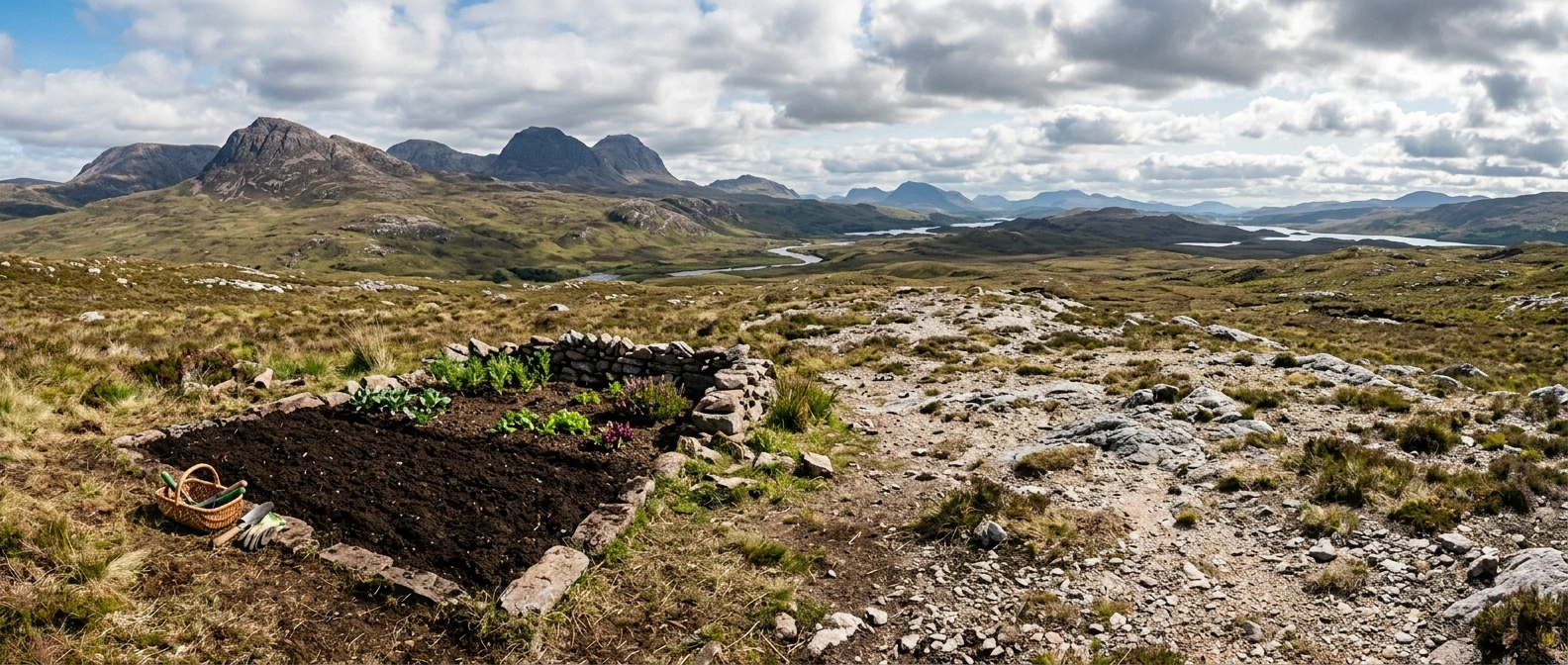
Mountain soils are frequently young, thin, rocky and slow to build, having had less time, less vegetation cover and a shorter growing season each year to accumulate organic matter than soils almost anywhere else in this guide. This is closer in spirit to the Cool & Boreal guide's honest "this will take real patience" framing than to the Temperate Continental guide's "protect what's already good" framing, since alpine soil rarely starts from that kind of advantage. It's the honest starting point this whole guide has been building toward addressing.
Diversity of Inputs Matters Even More Here
No single input carries the whole job, and that's true here even though every input is genuinely limited. Meadow hay and livestock manure (see Chapter 6), biochar, humanure, and whatever kitchen scraps and garden material are available (see Chapter 9) all matter more here precisely because there's less of everything to work with. Together, and only together, these build soil that's more than the sum of any one input applied alone.
The Honest Truth: This Is Genuinely Slow Going
It's worth saying plainly: this is, realistically, one of the slowest climates in this entire guide to build meaningful soil improvement, given the combination of a short season, daily freeze-thaw interrupting progress, and limited raw material to work with. But that makes consistent, patient effort more valuable here, not less. Every well-protected batch of compost that does get made represents a genuinely hard-won addition to soil that would otherwise struggle to improve at all, left to the mountain's own slow pace alone.
A Closing Principle, for This Zone and for the Whole Guide
Across all eight climates this guide has covered, from the driest deserts to the wettest tropics to the coldest boreal winters to this, the highest and harshest ground of all, the same underlying truth holds everywhere: consistent, well-adapted composting, however it has to be done in each specific place, is one of the most powerful tools a household has for building real, lasting food security into the ground itself, regardless of how difficult the starting conditions are. That's the principle this entire guide has been building toward, one climate, one chapter, one hard-won batch of compost at a time.
Frequently Asked Questions
Why is mountain soil often so thin and slow to build in the first place?
Mountain soils are frequently young, thin, rocky and slow to build, having had less time, less vegetation cover and a shorter growing season each year to accumulate organic matter than soils almost anywhere else. That's a genuinely harder starting point than most other climates in this guide begin from.
Is this really one of the slowest climates in the guide to build meaningful soil improvement?
Honestly, yes, given the combination of a short season, daily freeze-thaw interrupting progress, and limited raw material to work with. But that makes consistent, patient effort more valuable here, not less, since every well-protected batch of compost that does get made represents a genuinely hard-won addition to soil that would otherwise struggle to improve at all.
After covering eight different climates, what's the one principle that holds true everywhere?
That consistent, well-adapted composting, however it has to be done in each specific place, is one of the most powerful tools a household has for building real, lasting food security into the ground itself, regardless of how difficult the starting conditions are. That's true from the driest deserts to the wettest tropics to the coldest boreal winters to the highest and harshest ground of all.