
No-dig matters everywhere in this guide, but here it earns its place for three genuinely combined reasons at once, wind, freeze-thaw and UV, rather than any single argument on its own, making it one of the most valuable practices in this entire zone.
Three Reasons at Once
Wind erosion on exposed, sloped ground
An undisturbed, mulched bed protects thin, fragile mountain soil and the limited biology living in it from being stripped away by wind on exposed slopes, a real risk covered in Chapter 1.
The daily freeze-thaw cycle
Mulch moderates the temperature swing at the soil surface, protecting roots and soil organisms from the worst of the cycling that can hit a heap, and bare soil alike, every single day (see Chapter 11).
Intense UV drying
The same mulch layer that helps a compost heap survive intense high-altitude sun also helps bare soil retain moisture against it, rather than losing it to the same drying that crusts an unprotected heap.
The Method: What's Actually Available
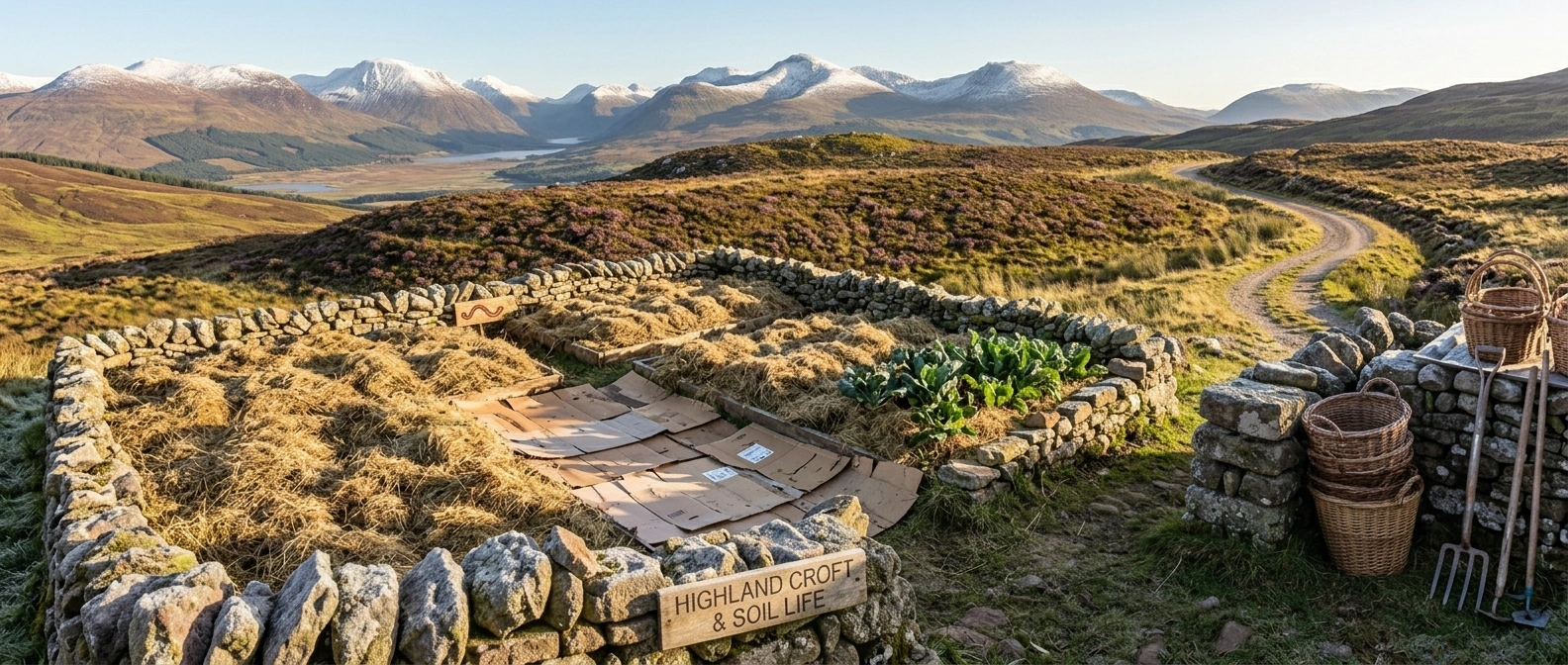
The core method is the same as everywhere: a thick compost or mulch layer applied to the surface, whatever material is available. Meadow hay is a natural, doubly-useful choice here since it's already the zone's dominant material (see Chapter 6), and cardboard where available helps suppress weeds beneath it. Plant directly into the surface layer rather than working it into the soil below.
Limited Material Means Concentrating It
Compost and mulch material are both genuinely limited in this climate, echoing the material scarcity covered in Chapters 4 and 5. No-dig here means using what little is available as efficiently and protectively as possible, concentrated on the smallest practical growing area rather than spread thin across more ground than it can actually protect.
Never Disturb Soil This Hard-Won
Thin, fragile mountain soil takes a genuinely long time to build in the first place. Once it's been improved, leaving it undisturbed protects that investment rather than risking it every time the ground is turned, a theme this guide returns to directly in its closing chapter.
Frequently Asked Questions
Why does no-dig matter so much in a highland or alpine climate specifically?
For genuinely combined reasons, not just one. An undisturbed, mulched bed protects thin, fragile mountain soil and its limited biology from wind erosion on exposed sloped ground, moderates the daily freeze-thaw cycle at the soil surface so roots and soil organisms aren't hit by the full swing, and helps bare soil retain moisture against intense high-altitude UV, all at once.
What should I actually use as mulch here?
Whatever material is genuinely available. Meadow hay is a natural, doubly-useful choice since it's already the dominant material in this climate, and cardboard where available helps suppress weeds beneath it. Plant directly into the surface layer rather than working it into the soil below.
What if there isn't much compost or mulch material to go around?
Concentrate what little is available on the smallest practical growing area rather than spreading it thin across more ground than it can actually protect. Because material is genuinely limited in this climate, no-dig here means using it as efficiently and protectively as possible, not covering the maximum area.