
A stalled or slow-moving heap usually needs one thing: a jolt of accessible nitrogen to kick the microbial population back into gear. In a wetter climate that jolt often comes from water-hungry plants like comfrey or nettles grown specifically for the purpose. In this climate, the honest answer looks different -- the real activators here are manure, urine, and whatever nitrogen-fixing legumes are already part of the food-growing rotation.
Urine -- The Free, Always-Available Activator
Urine is a genuinely free, always-available, high-nitrogen liquid input, and it matters more in a dry climate than almost anywhere else precisely because fresh nitrogen-rich green material is so scarce here for most of the year. It contains readily available nitrogen along with useful amounts of potassium and phosphorus, and unlike solid manure it requires no special handling or storage.
- As a heap activator -- dilute roughly 1:10 with water and apply directly onto a stalled or sluggish pile to restart microbial activity.
- As a liquid feed -- the same 1:10 dilution can be applied around the base of growing plants as a fast-acting nitrogen feed.
- Undiluted use -- avoid applying undiluted directly to plants or a dry heap surface, dilution is what makes it usable rather than harsh.
Manure Teas -- Water-Efficient Liquid Feeding
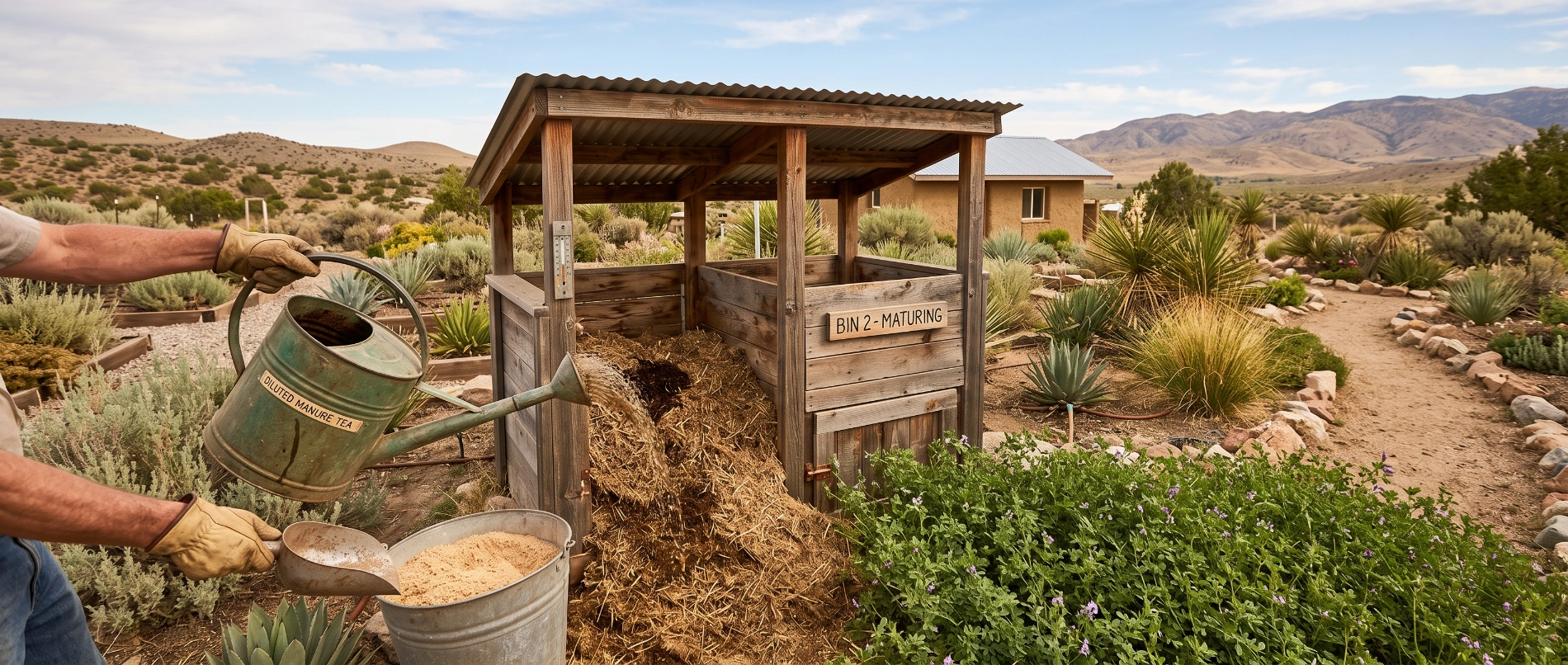
Manure tea is made by steeping a quantity of manure, from any of the types covered in Chapter 6, in a container of water for several days until the nutrients leach out into the liquid. The resulting tea can be applied to a stalled heap or used as a liquid feed around plants. This is genuinely water-efficient: a relatively small amount of manure treats a much larger area of ground than the same manure would cover applied solid, which matters a great deal when both manure and water are resources worth stretching as far as possible.
Nitrogen-Fixing Legumes Already in Rotation
Any legume trimmings from the food-growing rotation, bean and pea plant remains, or alfalfa (lucerne), a classic dryland forage and green-manure crop, carry naturally fixed nitrogen and make a genuinely useful heap activator when chopped and mixed in. Because these plants are typically already being grown for food or fodder rather than purely as compost boosters, using their trimmings this way doesn't compete for extra water the way a dedicated activator planting would. See Chapter 12 for more on drought-tolerant cover crops that serve this dual purpose.
Being Honest About What Works Here
Comfrey and nettles, the classic activator plants recommended in wetter-climate composting guides, are themselves water-hungry and generally don't justify the irrigation they'd need purely as compost boosters in this climate. It's more honest, and more useful, to say plainly that the primary activators available here are manure, urine, and whatever nitrogen-fixing legumes are already part of the food-growing rotation, not imported herb plantings that would draw down a scarce resource for a marginal benefit.
Frequently Asked Questions
Why is urine such a useful compost activator in a dry climate?
Urine is a genuinely free, always-available, high-nitrogen liquid input, which matters more here than in a wetter climate precisely because fresh nitrogen-rich green material is scarce. Diluted roughly 1:10 with water, it works both as a heap activator, waking up a stalled pile, and later as a liquid feed for growing plants.
What is manure tea and why use it instead of solid manure?
Manure tea is made by steeping manure in water until the nutrients leach out into a liquid that can then be applied to a heap or to plants. It's genuinely water-efficient because a small amount of manure treats a much larger area than spreading the same manure solid, which matters when both manure and water are limited resources.
Can I grow comfrey or nettles here as compost activators?
Generally not practically. Comfrey and nettles, the classic activator plants used in wetter climates, are themselves water-hungry and rarely justify the irrigation they'd need purely as compost boosters in a dry climate. The primary activators here are manure, urine, and whatever nitrogen-fixing legumes like alfalfa are already part of the food-growing rotation, not imported herb plantings.