
Most arid and semi-arid regions are inland, so seaweed, the signature nitrogen input of a maritime compost guide, simply isn't available to most people composting here. But dryland pastoral farming has relied on a different, equally abundant local input for millennia: livestock manure. Sheep, goat, cattle, poultry, and in many regions camel or donkey manure, are the real backbone nitrogen source in this climate, and understanding how to use each one properly is one of the most valuable skills in this whole guide.
Why Manure Matters So Much in This Climate
As covered in Chapter 4, dry climates produce abundant carbon-rich material (dead grass, crop stalks, straw) but very little of the moist, nitrogen-rich "green" material that balances it, especially outside a short growing season. Manure fills that gap almost perfectly. It's genuinely nitrogen-rich, it's produced continuously by any livestock kept for food, milk or fibre, and in pastoral dryland regions across the world, from the US Southwest to the Sahel and inland Australia, it has been the default fertility input for as long as animals and crops have been kept together.
Manure Types and Their C:N Ratios
Poultry manure -- hot and high-nitrogen
Chicken, duck and other poultry manure has a very low C:N ratio, roughly 7:1 to 10:1 fresh, making it the strongest, "hottest" manure of the common types. This strength is genuinely useful but also genuinely risky: applied fresh and undiluted, it can scorch roots and foliage outright. It should always be composted first, ideally layered with plenty of dry carbon material such as straw or dry leaves, before it goes anywhere near a growing bed.
Cattle, horse, camel and donkey manure -- milder and forgiving
Cattle and horse manure sit around 18:1 to 25:1 C:N, much milder than poultry manure, and can be used more liberally with less risk of burning plants. Camel and donkey manure, important sources across many arid pastoral regions, behave similarly to horse manure: relatively dry, fibrous and mild by comparison to poultry. All of these still benefit from proper composting rather than fresh application, both for pathogen safety and to let the nutrients become plant-available gradually rather than all at once.
Goat and sheep manure -- the dryland middle ground
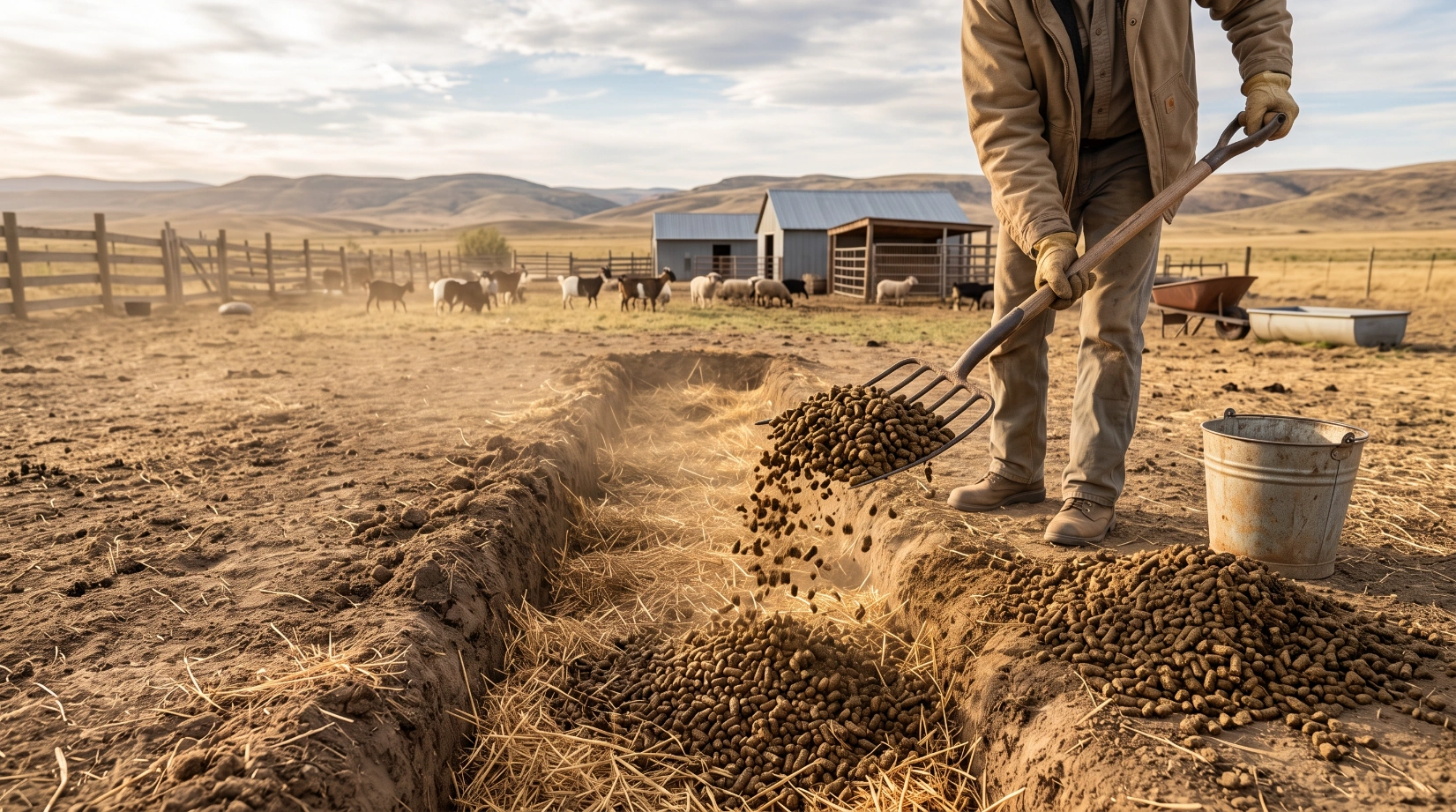
Goat and sheep manure typically fall around 15:1 to 20:1 C:N, a genuinely useful middle ground between poultry's strength and cattle's mildness. In a dry climate they carry an extra practical advantage: they're often already dry and pellet-like by the time they're collected, which makes them easy to store, handle and transport without the mess or smell of wetter manures, a real benefit where water for washing and cleanup is itself limited.
Composting Manure Properly
Manure still needs the same moisture and carbon balance as any other compost input, it doesn't get a free pass just because it's nitrogen-rich. Straw bedding mixed in with manure, the natural result of how most livestock are housed, is often already close to a good working C:N ratio, which is one reason bedded manure composts so reliably compared to manure alone.
- Balance with dry carbon -- straw, dry leaves or shredded stalks mixed through manure, particularly hot poultry manure, before piling.
- Keep it damp, not wet -- manure piles dry out just as fast as any other heap in this climate; follow the same moisture and cover principles from Chapter 2.
- Use activators where the pile is sluggish -- see Chapter 8 for urine and manure teas that can speed a stalled pile along.
Pathogen Safety
Manure composting still needs adequate heat and time like any other input carrying pathogen risk. E-coli and parasite eggs are a real concern, especially with fresh manure applied near root vegetables or anything eaten raw close to the soil. Let manure fully compost, reaching a proper thermophilic heat through the pile, before using it on food-growing beds, and never apply fresh manure directly around crops intended to be eaten raw. The same heat-and-time principles covered for humanure in Chapter 7 apply here, though manure carries a generally lower pathogen risk to begin with than human waste.
Sourcing Manure Without Your Own Livestock
Not every household keeping a food garden also keeps animals. In a self-sufficiency context, manure can often still be gathered rather than bought: communal grazing land, tracks used by herded livestock, and overnight penning areas all accumulate droppings that can be collected by hand, exactly as dryland communities have done for generations. Treat gathered manure of unknown origin as fresh and potentially pathogen-bearing, and compost it fully before it touches any growing bed.
Frequently Asked Questions
Why is manure so much more important here than in a wetter climate?
Because the usual alternative, fresh green plant matter, is scarce for most of the year in a dry climate, while dry carbon-heavy material like straw and dead grass is abundant. Manure is often the only reliably abundant nitrogen-rich input around, which is exactly why dryland pastoral farming traditions worldwide lean on it so heavily rather than on green manures or seaweed.
Can I put fresh chicken manure straight onto my beds?
No. Poultry manure is very high in nitrogen and genuinely hot, and applying it fresh can burn plant roots and foliage outright. It needs to be composted first, ideally mixed with a good amount of dry carbon material like straw or dry leaves, and allowed to break down and cool before it goes anywhere near growing plants.
What if I don't keep any livestock myself?
Manure can often still be gathered rather than bought. Communal grazing land, tracks used by herded animals, and areas where livestock are penned overnight all accumulate droppings that can be collected for composting, the same way dryland communities have gathered manure for generations. Treat anything gathered this way as fresh and unknown in origin, so compost it fully before use.