
A green manure builds soil fertility by growing rather than by decomposing in a heap -- a living shortcut that works even better here than the mixes recommended for wetter climates, once you choose species that can actually take the water stress this climate hands out.
The Core Principle
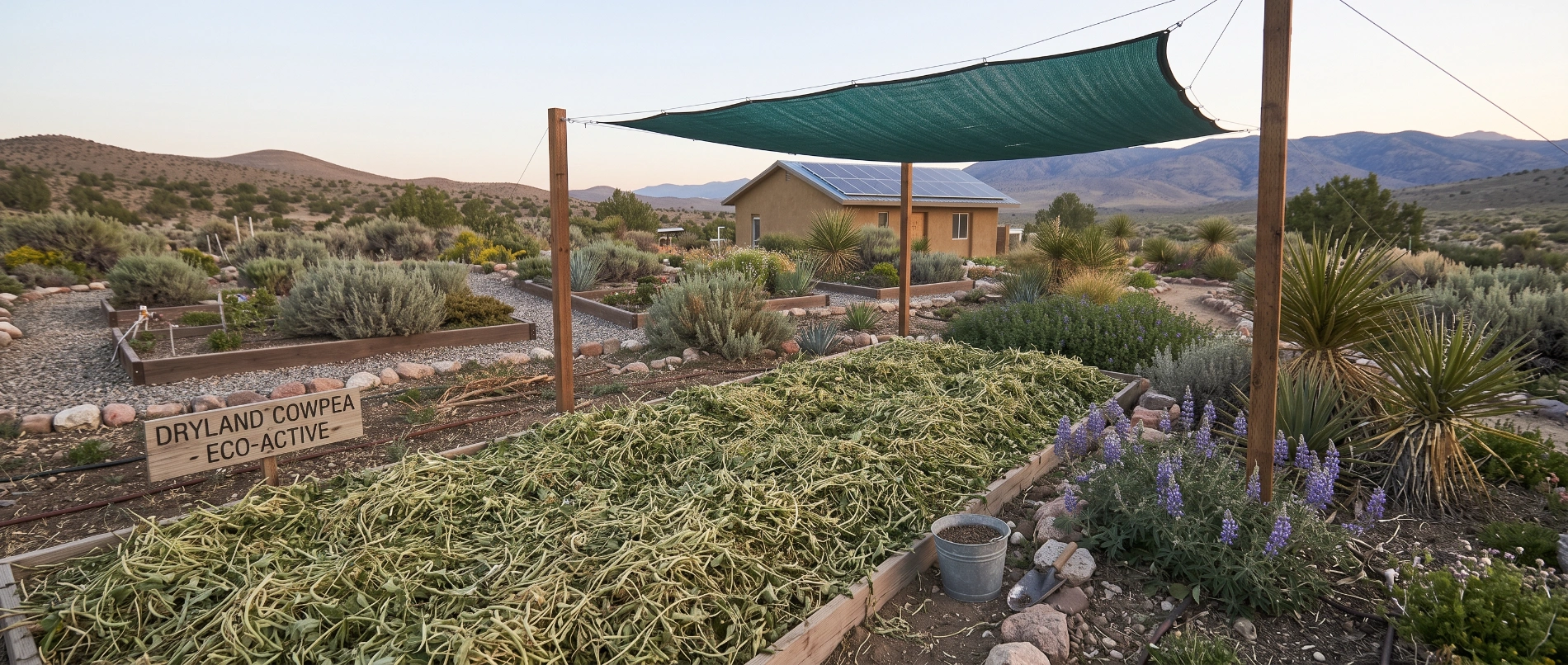
Legume green manures fix atmospheric nitrogen through bacteria living in nodules on their roots, while most green manures, legume or not, also build organic matter and improve soil structure simply through the physical action of their root systems growing and dying back. Once grown to the right stage, they're cut and either dug into the soil or, preferably in this climate, left as a surface mulch to break down in place rather than turned under.
Leaving cut material on the surface rather than digging it in fits the no-dig approach covered in Chapter 18, and matters more here than in a wetter climate, since undisturbed soil holds moisture far better than freshly turned ground.
Genuinely Drought-Tolerant Species
The clover, vetch and phacelia mixes recommended for wetter climates need consistent moisture to perform and are a poor fit here. Instead, look for species that tolerate genuine water stress once established:
- Cowpea -- fast-growing, nitrogen-fixing, and reliably drought-hardy once past establishment.
- Guar -- a tough, deep-rooted legume bred for genuinely arid conditions.
- Fenugreek -- quick-growing and useful in the cooler part of the growing calendar.
- Pigeon pea -- a longer-lived, deep-rooted legume that also tolerates poor soils.
- Tepary bean -- among the most drought-adapted legumes available, bred by desert-farming traditions specifically for low water conditions.
- Mesquite and other nitrogen-fixing dryland shrubs or trees -- used in some regions as part of alley-cropping systems, planted alongside food crops as a longer-term fertility source.
Timing Around the Cool-Season Growing Window
Many arid-zone gardens do their main food growing during a cooler season rather than a single spring-to-autumn run, as set out in the rotation calendar in Chapter 17. A green manure can be sown to use the "off" hot season, when food crops would struggle anyway, putting otherwise-idle ground and scarce water to productive fertility-building use rather than leaving beds bare and exposed.
Chop and Drop as the Default
Cutting the green manure at the base and dropping it in place, rather than digging it in, is the default method here for good reason: it delivers a double benefit. The cut material builds fertility as it breaks down on the surface, while also functioning as mulch that cuts evaporation from the bed underneath (see Chapter 11). Fertility building and evaporation control from a single pass with a sickle or shears.
Frequently Asked Questions
What is a green manure and how does it build soil fertility?
A green manure is a crop grown specifically to feed the soil rather than to harvest. Legume green manures fix nitrogen through root nodules, and most green manures also build organic matter and soil structure through their root systems as they grow. Once grown, they're cut and either dug in or, preferably in this climate, left as a surface mulch to break down in place.
Which green manures actually tolerate drought once established?
Cowpea, guar, fenugreek, pigeon pea and tepary bean are all genuinely drought-tolerant once established, and in some regions nitrogen-fixing dryland shrubs or trees like mesquite are used the same way in alley-cropping systems. These tolerate real water stress, unlike the clover, vetch or phacelia mixes common in wetter climates, which need consistent moisture to perform.
Should I dig a green manure in or leave it on the surface?
Leave it on the surface as mulch wherever possible. This chop-and-drop method disturbs the soil far less than digging in, fitting the no-dig principle that matters more here than almost anywhere, and it delivers a double benefit: the cut material builds fertility as it breaks down while also functioning as an evaporation-cutting mulch cap over the bed.