
Everything in this guide, from trench composting to shade cover to liquid feeding, has been in service of one long-term goal: turning thin, low-organic-matter dryland soil into something that actually holds water and supports life. This final chapter looks at that bigger picture.
A Bigger Transformation Than in Richer Soils
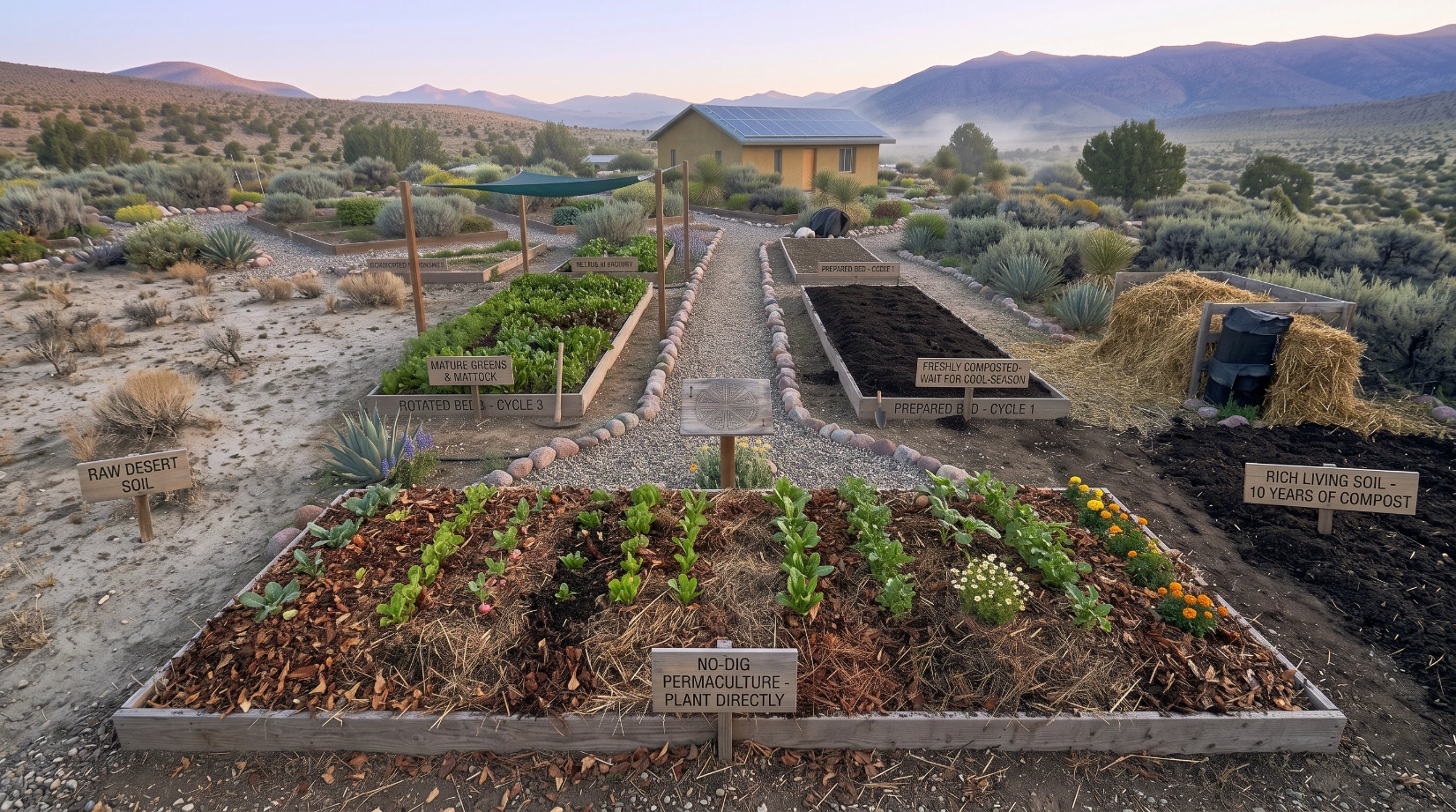
Arid and desert soils are naturally low in organic matter, simply because there's been less plant growth and decay feeding them over time compared to wetter climates. That low starting point means consistent, long-term composting produces a genuinely larger transformation here than the same effort would in already-rich soil: a real turn from thin, low-water-holding ground toward something that retains moisture and supports biological life. For a dryland grower, building that organic matter over years is arguably the single biggest lever available over their own growing conditions, bigger than almost any other single decision.
Diversity of Inputs Still Matters
Manure, urine, chop-and-drop green manures, biochar and kitchen scraps all feed into soil biology and structure in their own way, and drawing on as many of them as are actually available produces a more biologically rounded result than relying on any single source. This is a direct callback to Chapter 6's case for manure as the backbone input, Chapter 9's biochar as a permanent structural amendment, and Chapter 12's drought-tolerant cover crops, each of which contributes something the others don't.
The Terra Preta Parallel
Pre-Columbian Amazonian peoples built terra preta, extraordinarily fertile dark earth, through long-term addition of charcoal and organic matter to otherwise unremarkable soil, and that soil remains fertile centuries later. The same principle applies to a temperate garden, but it's arguably an even more relevant model for a dry climate than a wet one, because terra preta's defining benefit, dramatically improved water and nutrient retention in soil that started out poor, is exactly what dryland growing needs most.
Frequently Asked Questions
Why does composting transform arid soil more than it transforms already-rich soil?
Because arid and desert soils start out naturally low in organic matter, so consistent compost addition moves them from a genuinely thin, low-water-holding baseline toward something that actually retains water and supports biological life. That same amount of compost added to soil that was already reasonably rich produces a smaller relative change. For a dryland grower, building organic matter over time is arguably the single biggest lever available over their own growing conditions.
What is terra preta and why is it especially relevant to a dry climate?
Terra preta is the extraordinarily fertile dark earth built by pre-Columbian Amazonian peoples through long-term addition of charcoal and organic matter, soil that remains fertile centuries later. Its key benefit, dramatically improved water and nutrient retention in otherwise poor soil, is arguably an even more relevant model for a dry climate than a wet one, since improved water retention is exactly what dryland growing needs most.
Can soil that holds almost no water actually be turned into soil that does?
Yes, realistically, given enough time and consistency. Each season's compost, however hard-won it was to produce, compounds on what came before it. Soil that held almost no water five years ago holding real moisture reserves after years of consistent organic matter addition, through manure, urine, chop-and-drop green manures, biochar and kitchen scraps, is an achievable outcome, not wishful thinking, and it's the biggest single thing a dryland grower can do for their own conditions.