
Rotation and compost timing here follow a different rhythm to a temperate garden's single spring-to-autumn season. In many arid and semi-arid regions the main growing window runs through the cooler months, autumn through spring, because summer heat and water stress make that the difficult season for most vegetables, though a handful of heat-tolerant, drought-tolerant crops do carry through it.
A Cool-Season-Primary Rotation
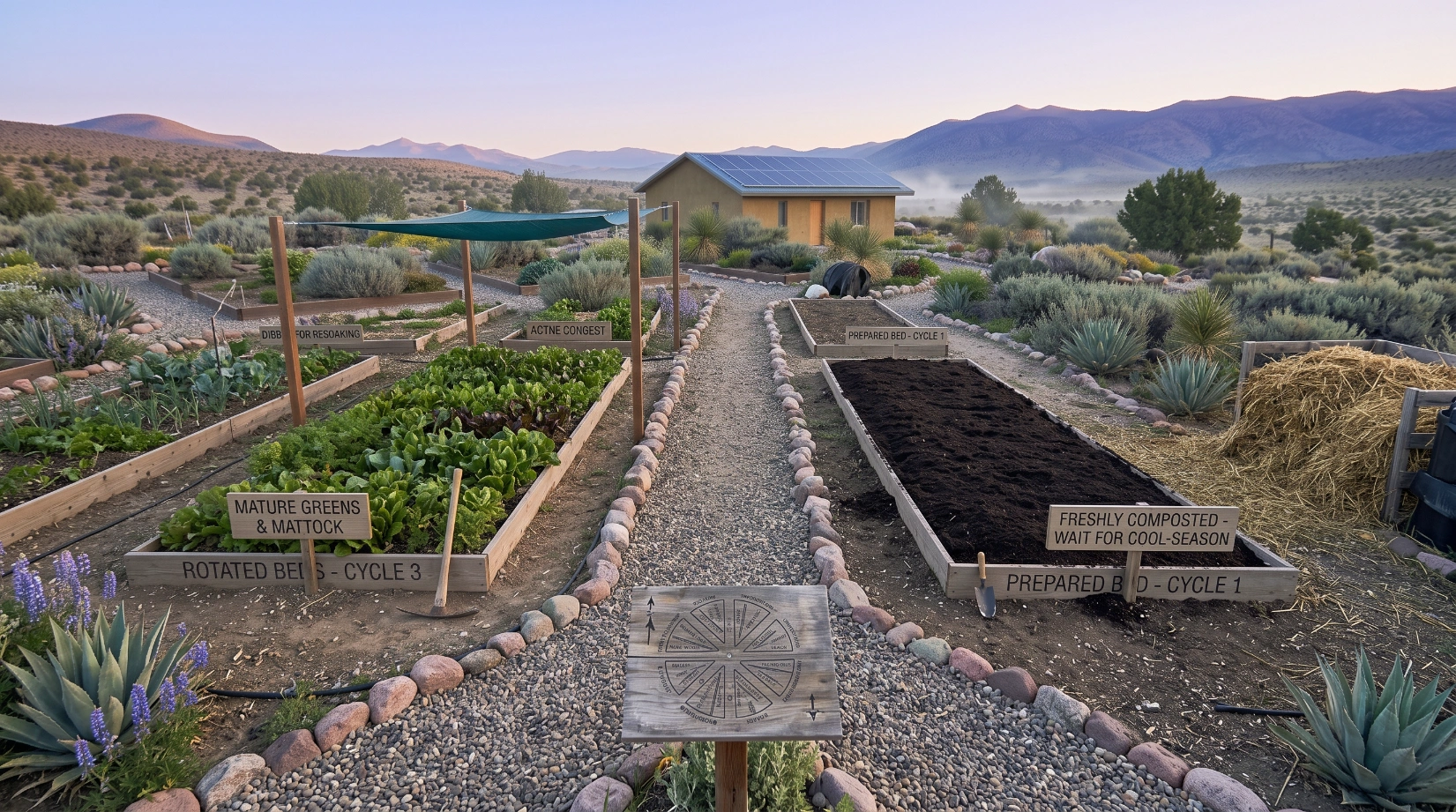
Run a simple rotation across a small number of beds, each moving through the same stages a season apart: compost applied ahead of the cool-season planting window, the main cool-season crop grown through autumn, winter and into spring, then a summer rest-and-rebuild phase for any bed not carrying a heat-tolerant crop, before the cycle repeats. Rather than chasing a single busy growing season, the rotation treats the cool months as the main event and summer as recovery time for both soil and compost system.
| Bed / Stage | Timing | Compost Action |
|---|---|---|
| Pre-planting prep | Late summer, ahead of the cool season | Main compost application, worked in or top-dressed before sowing |
| Cool-season crop | Autumn through spring | Liquid feeds as needed (see Chapter 16); light top-dress mid-season |
| Heat-tolerant summer crop | Summer, in beds suited to it | Lighter compost application before planting; mulch heavily to conserve moisture |
| Rest-and-rebuild bed | Summer, beds not in a summer crop | Sow a drought-tolerant green manure, or leave fallow under mulch while the next batch of compost builds |
Frequently Asked Questions
Why is the main growing season here in the cooler months rather than summer?
In many arid and semi-arid regions, summer heat and water stress make it the hardest season for most vegetable crops to grow well, so the main growing window runs through autumn, winter and spring instead, when temperatures are gentler and water goes further. Some heat-tolerant, drought-tolerant crops do still grow through summer, but they're the exception rather than the rule.
What happens to a bed that isn't growing a summer crop?
It enters a rest-and-rebuild phase rather than sitting bare. That might mean sowing a drought-tolerant green manure to hold and build the soil through summer, or simply using the slower summer period to build the next batch of compost ready for the following cool-season planting window, so the bed and the compost system rest and recover together.
When should compost be applied in this rotation?
Ahead of the cool-season planting window, so it's had time to settle in before the bulk of the year's growing gets underway. A second, lighter round can go on before any heat-tolerant summer crops, and beds resting through summer get their compost applied at the end of that rest period, ready for the next cool season.