
In a climate where both water and compost are scarce, liquid feeding is often the more efficient choice of the two, not a lesser substitute for the real thing. A small amount of compost or manure steeped in water treats a far larger area than the same material spread solid, and delivers it straight to the roots with little waste.
Why Liquid Often Beats Solid Here
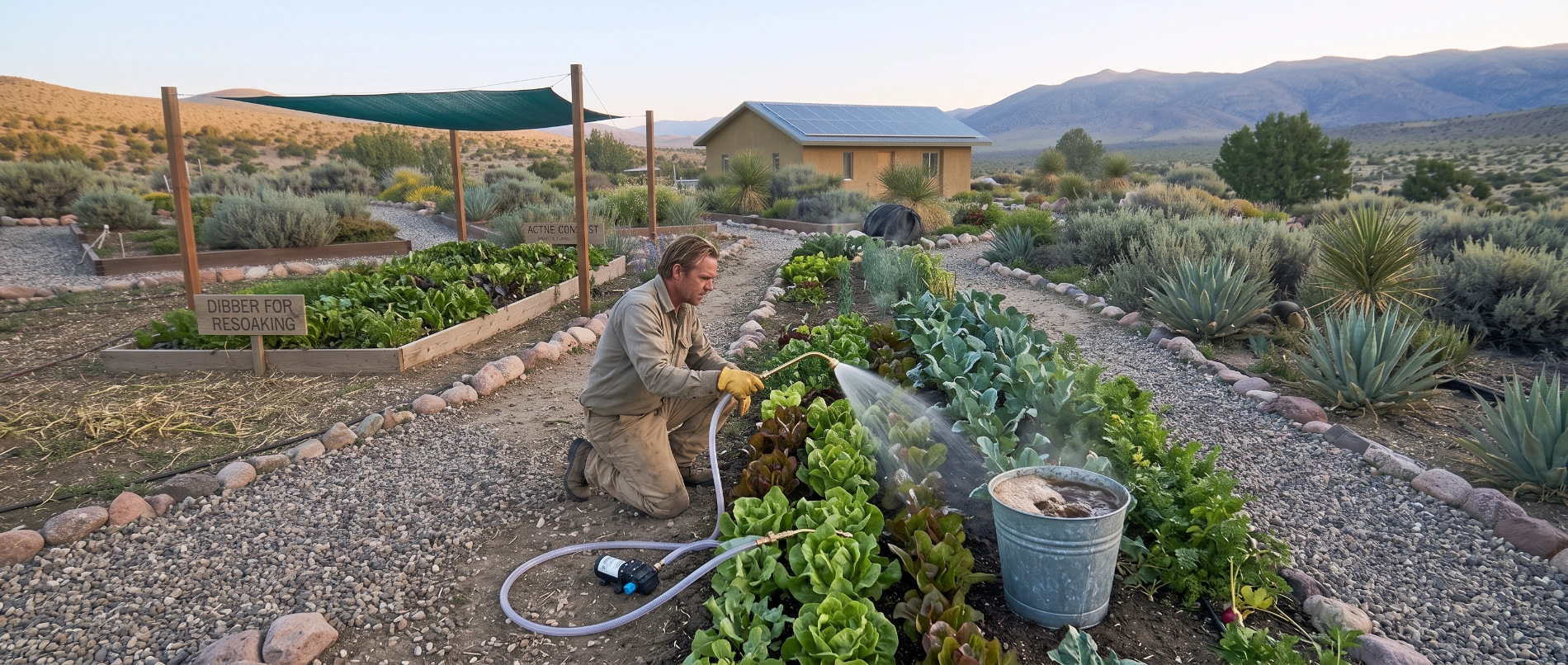
Spreading solid compost across a bed means only a fraction of it sits directly where roots can reach it, and the rest slowly breaks down and moves through the soil profile over weeks or months. Steeping that same amount of compost or manure in water instead lets its nutrients dissolve out and spread through a much larger volume of liquid, which can then be watered directly onto the root zone of many more plants than the solid material alone would have reached. In a climate where every batch of finished compost took real effort to produce, that stretch matters.
Basic Compost Tea
Steep a shovelful or two of finished compost in a bucket of water for a day or two, stirring or aerating it periodically rather than leaving it completely undisturbed, which keeps it fresh and living rather than stagnant. Strain out the solids (they can go back onto the heap or straight onto a bed) and dilute the remaining liquid before applying it, since it's usually too strong to use at full strength.
Manure Tea and Diluted Urine
Manure tea works the same way as compost tea, using manure in place of compost (see Chapter 6), and is a genuinely strong nitrogen feed once diluted. Given how central livestock manure already is to this climate's composting, it's often the most abundant material available for teas.
Diluted urine is the simplest liquid feed of all, needing no steeping or straining, only dilution before it goes on the soil (see Chapter 8). It's an immediately available nitrogen source that costs nothing and requires no waiting.
When and How to Apply
Water any liquid feed into the root zone in the cool of morning or evening, never in the heat of the day. Applying in full heat means a significant share of the liquid evaporates before it can soak in, wasting both the water and the nutrients it carried, and undermining exactly the evaporation-control discipline the rest of this guide builds around (see Chapter 11).
Frequently Asked Questions
Is liquid feeding really more water-efficient than spreading solid compost?
Often, yes. A small amount of finished compost or manure steeped in water can treat a much larger area than the same material would cover spread solid, and because it's delivered as a liquid it goes straight to the root zone where plants can use it immediately, with none of it sitting unused on the surface. In a climate where both compost and water are hard-won, that efficiency matters.
How do I make basic compost tea?
Steep a shovelful or two of finished compost in a bucket of water for a day or two, stirring or aerating it periodically to keep it from turning stagnant. Strain out the solids and dilute the liquid before applying it to plants, since it's typically too concentrated to use at full strength straight from the bucket.
When is the best time of day to apply a liquid feed?
Early morning or evening, never in the heat of the day. Watering the root zone when temperatures are cooler minimises how much of the liquid is lost to evaporation before it can soak in and be taken up by the plant, so the feed actually reaches the roots instead of largely evaporating off the surface.