
The problems a compost heap runs into here are genuinely different from the problems in a cool, wet climate. Almost everything below traces back to water, heat or the scarcity of nitrogen-rich material, and almost every fix is quick once you know which of those three is actually at fault.
The Heap Has Dried Out and Gone Dormant
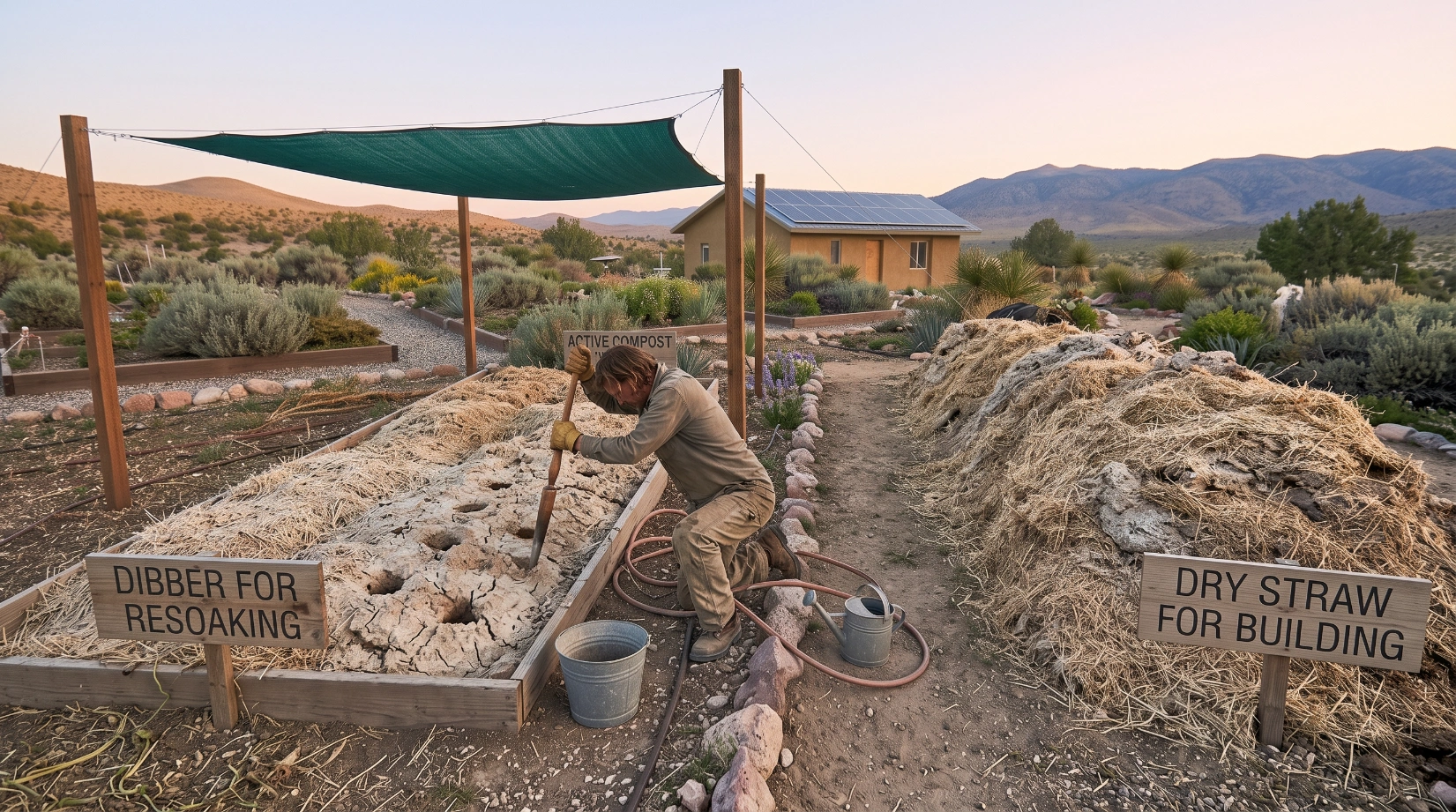
This is by far the most common failure in this climate, and it looks unmistakable: the material is pale, dusty and crumbles to powder rather than clumping together, there's no warmth inside, and nothing smells of anything much at all. A light surface sprinkle won't fix it -- water poured onto a dry, crusted heap tends to run straight off or wick away at the surface without reaching the core. Instead, poke holes down through the heap with a stake, broom handle or fork, and water slowly into those holes so moisture actually penetrates, repeating over a day or two until the material feels evenly damp, roughly like a wrung-out sponge, all the way through.
Once the heap is properly rewetted and activity resumes, the real fix is prevention: add a thicker mulch or shade cover over the top so the same thing doesn't happen again within days (see Chapter 11). A heap that keeps drying out repeatedly is telling you its cover isn't doing its job.
The Heap Has Overheated
Less common than drying out, but genuinely possible in full summer sun: a large, dark heap can climb past the point where composting bacteria thrive, into a range where they start dying off instead. Signs include a heap that feels hot right at the surface as well as the core, with activity that seems to stall despite plenty of moisture. Fix it by adding shade over the heap, turning it to let trapped heat escape, or splitting one large heap into two smaller ones, since a smaller mass holds less heat overall.
Moist but Not Decomposing
If moisture is genuinely adequate but the heap still isn't heating up or breaking down, the usual culprit is a nitrogen deficiency, which is common here given how carbon-heavy dryland material tends to be by default. Mix in manure, urine or fresh kitchen scraps to correct the balance (see Chapter 4) rather than adding more dry carbon or more water, neither of which addresses the actual shortfall.
Ants, Rodents and Other Pests
A compost heap is often one of the only reliably moist, food-rich spots for a long distance in a dry landscape, which makes it a genuine draw for ants and rodents in a way it isn't in a wetter climate with moisture everywhere. Avoid adding meat or dairy scraps, which are the strongest attractant, keep the heap appropriately covered rather than open, and site it away from the house so any activity it does attract stays well clear of your living space.
Salt Buildup in Finished Compost
Compost made heavily from manure or from material that's been affected by irrigation water can carry a higher salt content than compost made from more varied inputs. Before using a manure-heavy batch generously, test it on a few salt-sensitive seedlings first rather than applying it across a whole bed, and if it seems to check their growth, dilute it by mixing with other, less salty compost or material rather than discarding it.
Frequently Asked Questions
My heap has gone dusty and dormant -- how do I fix it?
This is the most common arid-specific failure, and it needs deliberate, thorough rewetting rather than a light sprinkle, which will only run off a dry crust and leave the interior untouched. Poke holes down through the heap with a stake or fork and water slowly so it soaks in rather than running off the surface, repeating over a day or two until the material feels like a wrung-out sponge all the way through. Once activity restarts, add a thicker mulch or shade cover to stop it happening again.
Can a compost heap get too hot in a hot climate?
Yes, though it's rarer than drying out. A large dark heap in full summer sun can climb past the 65-70 degree range where the organisms doing the composting start dying off rather than thriving. Fix it by adding shade, turning the heap to release trapped heat, or splitting a large heap into two smaller ones that hold less heat overall.
Why is my heap not breaking down even though it's moist?
This is usually a nitrogen deficiency, which is common here because dryland material tends to be heavily carbon-weighted. If moisture is genuinely adequate and the heap is still sluggish, mix in manure, urine or fresh kitchen scraps to correct the balance rather than adding more dry material or more water.