
The biology doesn't change with climate: microbes need carbon for energy and nitrogen for growth, and the target ratio is the same everywhere, roughly 25-30 parts carbon to 1 part nitrogen by weight. What's genuinely different in a cool or boreal climate is the timing. Carbon is abundant for most of the year, nitrogen is concentrated into a short, intense window, and managing that mismatch in time matters as much as managing the ratio itself.
Carbon Is Abundant, Nitrogen Is a Short Season
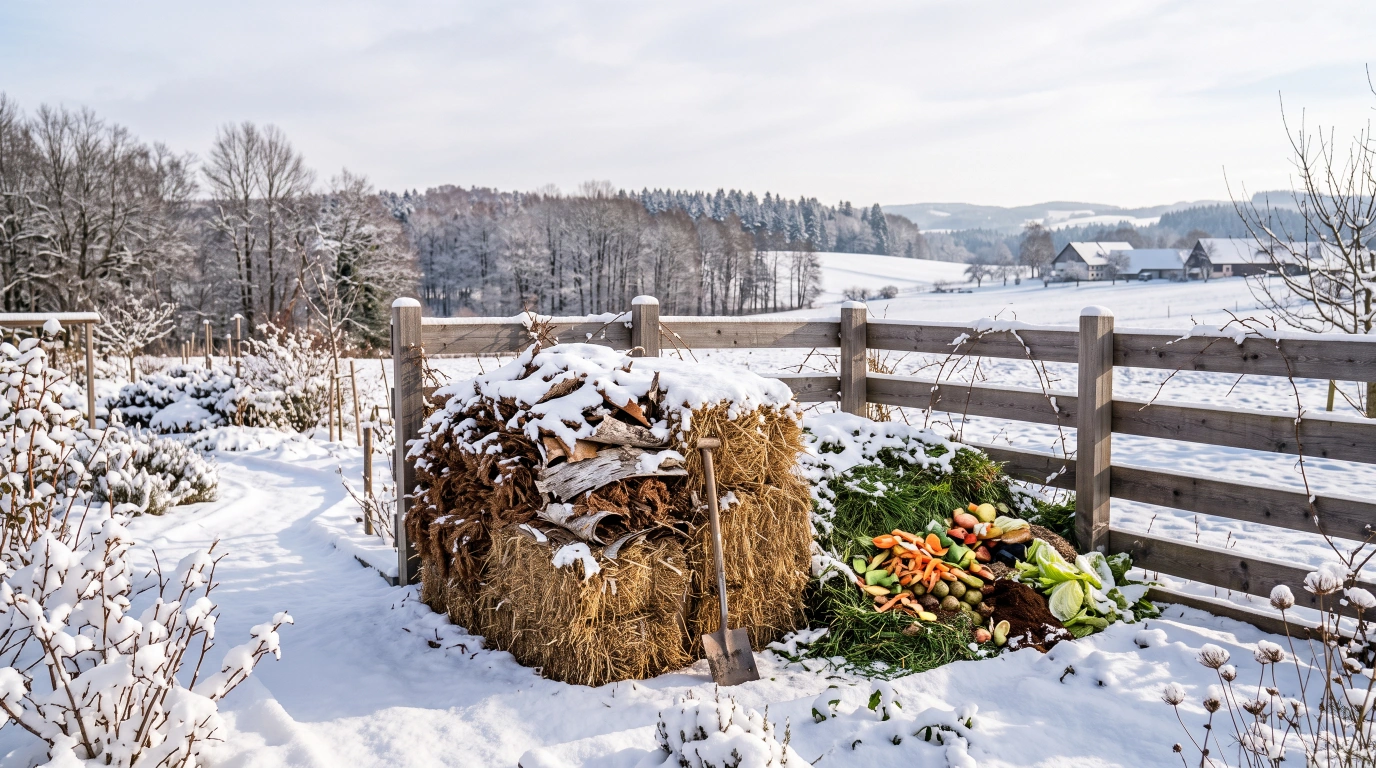
Carbon-rich brown material is easy to come by here year-round. Conifer needles, birch bark, dead leaves and straw are all straightforward to gather, and autumn in particular provides a large, low-effort supply as deciduous trees drop their leaves before the freeze sets in. Carbon is rarely the limiting factor.
Nitrogen is the harder half, not because it's scarce overall, but because it's concentrated into a short window. Fresh kitchen scraps, grass clippings and garden material are genuinely abundant only for the few months the growing season lasts. Unlike a merely cool climate, where nitrogen is simply somewhat harder to find, here the real task is stockpiling and timing: gathering and holding enough carbon in reserve so that when the nitrogen-rich window does open, it can be combined with it immediately, and, where genuinely necessary, freezing surplus kitchen scraps until there's enough carbon and warmth to use them properly.
The most effective approach is timing the main heap-building push to coincide with the season's peak of fresh material, rather than trickling nitrogen-rich additions in throughout the year the way a milder climate can.
Carbon vs Nitrogen at a Glance
A representative spread of materials genuinely available in a cool or boreal climate, from the most carbon-heavy to the most nitrogen-heavy. The full input list, with practical notes on using each one, is in the next chapter.
| Material | Type | Approx C:N Ratio | Notes |
|---|---|---|---|
| Cardboard (plain, kept dry) | C | ~350-400:1 | Shred first; abundant, easy to store dry |
| Conifer needles | C | ~60-110:1 | Slow to break down, somewhat acidic; use in moderation |
| Birch bark | C | ~100-150:1 | Shred or tear; slow but genuinely abundant |
| Dried leaves (birch, aspen) | C | ~50-60:1 | Gather heavily in autumn; store dry for year-round use |
| Straw | C | ~50-80:1 | Excellent bulk carbon and a good insulating material too |
| Fresh grass clippings | N | ~15-20:1 | Abundant only through the growing season; use before matting down |
| Fresh kitchen scraps | N | ~15:1 | Available year-round but the surplus is seasonal; freeze extra if needed |
| Fresh garden weeds | N | ~15-20:1 | Pull before seed set; a short-season resource |
| Manure (where available) | N | ~15-25:1 | Strength varies with animal and bedding; a genuine local resource if kept |
| Urine | N | ~0.8-1:1 (as N source, diluted) | A concentrated, genuinely free nitrogen source; always dilute before use (see Chapter 8) |
Ratios are approximate -- real material varies with freshness, moisture content and exact species. Treat them as a guide to relative balance, not a figure to measure precisely.
Working By Volume, Not Weight
You don't need to weigh anything to get this right in practice. Carbon material is typically bulkier and lighter than fresh green material, so working by volume naturally lands close to the target ratio: roughly two buckets or barrowloads of carbon (conifer needles, birch bark, dried leaves, straw) to every one bucket of fresh greens.
In this climate the practical task is rarely getting that 2:1 ratio precisely right, since carbon is easy to gather whenever it's needed. It's making sure a large carbon reserve is already stockpiled well before the short nitrogen-rich window opens, so that when fresh greens do arrive, there's already plenty of carbon ready to combine with them immediately, rather than scrambling to find brown material at the exact moment fresh green material needs using.
Troubleshooting: The Heap That Froze Before It Started
The most common failure in this climate is a heap started too late in the season with too little nitrogen gathered before the cold sets in. Without enough fresh green material to drive an early burst of heat, the heap never builds real internal warmth, and once the freeze arrives, it locks up before it ever properly got going.
This is a timing problem more than a balance problem. Getting the materials right in isolation doesn't help if they're combined too late in the year to matter. The fix is timing the main heap-build to the season's nitrogen peak, with carbon already stockpiled and waiting, rather than treating carbon and nitrogen gathering as two tasks to handle whenever it's convenient.
Frequently Asked Questions
What's the ideal carbon-to-nitrogen ratio in a cool or boreal climate?
The target is the same everywhere, roughly 25-30 parts carbon to 1 part nitrogen by weight. What's different here is the timing. Carbon-rich brown material, conifer needles, birch bark, dead leaves, straw, is easy to gather year-round, especially in autumn, while nitrogen-rich green material is only genuinely abundant for a few months during the short growing season, so the challenge is less about the ratio itself and more about having enough carbon ready when that narrow nitrogen window opens.
Why is nitrogen so much harder to manage here than carbon?
Because the brief growing season compresses fresh kitchen scraps, grass clippings and garden material into just a few months rather than spreading them across the year. Unlike a merely cool climate where nitrogen is simply somewhat scarce, here it's concentrated into a short, intense window, which means stockpiling carbon in advance and, where genuinely necessary, freezing surplus kitchen scraps until they can be used properly, matters more than it would almost anywhere else.
Why did my heap freeze before it ever really got going?
This is the most common failure mode in this climate: a heap started too late in the season with too little nitrogen gathered before the cold set in. It's a timing problem more than a balance problem, a heap needs a real push of fresh nitrogen-rich material to build up heat, and if that push comes right as the cold arrives, there simply isn't enough active time left before it freezes. The fix is timing the main heap-build to the season's nitrogen peak, not just getting the ratio right in isolation.
Do I need to weigh my compost inputs to get the ratio right?
No -- working by volume rather than weight is accurate enough in practice, because carbon material is typically bulkier and lighter than fresh green material. The rule of thumb is roughly two buckets or barrowloads of carbon to every one bucket of fresh greens. In this climate the practical task isn't measuring that ratio precisely, it's having a large carbon reserve already stockpiled before the short nitrogen-rich window opens, since carbon is easy to gather but greens won't wait.