
This is the single most important structural chapter in this guide. In a merely cool climate, a heap can often manage on mass and good management alone. Here, a heap loses heat to a genuinely cold environment far faster than a small or poorly insulated pile can generate it, so retaining what heat is made is the central engineering problem, not a refinement layered on top of the siting and basic construction covered in Chapter 2.
Why Insulation Isn't Optional Here
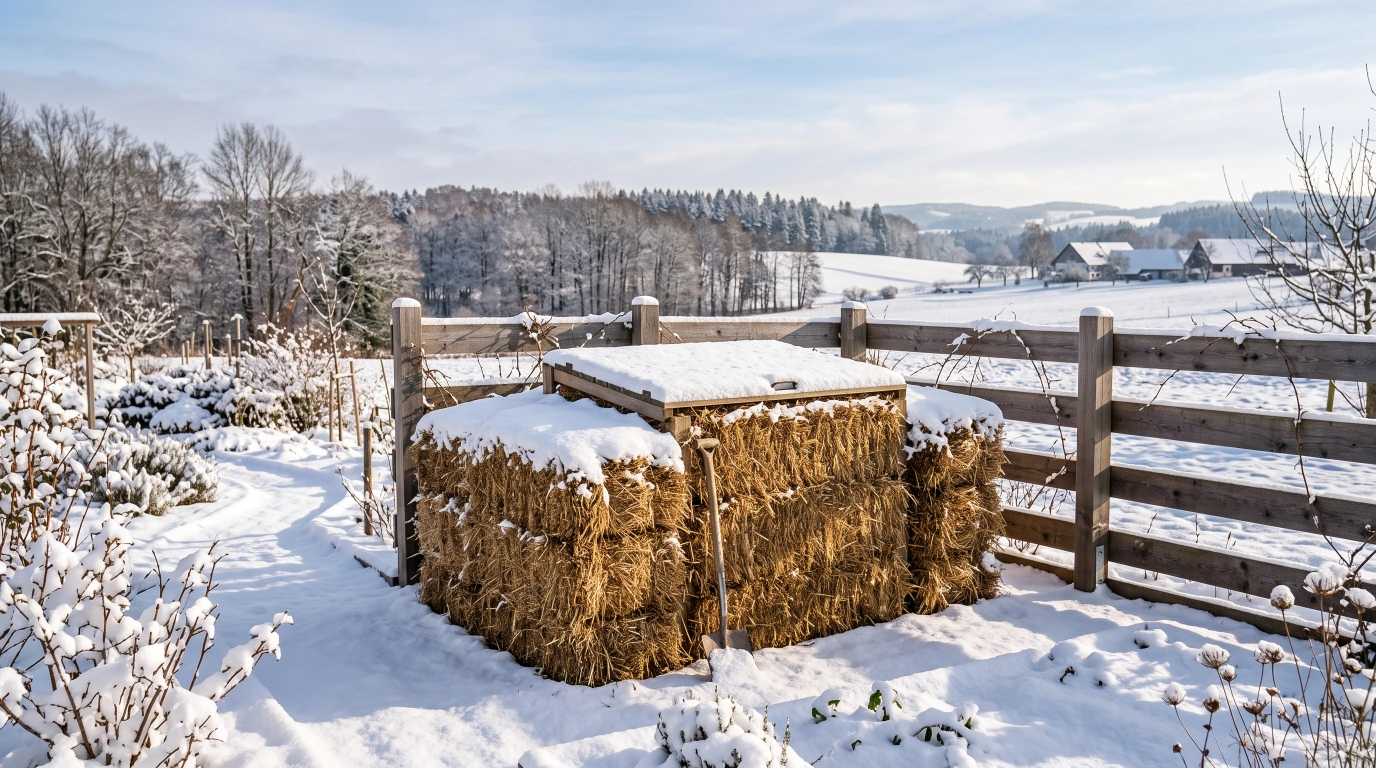
Composting microbes generate their own heat as they work, and in most climates that heat, plus a reasonable heap size, is enough to keep a pile well above the surrounding air temperature. In a genuine boreal cold, the rate of heat loss to the environment can simply outpace what a small or poorly built heap is able to generate, and once a heap loses its core warmth, it freezes and activity effectively stops until it thaws again.
Real insulation changes that balance. It doesn't make a heap generate more heat, it slows how quickly the heat already being generated escapes, which is often the difference between a heap that keeps working well into autumn and one that freezes solid at the first hard frost.
Err Toward a Larger Heap
The rough one-cubic-metre minimum that's useful as a rule of thumb elsewhere is a floor, not a target, in this climate. More mass holds heat for longer against a harder cold, since a bigger heap has proportionally less surface area exposed to the cold relative to its heat-generating core. Where space and material allow, build toward the larger end of what's practical rather than the bare minimum, it buys real resilience through the coldest stretches.
Insulating Materials & Methods
- Straw bales stacked around a bin as a removable insulating jacket, put in place in autumn as the cold sets in and taken down again in spring once the heap is managing on its own. Straw is an excellent, cheap insulator and this is the single most accessible option for most builds.
- Double-walled bin construction with an air gap, or the cavity packed with straw or dry leaves, between an inner and outer wall (see the basic construction options in Chapter 2).
- A soil or snow berm banked around the base of an already-active heap. This sounds counterintuitive, but once a heap has built up some mass and warmth, packed snow is a genuinely effective insulator, trapping still air extremely well. It's the initial freeze into a heap that hasn't yet built up warmth that's the real enemy, not snow settling on top of one that has.
- A lid or cover that sheds snow and rain while still allowing some air movement, protecting the insulating layers underneath from getting waterlogged, which would ruin their insulating value.
Sealed vs Ventilated: Choosing the Balance
A fully sealed system retains heat best of all, but it requires deliberate, active airflow management, occasional turning or a built-in air channel, to avoid the heap tipping into anaerobic conditions, which brings its own problems regardless of climate.
A well-insulated but still ventilated system is the recommended default for most builds here, striking the same kind of balance the structural chapters in other climates land on: enough insulation to hold real heat, enough air exchange to keep the process aerobic and avoid the heap turning sour.
Frequently Asked Questions
Why does insulation matter so much more here than in an ordinary cool climate?
Because a heap loses heat to a genuinely cold environment far faster than a small or poorly insulated pile can generate it. In a merely cool climate, a heap can often get by on mass and management alone. Here, retaining what heat is generated is the central engineering problem the whole system has to solve, which is why insulation is treated as essential rather than optional in this guide.
Should I just let snow pile up on my compost heap?
Once a heap already has some mass and warmth built up, snow sitting on and around it is a genuinely effective insulator, packed snow traps air extremely well. The real enemy is the initial freeze into a heap that hasn't built up any warmth yet, not snow accumulating on top of one that has. A soil or snow berm banked around the base of an already-active heap can be a legitimate, low-cost insulating layer.
Should I seal my compost bin completely to keep the heat in?
Not as the default choice. A fully sealed system does retain heat best, but it requires deliberate airflow management to avoid the heap turning anaerobic. A well-insulated bin that still allows some air exchange, with a lid that sheds snow and rain but isn't airtight, is the recommended balance for most builds, similar to the trade-off struck in the structural chapters for other climates.