
This is arguably the single most important chapter in the whole guide for this climate. Every other technique -- inputs, ratios, timing -- only gets the value it deserves if the heap actually survives winter with its progress and structure intact. Master winterizing, and the rest of this guide holds up through a season nothing else in the guide can fully protect you from.
Why Winterizing Matters So Much
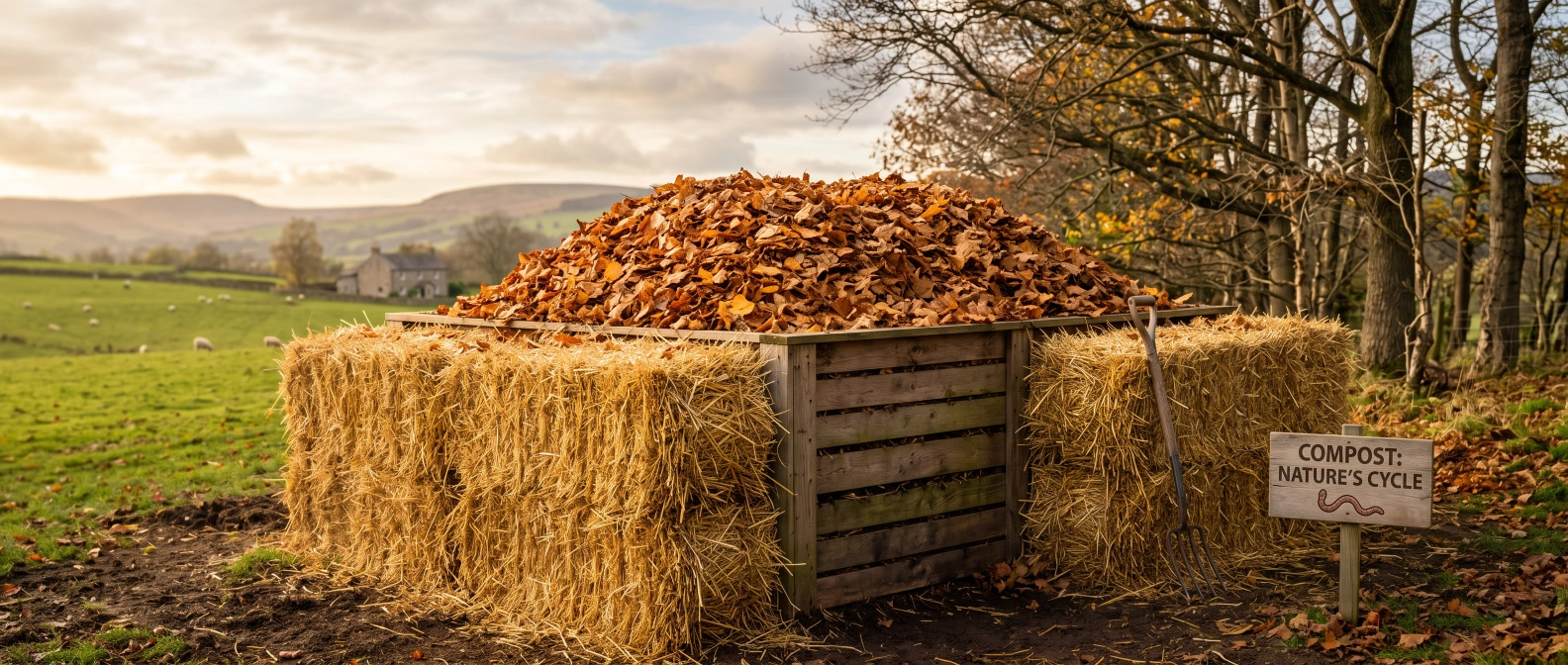
A heap that goes into winter unprepared simply freezes solid and stays that way for months (see Chapter 1). That's lost time, but it can also be lost structure, repeated freeze-thaw cycles at the shoulders of winter can heave and disturb a poorly protected heap in ways a milder climate never has to plan around.
A well-winterized heap is different. It retains more of its own generated warmth for longer, may keep working meaningfully weeks further into the cold season than an unprotected one would, and comes out the other side in far better shape to restart quickly once temperatures recover in spring. None of this makes a heap immune to winter, but it changes how much of the season's progress survives it.
Timing: Before the Ground Freezes, Not After
Winterizing has to happen while it's still genuinely workable, which means before the ground properly freezes, not after. Gather straw, dry leaves and any other insulating material while they're easy to source and handle, and get them in place while the ground and the heap itself are still soft enough to work with. Waiting until the first hard freeze has already set in makes the whole job harder, sometimes to the point of being impractical, and leaves the heap exposed through exactly the window it most needed protection. Track this against the seasonal calendar in Chapter 13 so it doesn't sneak up.
Practical Insulating Techniques
Wrap the bin in a straw bale jacket
Stack whole straw bales around the outside of the bin, forming a thick removable jacket. This is one of the most effective and simplest techniques available, straw is an excellent insulator, and because the bales just stack rather than attach, the whole jacket lifts away again in spring without any real dismantling.
Pile insulation directly over the top
Side insulation alone isn't enough, a thick layer of dry leaves or straw piled directly over the top of the heap matters just as much, since heat escapes upward as readily as it does outward. Don't skip this step even with a well-wrapped bin, the top is often where the fastest heat loss happens.
Bank soil or snow around the base once there's enough
Once snow has accumulated, banking it around the base of the bin adds another useful layer, snow is actually a decent insulator once a heap already has some retained warmth to protect. The real enemy isn't the ongoing cold itself so much as the initial hard freeze reaching a heap with no protection at all, so the goal is keeping that first deep freeze out for as long as possible.
Accepting Genuine Dormancy Without Panicking
Once deep winter sets in, even a well-insulated heap will likely still slow dramatically or stop altogether, and that's fine, expected, and not a sign anything was done wrong. The goal of winterizing was never to keep a heap fully active through genuine deep cold, that isn't realistically achievable without far more infrastructure than this guide assumes. The real goal is delaying and softening that shutdown, and protecting the heap's structure and the progress it already made, so there's something worth restarting once spring comes.
Spring Wake-Up
Once the thaw is properly underway, not at the first mild day but once it's clearly sustained, remove the insulating wrap so the heap can start responding to warming air and sun again. Check moisture right away, spring meltwater can oversaturate a heap that was perfectly fine when it went into winter, and a waterlogged heap needs dry material mixed in before it will restart properly.
Turn the heap to reintroduce air and kickstart activity again as temperatures allow, and expect it to take a little while to properly wake up even once conditions are favourable. This transition period is covered in more detail as part of the full seasonal picture in Chapter 13.
Frequently Asked Questions
Why does winterizing a compost heap matter so much in this climate?
Because an unprepared heap simply freezes solid and stays that way, losing months of potential progress and risking structural damage from freeze-thaw heaving. A well-winterized heap retains more warmth for longer, may keep working weeks longer into the cold season, and comes out of winter in far better shape to restart quickly once spring arrives.
When should a heap be winterized?
Before the ground properly freezes, not after. Insulating material needs to be gathered and put in place while it's still easy to work with the heap, dig around its base and handle straw or leaves without fighting frozen ground. Waiting until the first hard freeze has already set in makes proper winterizing far harder and less effective.
Will an insulated heap keep working all through winter?
Realistically, no. Once deep winter sets in, even a well-insulated heap will likely still slow dramatically or stop, and that's expected, not a sign anything went wrong. The goal of winterizing is to delay and soften that shutdown and protect the heap's structure and progress, not to keep it fully active through genuine deep cold, which isn't realistically achievable without far more infrastructure than this guide assumes.