
A milder climate's compost calendar shifts gradually, month to month. This climate doesn't. It swings between a short, intense, long-daylight summer and months of hard winter dormancy, a genuinely more extreme version of the seasonal picture than even the temperate maritime zone deals with. Managing a heap well here means planning around that hard switch rather than fighting it.
Spring: Thaw Management
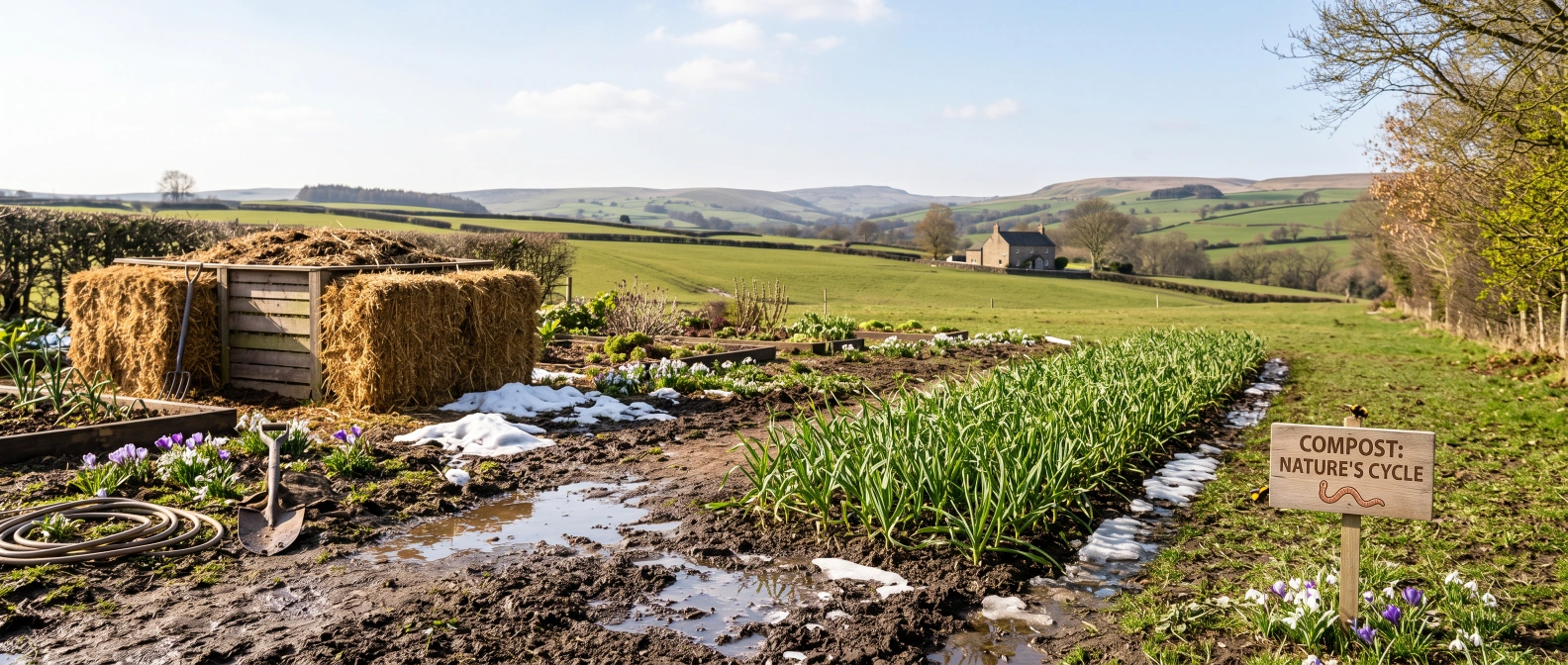
Spring starts with checking, not assuming. A heap that went dormant over winter needs a proper look before it's put back to work: check for meltwater oversaturation, since spring thaw can waterlog a heap that was entirely fine when it froze solid. Remove winter insulation once the thaw is properly underway, per Chapter 11, rather than at the first mild day that might not hold. Then turn the heap to reintroduce air and kickstart activity again as temperatures allow, expecting a gradual restart rather than an instant return to full activity.
Summer: The Main Active Season
Summer is the heap's one real working window all year, and it needs to be used deliberately rather than left to happen on its own. Front-load nitrogen-rich activators, per Chapter 8, to get the maximum use out of the short warm period, and take full advantage of the long daylight hours and the burst of fresh material this season brings. Treat summer as the season to build heap mass and momentum, not just maintain what's already there, since there won't be another real chance until next year.
Autumn: The Critical Preparation Window
Autumn is arguably the most consequential season in this calendar, even though little visible progress happens in it. This is when winterizing, per Chapter 11, needs to happen, while the ground is still workable. It's also the time to gather and stockpile carbon material for next year, and to make final additions to the heap before the ground starts to freeze and closes that option off entirely. Treat autumn as preparation, not a continuation of summer's active management.
Winter: Genuine Dormancy
Once winter sets in properly, check on the heap only occasionally if at all, and don't expect activity, per Chapter 11. This is also the season by which the vermicomposting bin, per Chapter 10, should already be safely relocated indoors, not something to sort out once the cold has already arrived. Winter here isn't a slow month for the heap, it's an off month, and planning for that rather than resisting it is the whole point of this chapter.
Frequently Asked Questions
What's the first thing to do with a compost heap in spring here?
Check it before assuming it's ready to work. Spring meltwater can oversaturate a heap that was perfectly fine when it froze, so check moisture first, then turn the heap to reintroduce air and kickstart activity again as temperatures allow. This is also when winter insulation comes off, but only once the thaw is properly underway, not at the first mild day.
Why does summer matter so much for composting in this climate?
Because it's the only real active window the heap gets all year. Summer here brings long daylight hours and abundant fresh material, so front-loading nitrogen-rich activators during this window makes the most of the short warm season while it lasts, rather than assuming there will be time to catch up on activity later.
How is seasonal composting here different from a milder climate?
The transitions are far more extreme. A milder climate has a fairly smooth month-to-month change in heap activity, but this climate has something closer to a hard on/off switch, a short, intense, high-daylight summer of real activity followed by months of genuine winter dormancy. Successful composting here means respecting that switch and planning around it, rather than trying to keep the heap active through a season it simply can't work in.