
A green manure builds soil fertility by growing, not by decomposing in a heap. In a climate where the growing season is short and compressed, choosing genuinely cold-hardy, fast-maturing species matters more than it would elsewhere, since a green manure that can't establish or mature in time is wasted ground and wasted time.
The Core Principle
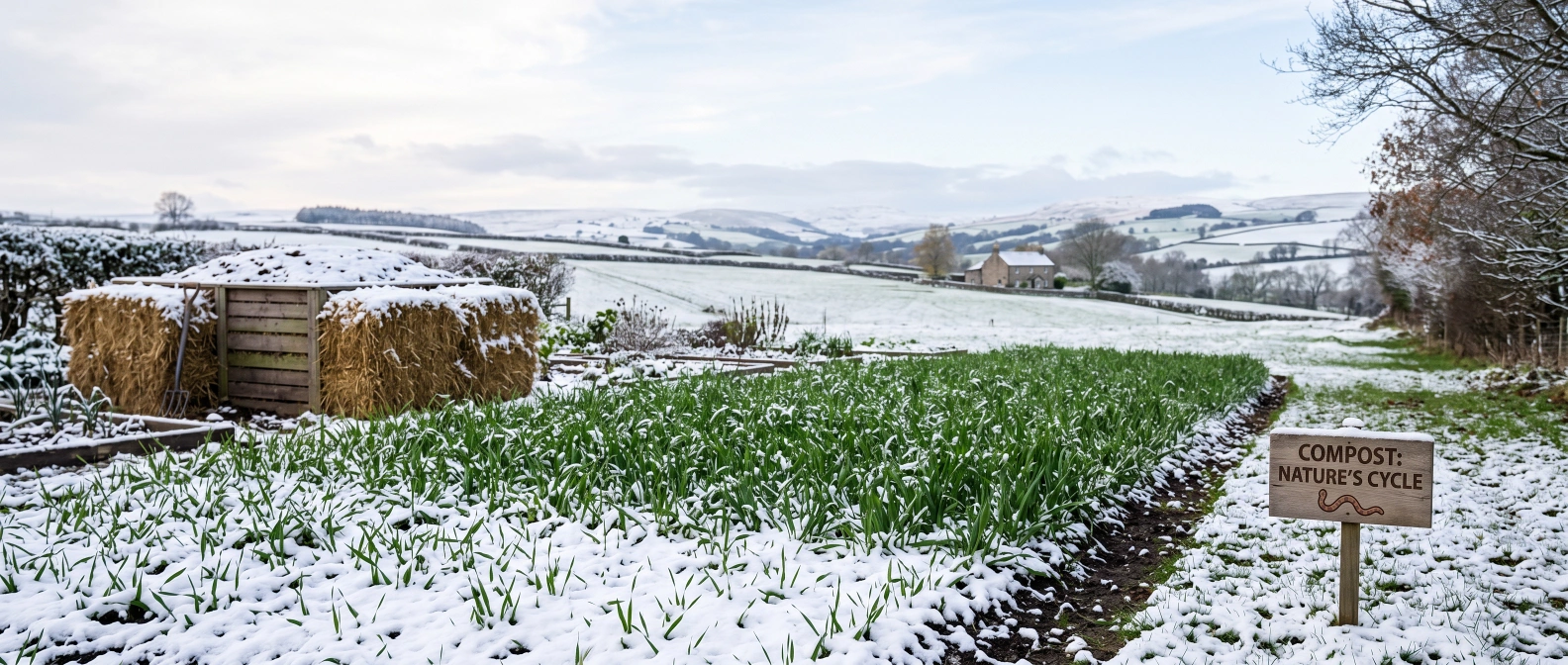
Green manures fix nitrogen via bacteria living in legume root nodules and, whether legume or not, build organic matter and soil structure through their root systems as they grow. Once the crop has done its job, it's cut and either dug into the soil or left on the surface as a mulch to break down, releasing the nutrients and organic matter it accumulated back into the bed. This is fertility built in place, using sunlight and the plant's own growth rather than material hauled in and composted separately (see Chapter 4).
Genuinely Cold-Hardy, Fast-Maturing Options
- Fall rye (winter rye) -- can be sown late in the season, after most food crops are finished, and will overwinter under snow cover, resuming growth in spring before being cut. This extends the useful growing window into a period food crops simply can't use.
- Field peas and other cold-tolerant legumes -- mature quickly and fix nitrogen effectively, making them a strong choice within the short window of an active growing season.
- Buckwheat -- a fast-growing summer option that can fit into a short gap between plantings, useful for quickly covering and building a bed mid-season. It's frost-tender, though, and won't survive winter itself, so it only suits a summer gap, not an overwintering role.
The Strategic Value of an Overwintering Green Manure
A crop like fall rye that can be sown right at the end of the food-growing season and left to overwinter is genuinely one of the most valuable techniques available in this climate. It puts ground and time to productive use that would otherwise sit bare and idle through a season too short to fit in a second food crop, and it protects and builds the soil through the exact months a bed here would otherwise be doing nothing at all. Pair this timing against the crop calendar in Chapter 17 so the green manure slots in naturally rather than competing with food crops for the same window.
Chop-and-Drop vs. Incorporating
The "chop and drop" method, cutting the green manure and leaving it lying as a surface mulch, is one option and works well enough in a milder climate. Here, incorporating it, digging it into the soil in spring, may be more practical, since digging it in also helps warm and dry out cold, wet spring soil faster than a mulch layer sitting on top would. Given how short the window is to get spring plantings started, that faster warm-up can be worth more than the mulch layer's other benefits.
Frequently Asked Questions
What does a green manure actually do for the soil?
It builds fertility by growing rather than by decomposing separately. Legume green manures fix nitrogen through bacteria living in their root nodules, while most green manures also build organic matter and improve soil structure through their root systems as they grow. The crop is then cut and either dug into the soil or left as a surface mulch to break down and release those nutrients.
Which green manures actually work in a cool or boreal climate?
Genuinely cold-hardy, fast-maturing species. Fall rye, also called winter rye, can be sown late in the season and will overwinter under snow, resuming growth in spring before being cut. Field peas and other cold-tolerant legumes mature quickly and fix nitrogen well. Buckwheat is a fast-growing summer option for a short gap between plantings, though it's frost-tender and won't survive winter itself.
Is it worth sowing a green manure at the end of the growing season here?
Yes, and it's one of the most strategically valuable things a green manure can do in this climate. A crop like fall rye can be sown right at the end of the food-growing season and left to overwinter, productively using ground and time that would otherwise sit bare and idle through a season too short for a second food crop.