
A long, mostly warm growing year gives a wide window for liquid feeding in this climate, plants are rarely dormant for long. But water itself, not warmth, is the resource that swings here, so making and using compost tea well means working with this zone's episodic rainfall rather than assuming water is always freely on tap.
The Basic Compost Tea Method
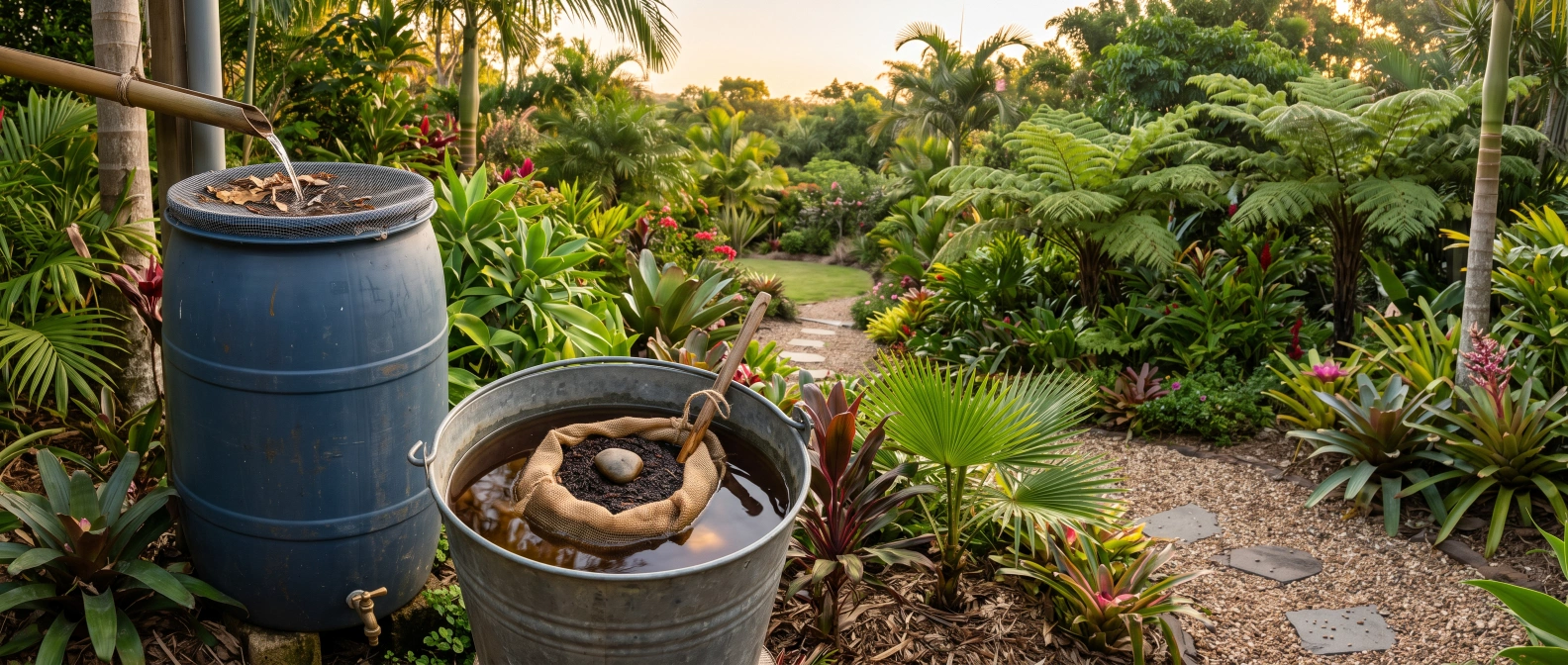
Steep finished compost in water, ideally aerated or stirred periodically, for a day or two, then dilute before applying. A cloth sack or similar holding the compost makes it easy to lift out and reuse the solids on a bed afterward.
Make the tea using stored or captured rainwater where possible, built up during a wet stretch, rather than assuming water is always freely available the way it might be in a consistently wet climate. This is the same water-availability picture covered in Chapter 11, and it applies just as much to making liquid feeds as it does to watering a heap.
Urine: The Simplest Always-Available Feed
Diluted 1:10 with water, urine is the simplest liquid feed available, and unlike compost tea it doesn't depend on having finished compost or stored rainwater on hand. It's a reliable nitrogen source to fall back on between compost batches or during a dry stretch when other liquid feeds are harder to make.
Comfrey or Fast-Growing Legume Tea
Made from the same fast-growing legumes and other plants covered as activators in Chapter 8, steeping a mass of chopped leaves in water for a couple of weeks produces a strong, nutrient-dense tea. It has a stronger smell than compost tea and should be diluted well before applying.
Application Timing
Apply in the morning or evening to reduce evaporation loss during sustained heat, never in the full heat of the day. Time it to land during or just after a wet stretch, when the ground can actually absorb and hold onto the benefit, rather than during a dry spell when a liquid feed applied to parched ground may just evaporate quickly and do little good.
Frequently Asked Questions
How do I make a basic compost tea?
Steep finished compost in water, ideally in a cloth sack or similar so it's easy to lift out, for a day or two, stirring or aerating it periodically. Dilute the result before applying it to plants, a strong, undiluted tea can do more harm than good. The long, mostly warm growing year here gives a wide window for using it, whenever plants are actively growing.
What water should I actually use to make compost tea here?
Stored or captured rainwater where possible, made up during a wet stretch rather than assumed to be freely available at any moment. Water itself is the more variable resource in this climate, rain arrives episodically rather than constantly, so treating it the same way a consistently wet climate might, as always on tap, isn't a safe assumption here.
When is the best time of day to apply a liquid feed?
Morning or evening, to reduce evaporation loss during sustained heat. It also helps to apply during or just after a wet stretch, when the ground can actually absorb and retain the benefit, rather than during a dry spell when a liquid feed may simply evaporate quickly and do little good.