
Knowing your compost is ready is the same anywhere. What to do with it once it is ready is where this climate asks for its own approach, because both the ground and the sky here swing between extremes, and finished compost sitting exposed on a bed is vulnerable to either one.
Knowing When It's Ready
Finished compost is dark, crumbly, and smells like earth, not sour, not ammonia-sharp, just earthy. The materials that went in, whether citrus peel, palm fronds, kitchen scraps or garden waste, should no longer be recognisable as individual pieces. These signs hold true in every climate this guide covers, subtropical conditions don't change what "done" looks like, only how quickly a heap gets there.
Apply It, Then Cover It Promptly
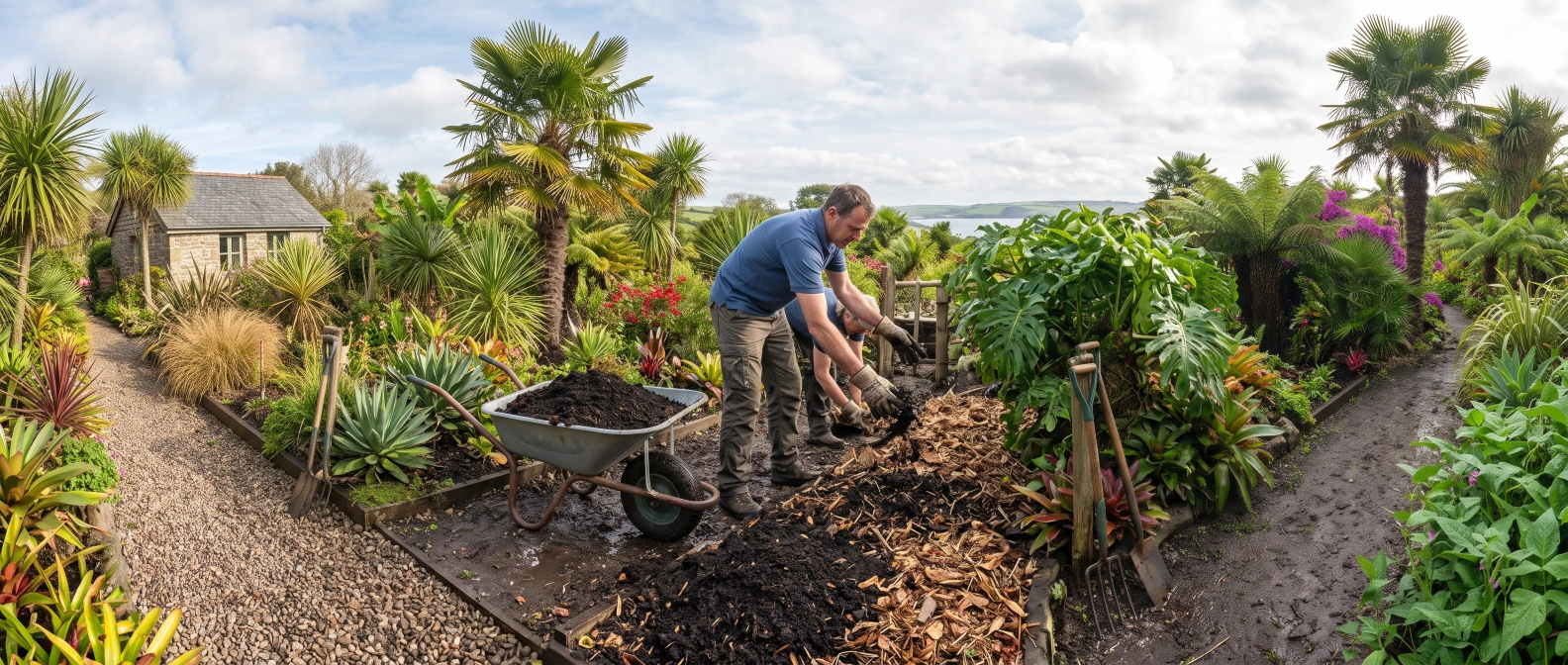
Once compost goes onto a bed, get a mulch layer over it promptly. Exposed, unprotected compost is genuinely vulnerable to both of this climate's extremes: a heavy downpour can wash it out or splash it away before it settles in, and a dry stretch can dry it out on the surface before roots get the benefit. The bridging and protection habits from Chapter 11 apply just as much to compost already on the bed as they do to a heap still working.
Where possible, time major applications to coincide with the start of a wetter stretch rather than the middle of a dry one. The coming rain helps work the compost into the soil, and the growth that follows can make quick use of the nutrients while they're freshly available.
Smaller, More Frequent Applications
Because decomposition runs fast here, a working rhythm of smaller, more frequent applications suits this climate well, similar in spirit to a tropical approach, rather than stockpiling one large batch and applying it all at once. Compost becomes available in a fairly steady trickle through most of the year, so using it as it's ready keeps both the soil and the compost system itself in a healthy, ongoing cycle. See Chapter 17 for how this fits into a full planting calendar.
Sieving for Seed Mix vs. Coarser Mulch
Sieve finished compost through a coarse mesh when you need a fine, even mix for starting seeds or filling small containers. Whatever doesn't pass through the sieve, twiggy bits and larger fragments that haven't fully broken down, still has a use: spread it as a coarser protective mulch layer on top of beds rather than wasting it, where it continues to break down slowly while it protects the soil beneath.
Frequently Asked Questions
How do I know my compost is actually ready to use?
The same universal signs apply in any climate: it should be dark, crumbly, and smell like earth rather than anything sour or rotten, and the original materials that went in should no longer be recognisable as individual scraps, leaves or twigs. If you can still pick out identifiable pieces, give it more time.
Why should I cover fresh compost with mulch right after applying it?
Because exposed, unprotected compost is vulnerable in both directions in this climate, it can be washed out by the next heavy downpour or dried out in the next dry stretch. A mulch cap applied promptly protects the compost from both, letting it actually stay in place and do its job rather than being lost to whatever the weather does next.
Should I stockpile one big batch of compost or apply smaller amounts more often?
Smaller, more frequent applications tend to suit this climate well. Because decomposition runs fast here, finished compost becomes available in a fairly steady rhythm rather than all at once, so using it as it becomes ready, similar in spirit to a tropical climate's approach, generally works better than holding everything back for one large seasonal application.