
A subtropical compost system has a genuinely dual priority that most single-extreme climates don't face. It needs to drain well enough to survive a sudden, heavy downpour without waterlogging, and it needs to retain enough moisture to survive the dry stretch that follows without stalling. Neither problem can be solved by ignoring the other, and everything in this chapter is built around holding both at once.
Choosing the Site
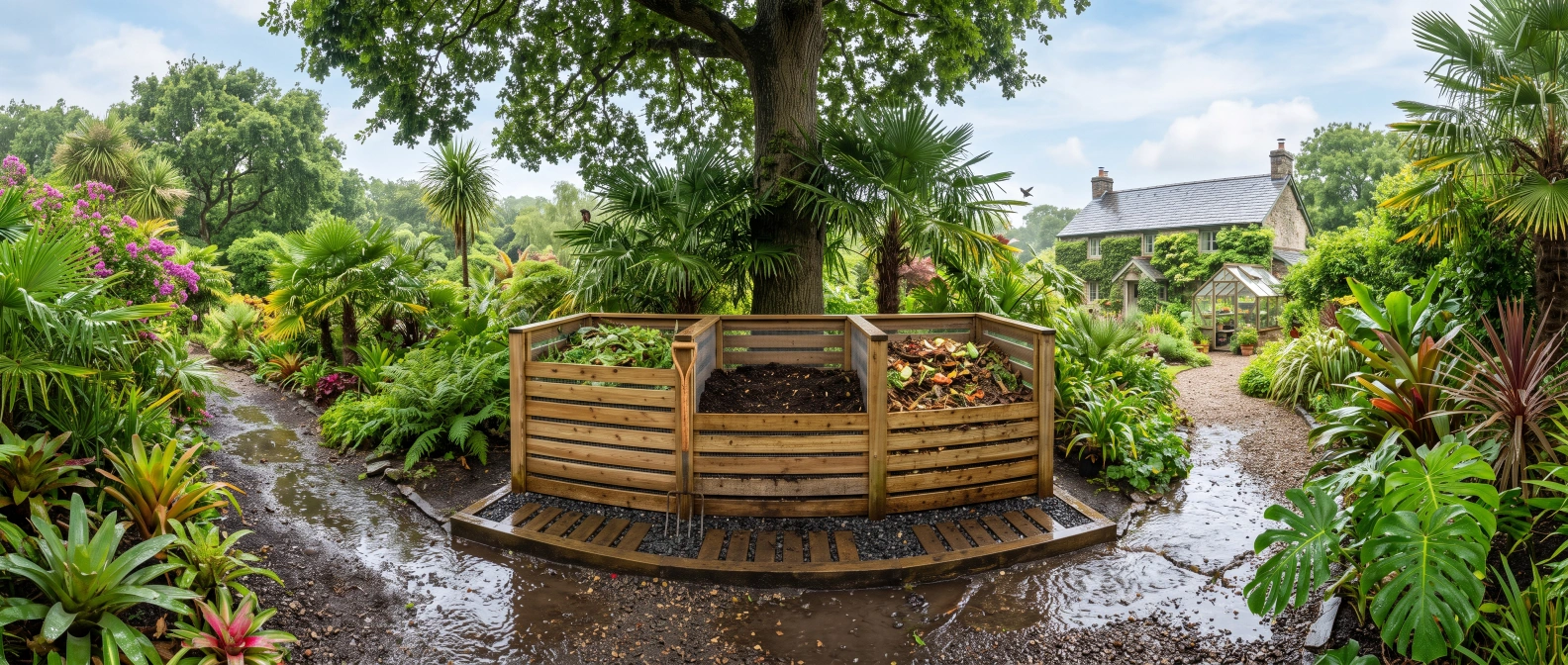
Good drainage, but not a bone-dry, fully exposed site
Avoid low spots that visibly pool after a heavy, tropical-storm-scale downpour, standing water around the base of a heap is one of the fastest ways to push it anaerobic. But swing too far the other way and a site that's raised, fully exposed and free-draining in every direction will also shed the moisture a heap needs during the dry stretches between rains. The right site drains cleanly without being parched.
Partial shade, not full sun or deep permanent shade
Partial shade, dappled light under a tree canopy or the north side of a structure in the northern hemisphere (south side below the equator), slows how fast a heap dries out in sustained heat between rains. It doesn't need Tropical's full rain-shedding roof, since rain here isn't constant, but it does need enough cover that direct midday sun isn't drawing moisture out of an exposed heap all day, every day, through a dry spell (see Chapter 11).
Construction: Breathable, Not Fully Open
Sides should be breathable rather than fully open or fully sealed, slatted timber or wire mesh that lets air move through works well. This is a lighter version of Tropical's roofed-and-ventilated approach, appropriate because downpours here are real but episodic rather than constant. A partial cover over the top, even a simple sloped board or offcut of corrugate, takes the edge off a heavy downpour without shutting the heap in and trapping humidity the rest of the time.
A fully open heap with no cover at all risks being pushed from properly moist to waterlogged in a single downpour. A fully sealed, airtight bin risks trapping too much humidity and stalling airflow between rain events. Breathable-but-covered sits in the middle, and it's the right compromise for this climate specifically.
The Base: A Simple Drainage Layer
A simple raised base or a coarse drainage layer, broken brick, gravel or coarse twigs a few inches deep under the heap, prevents pooling after a heavy rain event by giving excess water somewhere to go rather than sitting under the pile. This doesn't need to be as elevated as a true tropical system on stilts or a raised platform, since rain here isn't relentless, but leaving a heap sitting directly on flat, compacted ground is asking for trouble the first time a real downpour arrives.
The two-chamber design covered in the next chapter builds this same drainage and moisture consideration into both bays from the start, since each one spends part of the year as the actively fed chamber and needs to handle both extremes equally well (see Chapter 3).
Frequently Asked Questions
Why does a subtropical compost system need to handle both drainage and moisture retention?
Because this climate genuinely swings both ways rather than sitting at one extreme. A heavy, tropical-storm-scale downpour can waterlog a poorly drained heap in a single event, while the dry stretch that follows, sometimes weeks long, can dry the same heap out just as thoroughly. A system built only to shed water fails in the dry stretch, and a system built only to hold moisture fails in the downpour, so both have to be designed for together.
Does a subtropical system need a full roof like a tropical one?
Not usually, no. A true tropical climate needs a genuine rain-shedding roof because it rains constantly. Here, rain is episodic rather than constant, so a lighter, breathable structure with partial cover is usually enough to take the edge off a heavy downpour without shutting out the airflow a heap needs to avoid staying too wet during the humid stretches in between.
Should a compost site be in full sun or full shade in this climate?
Neither extreme works well. Full sun and full exposure dry a heap out fast during the gaps between rain events, while deep, permanent shade can leave a heap too damp and slow to warm up. Partial shade is the practical middle ground, it slows moisture loss during dry stretches without needing the full rain-shedding roof a true tropical climate requires, since rain here isn't constant.