
A subtropical climate -- the warm, humid regions just outside the true tropics, from Florida and the Gulf Coast to southern China, southern Brazil, coastal Queensland and South Africa's eastern coast -- runs hot for most of the year, driving decomposition at close to a tropical pace, but with a genuinely different rainfall pattern to a true tropical climate. Understanding this properly, not just as a list of tips but as the actual rhythm behind it, is the foundation everything else in this guide builds on.
The Challenges
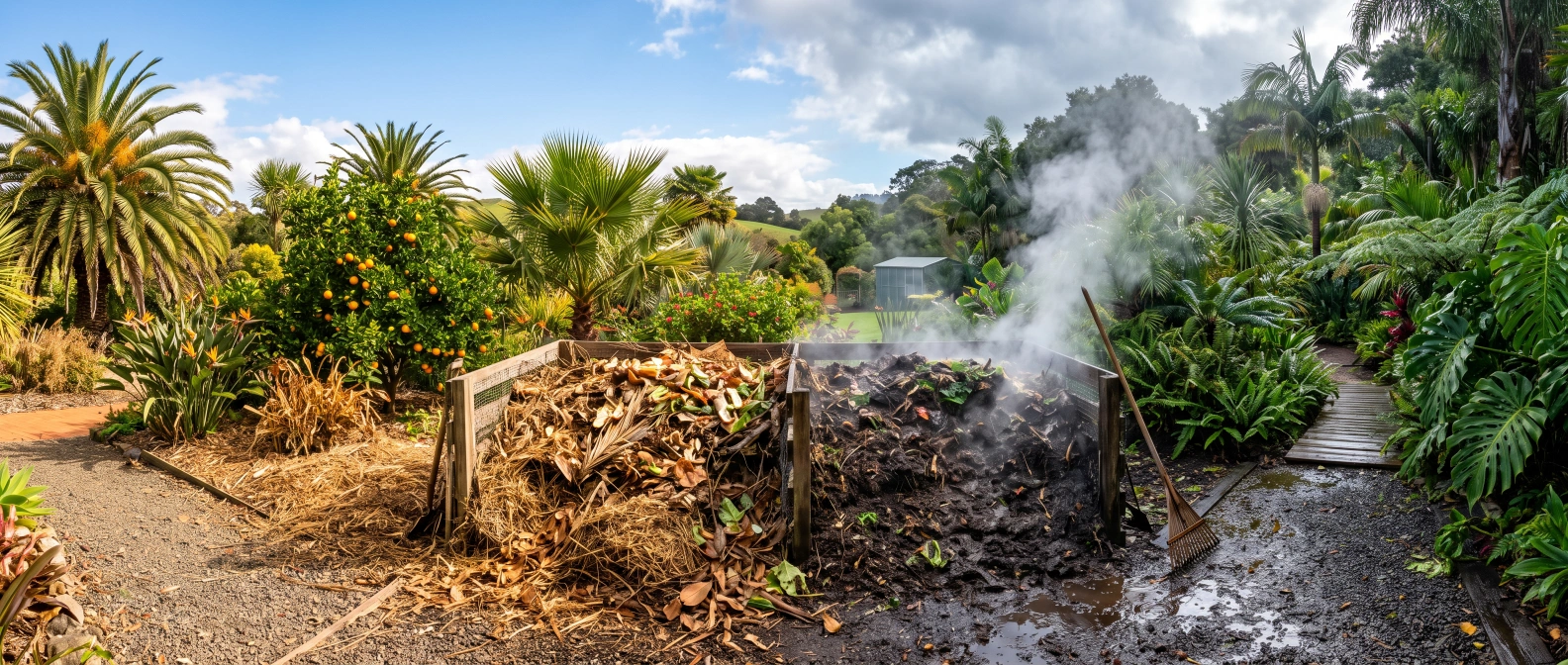
Unreliable, episodic rainfall swings a heap both ways
This is the central challenge, and it's genuinely different from a true tropical climate's constant wetness. Rain here arrives episodically, sometimes as a heavy downpour or tropical storm capable of waterlogging an unprotected heap in a single event, sometimes not for a real stretch of weeks in between. A heap built to handle only one of those extremes fails at the other, which is why this guide treats both drainage and moisture retention as equally important rather than picking one (see Chapter 11).
Sustained heat means lost moisture doesn't come back on its own
Warm conditions for most of the year drive fast decomposition, which is genuinely useful, but the same heat also means a heap loses moisture steadily between rain events. General atmospheric humidity doesn't replace what's lost from inside a heap the way direct rain or deliberate watering does, so a heap can sit in genuinely humid air and still dry out and stall internally if it goes too long without attention.
Sudden heavy downpours can undo careful moisture management fast
The same climate that dries a heap out between rains can deliver a genuinely tropical-storm-scale downpour with little warning, especially during hurricane or monsoon-influenced periods depending on region. A heap without adequate drainage can be pushed from properly moist to waterlogged in a single event, forcing out the air pockets aerobic decomposition depends on (see Chapter 2).
Often sandy, free-draining coastal soils hold onto little
Much of this climate zone sits on sandy, free-draining coastal plain soils that hold water and nutrients poorly on their own, which is exactly why Chapter 19 treats consistent composting as a genuine, cumulative improvement to a soil's underlying capacity, not just a one-off boost.
The Advantages
- Fast decomposition and reasonably fast pathogen die-off once a heap is properly built and kept moist, close to tropical speed for much of the year.
- Near-constant plant growth keeps nitrogen-rich green material generally available rather than confined to a short season.
- A genuinely milder winter than a temperate climate, meaning composting can continue in some form through most of the year rather than facing a hard seasonal shutdown.
- Abundant citrus and palm cultivation across much of this zone provides a characteristic, genuinely reliable local input (see Chapter 6).
Frequently Asked Questions
How is a subtropical climate different from a true tropical one for composting?
The rainfall pattern is the real difference. A true tropical climate stays hot and genuinely wet almost constantly, so a heap's main risk is too much moisture. A subtropical climate is hot for most of the year too, but rain arrives episodically rather than constantly, real downpours followed by real dry stretches, so a heap here has to survive both extremes rather than being built around managing only one.
Why does a heap dry out here if the climate is humid overall?
Humidity in the air isn't the same as moisture in a heap. Between rain events, sustained heat draws moisture out of exposed material steadily, and general atmospheric humidity doesn't replace what's lost from inside a heap the way direct rain or deliberate watering does. A heap can sit in genuinely humid air and still dry out internally if it goes too long without rain or attention.
Does a subtropical climate actually have any advantages for composting?
Genuinely, yes, and they matter as much as the challenges. Warm conditions for most of the year drive fast decomposition and reasonably fast pathogen die-off once a heap is properly built, near-constant plant growth keeps nitrogen-rich green material generally available, and citrus and palm cultivation across much of this zone produce a genuinely abundant, characteristic local input most other climates don't have in the same quantity.