
Composting worms, typically red wigglers or brandling worms (Eisenia fetida), generally do well in a subtropical climate for most of the year. It's an easier proposition than in most other zones this guide covers, but two genuine risk periods still deserve real management: peak summer heat, and, on this zone's cooler margins, the occasional light winter frost. Handled well, an outdoor worm bin here can run productively nearly all year round.
Most of the Year: Standard Moisture Management
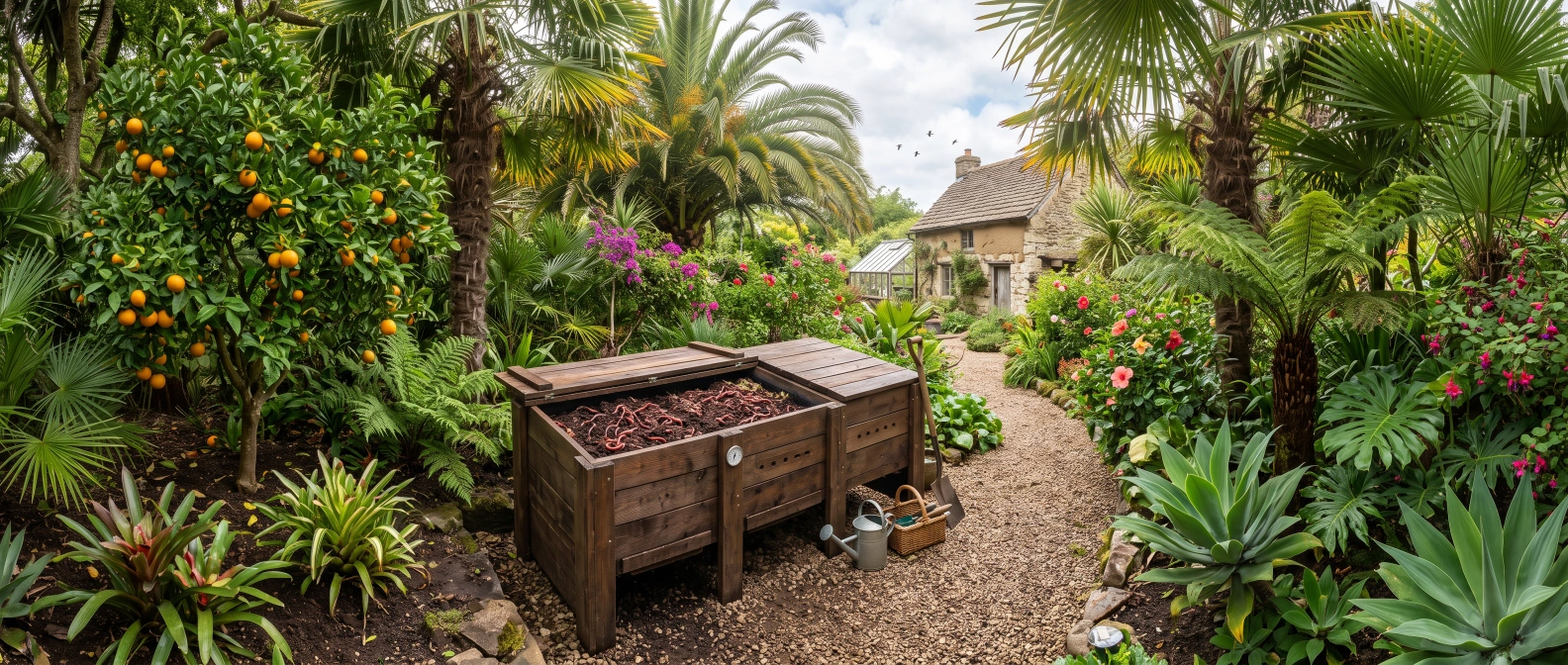
Through most of the year, an outdoor worm bin in this climate does fine with the same standard moisture management used everywhere else in this guide. Bedding should feel like a wrung-out sponge, damp but not dripping, and the squeeze test remains the simplest check: a small handful should release only a drop or two of water when squeezed, not a stream, and shouldn't crumble dry either.
Mild winters here mean there's rarely a hard shutdown the way a temperate or boreal climate faces, so a worm population can generally keep processing scraps at a steady pace across most of the calendar without the dramatic slowdown other zones deal with.
Peak Summer Heat: Shade and More Frequent Checks
During the hottest stretch of summer, shade becomes genuinely important rather than a nice-to-have. Direct sun on a bin through the middle of the day can push internal temperatures high enough to stress or kill worms, so siting a bin under a tree, on a shaded porch, or under a simple shade cloth matters here in a way it doesn't for cooler months.
Heat also accelerates drying, so bedding needs checking more often through summer than it does the rest of the year, the same underlying concern covered for a full-size heap in Chapter 11, just playing out faster and in miniature inside a worm bin, which holds far less material to buffer against moisture loss.
Occasional Light Frost on Cooler Margins
Unlike the true tropical core, some cooler-margin locations within this zone do get the occasional light frost on a handful of nights each winter. Where that's a genuine risk locally, a bin may need brief, simple protection for those few nights: moving it to a sheltered spot close to a wall, tucking it under cover, or adding an extra layer of insulating bedding or cardboard on top. This is a far smaller ask than the full seasonal relocation a boreal or alpine climate's worm-keepers face, and timing it is really just a matter of watching the forecast during the coolest stretch of the year (see Chapter 13).
Frequently Asked Questions
Is a subtropical climate genuinely easy for vermicomposting?
Yes, honestly, this is one of the more forgiving climates in this guide for it. Composting worms like Eisenia fetida do well outdoors for most of the year here with only standard moisture management, the squeeze test and bedding kept like a wrung-out sponge. There are only two genuine risk windows to manage: peak summer heat and, on this zone's cooler margins, the occasional light frost.
How does summer heat affect an outdoor worm bin here?
Heat accelerates drying, so bedding needs checking more often during the hottest stretch of summer and shade becomes genuinely important rather than optional. This is the same underlying concern covered for a full-size heap, just playing out in miniature inside a worm bin, where there's less material to buffer moisture loss.
Do worms need frost protection in a subtropical climate?
Only in specific locations. The cooler margins of this zone, unlike the true tropical core, can get occasional light frost, and on those few nights a year a bin may need brief, simple protection such as moving it to a sheltered spot or adding an insulating cover. It's a far smaller ask than the full seasonal relocation a boreal or alpine climate demands.