
This climate's seasonal swing is genuinely gentler than almost any other zone in this guide: a warmer, generally wetter summer, sometimes including a real hurricane or tropical-storm season depending on region, against a milder, generally drier winter. Neither extreme is as severe as elsewhere, which changes what "seasonal management" actually means here.
The Warm Season: Fast Decomposition, Drainage Matters Most
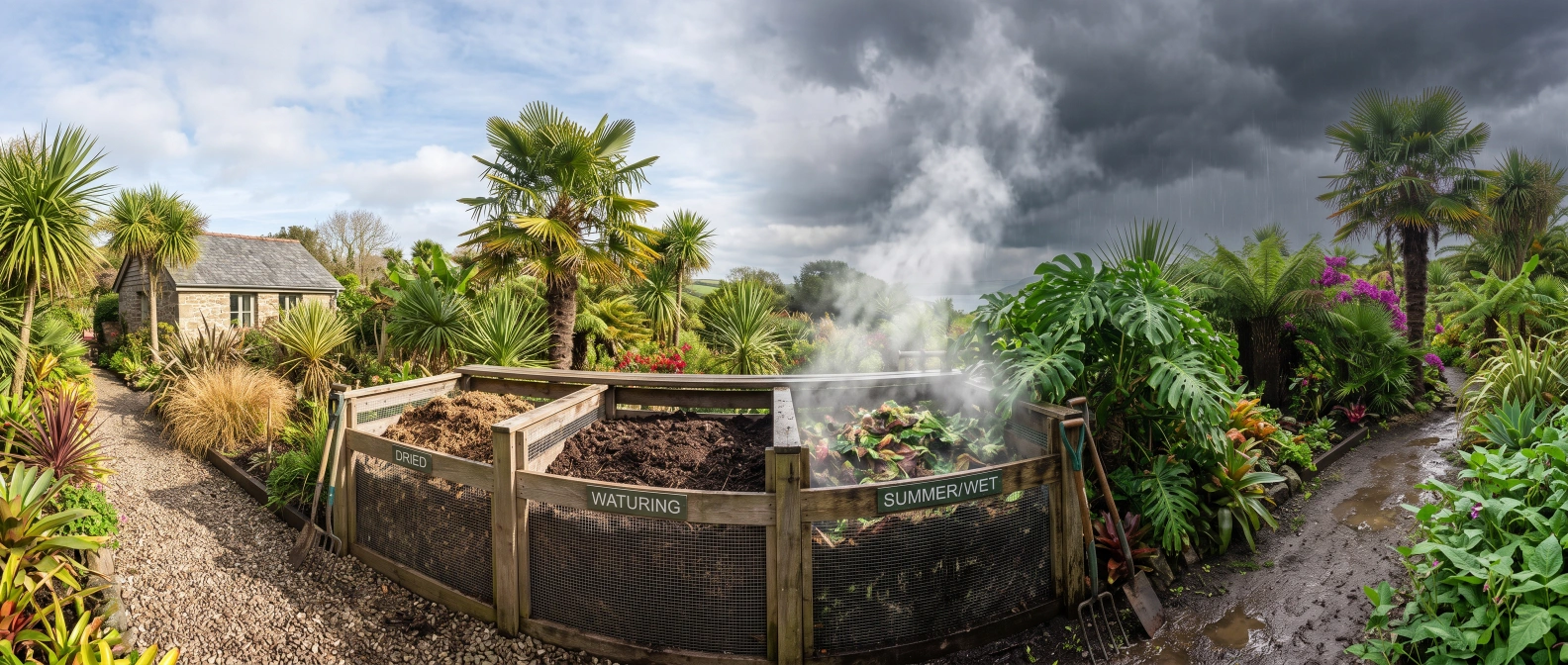
The warmer part of the year is generally also the wetter part here, and decomposition runs fast under those conditions. This is when a two-chamber system earns its keep, with the active chamber doing most of its work through this stretch while the second chamber matures further material.
It's also when sudden heavy downpours are most likely, the same episodic rainfall covered in Chapter 1 and Chapter 2, so drainage matters more now than at any other point in the year. A heap that drains well can absorb a storm that would waterlog a poorly sited one.
The Cooler Season: Milder Than Most, Drier Overall
Winter here is milder than almost any other zone's "cool" season in this guide, so decomposition slows somewhat but rarely stops outright the way it does further north or in a boreal climate. This tends to be the drier part of the year, though, which means bridging dry spells between rain events, the skill covered in full in Chapter 11, becomes the dominant day-to-day task through this stretch rather than an occasional concern.
Continuous Tracking, Not Hard Switches
Because neither season here is severe, seasonal management in this zone is less about flipping between two dramatically different routines and more about continuously tracking moisture and adjusting as conditions shift, really Chapter 11's skill applied throughout the year rather than confined to a single risky window. That same flexibility carries over into planning what to grow and when, covered fully in Chapter 17.
A Note on Regional Variability
The exact timing and intensity of the wetter and drier halves of the year varies significantly across this zone, from the southeastern US to southern China, southern Brazil, coastal Queensland and South Africa's eastern coast. This chapter describes the general pattern rather than specific months, and it's worth paying attention to the actual rhythm of rainfall in a specific location rather than assuming it matches any single calendar exactly.
Frequently Asked Questions
How different are the seasons in a subtropical climate for composting?
Genuinely gentler than almost any other zone in this guide. Summer is warmer and generally wetter, sometimes including a real hurricane or tropical-storm season depending on region, while winter is milder and generally drier, but neither extreme is as severe as the true seasonal swings other climates face. Management here is more about continuous tracking than dramatic seasonal changeovers.
What matters most during the warm season here?
Decomposition runs fast, so this is when a two-chamber system's active chamber does most of its work. It's also when sudden heavy downpours are most likely, so drainage matters more now than at any other point in the year, since a heap that's properly draining can handle a storm that would waterlog a poorly built one.
What matters most during the cooler season here?
Decomposition slows somewhat but rarely stops outright, since winter here is milder than almost any other zone's cool season in this guide. This tends to be the drier part of the year, so bridging dry spells between rain events becomes the dominant day-to-day task rather than a occasional concern.