
Every other closing chapter in this guide has told a story of rebuilding fertility from a poor starting point. This one is genuinely different: much of this zone sits on some of the most naturally fertile soil on earth, and the long-term task here is protecting it, not rescuing it.
A Genuinely Different Starting Point
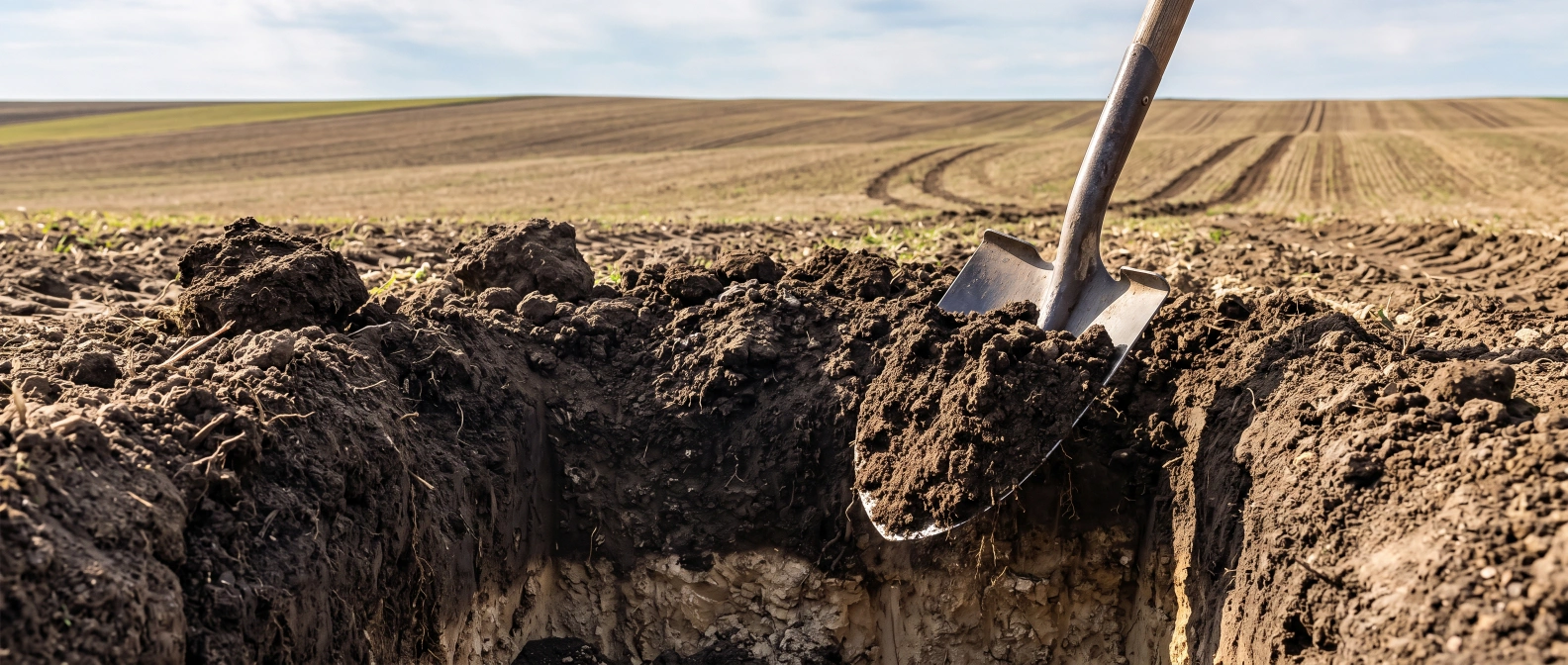
Unlike an arid, tropical, boreal or Mediterranean climate, where native soils are often naturally poor and long-term composting is fundamentally a rebuilding project, much of this zone sits on deep, naturally excellent soil: prairie mollisols across the US Midwest, chernozems across Ukraine and similar continental grasslands, genuinely among the most fertile soils on earth. These soils built up over millennia under natural grassland vegetation, long before cultivation began.
That changes the whole framing of this chapter. The long-term composting story here is about protecting and maintaining that fertility under continuous cultivation, and buffering it against the stress of this climate's genuine temperature extremes, rather than rebuilding something depleted from a low baseline.
Diversity of Inputs Still Matters Here
Protecting good soil is still active work, not passive neglect. Crop stubble (see Chapter 6), biochar (see Chapter 9), autumn leafmould (see Chapter 11), and chop-and-drop or winter-kill green manures (see Chapter 12) all feed into soil biology and structure over time, alongside humanure and ordinary kitchen scraps. A genuinely wide range of inputs keeps that fertility active rather than simply assuming it will look after itself.
Not Infinite, and Not a Reason to Skip Composting
A brief honest note: even naturally excellent soil isn't infinite or self-sustaining under continuous cultivation without inputs returned to it. "The soil is already good" is not a reason to skip composting, it's a reason the effort pays off particularly well, since every bit of compost is protecting something valuable rather than starting from nothing.
An Inheritance, Passed Forward
This climate's soil is, in a sense, an inheritance, built up over a very long time before any single grower's stewardship of it began. Consistent composting across the genuine four-season cycle covered throughout this guide, spring thaw through summer growth, autumn harvest, and hard winter dormancy, is what keeps passing that inheritance forward in at least as good a condition as it was received, against the depletion pressure that continuous cultivation always applies.
Frequently Asked Questions
How is the long-term soil story different here compared to other climates in this guide?
Fundamentally different. In climates like arid, tropical, boreal or Mediterranean zones, native soils are often naturally poor, and the whole point of long-term composting is rebuilding fertility from a low baseline. Much of this zone instead sits on deep, naturally excellent soil, prairie mollisols across the US Midwest, chernozems across Ukraine and similar continental grasslands, genuinely among the most fertile soils on earth, built up over millennia under natural grassland vegetation. Here the story is protecting and maintaining that fertility under continuous cultivation, not rebuilding something depleted.
If the soil is already naturally excellent, why keep composting at all?
Because even naturally excellent soil isn't infinite or self-sustaining under continuous cultivation without inputs returned to it. Diversity of inputs, crop stubble, autumn leafmould, chop-and-drop or winter-kill green manures, biochar, humanure and kitchen scraps, all feed soil biology and structure over time. The soil already being good isn't a reason to skip composting, it's a reason the effort pays off particularly well, since it's protecting something valuable rather than starting from nothing.
What's the guiding principle behind long-term soil care in this climate?
Stewardship and continuity. This climate's soil is, in a sense, an inheritance built up over a very long time before any single grower's stewardship of it began. Consistent composting across the genuine four-season cycle this guide has covered is what keeps passing that inheritance forward in at least as good a condition as it was received, through the depletion pressure continuous cultivation inevitably applies.