
Biochar is charcoal produced specifically for incorporation into soil, made by pyrolysis: burning woody or fibrous material with restricted oxygen, then quenching it with water to stop the burn at the charcoal stage rather than letting it turn to ash. The result is stable, porous carbon that persists in soil for centuries. In this climate, the case for it is genuinely different from most other zones in this guide, less about fixing a problem and more about protecting something already good.
Why Biochar Matters Here -- Protecting, Not Correcting
This zone's native soils are often naturally excellent. Deep prairie mollisols across much of the US Midwest, Ukraine's chernozems, and similar continental grassland-derived soils rank among the most fertile on earth, formed over millennia under deep-rooted prairie grasses. That's a genuinely different starting point from the naturally acidic, nutrient-poor podzols of a boreal climate or the heavily leached soils of many tropical regions.
So biochar's role here is framed differently. It's less about correcting a poor starting point and more about protecting and maintaining that existing fertility under continuous cultivation, decades of ploughing, cropping and weather working against it, as covered further in Chapter 19. Its stable, porous structure improves water-holding capacity through summer heat and improves soil structure against the repeated freeze-thaw cycling this zone's hard winters bring.
- Water-holding capacity -- helps soil retain moisture through real summer heat rather than drying out fast.
- Structural resilience -- improves soil structure against repeated winter freeze-thaw cycling.
- Permanent addition -- doesn't break down like compost, so it's a lasting protective measure under continuous cultivation.
- Long-term fertility protection -- connects directly to the wider soil-health project in Chapter 19.
Making Biochar From Abundant Crop Residue
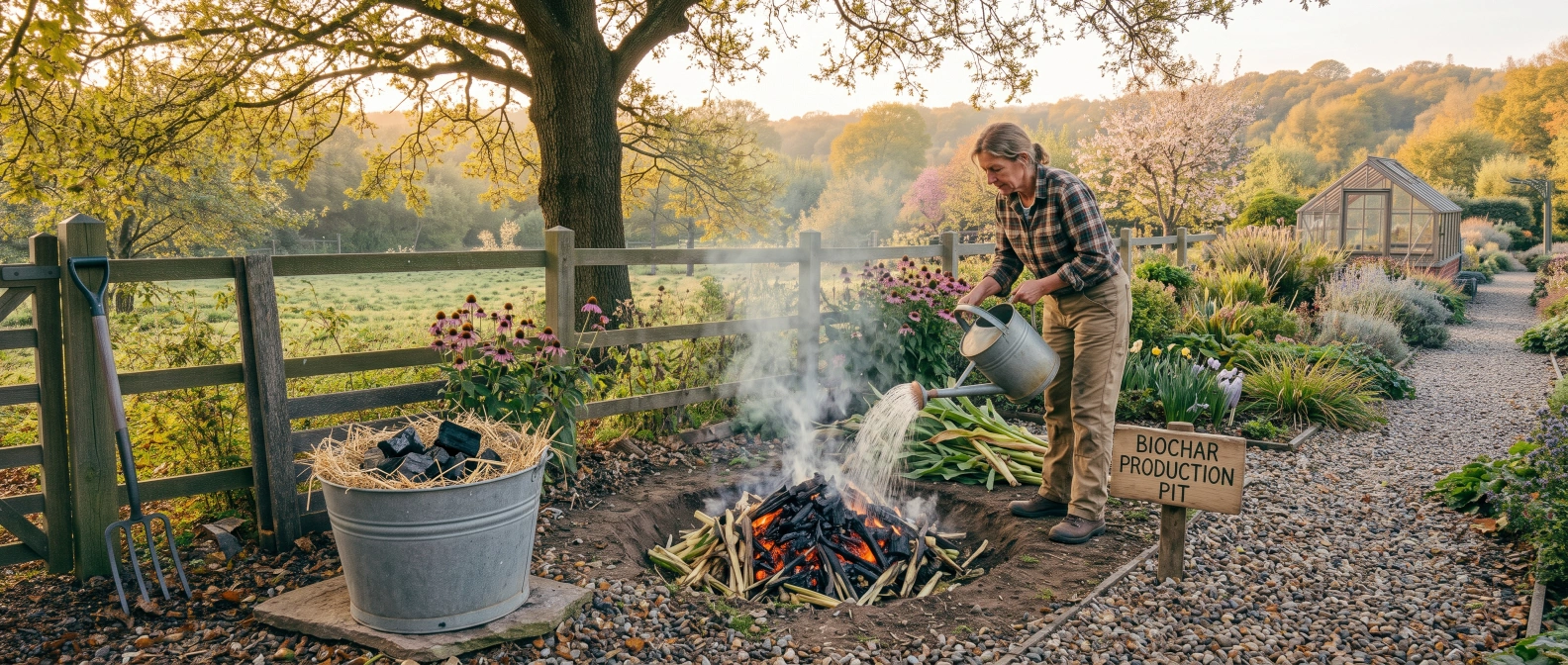
Source material is genuinely abundant in this climate, given the sheer volume of crop stubble and residue this zone produces every year (see Chapter 6). Tough material like corn stalks, which is slow to compost normally even when chopped, is often more practical to char than compost, turning what would otherwise be a slow-to-break-down burden into a fast, useful source of feedstock.
Dig a shallow trench or pit and build a fire with the woody or fibrous material, letting it burn down to glowing coals. Before the coals turn to grey ash, extinguish immediately by dousing thoroughly with water, quenching the burn at the charcoal stage. The result is a stable, porous black material, ready to be charged before use.
Charging Biochar Before Use
Raw biochar can actually rob soil of nutrients initially, its empty pore structure draws nutrients in to fill itself rather than releasing anything useful, so it should never be applied raw and unamended, even into soil that's already naturally fertile.
- Soak in compost tea -- steep biochar in finished compost tea for several days to weeks before use.
- Soak in diluted urine -- the 1:10 dilution covered in Chapter 8 works well for charging biochar as well as feeding plants directly.
- Mix into finished compost -- combine biochar with finished compost at roughly one part biochar to four parts compost, leave several weeks before applying to soil.
Frequently Asked Questions
If this zone's soil is already naturally excellent, why does biochar matter here at all?
Because the role it plays is different, not because it's unnecessary. Deep prairie mollisols across much of the US Midwest, Ukraine's chernozems, and similar continental grassland-derived soils are often among the most fertile on earth, so biochar here isn't about correcting a poor starting point the way it is in naturally acidic boreal podzols or heavily leached tropical soils. Instead it's about protecting and maintaining that existing fertility under continuous cultivation, and improving structure and water-holding capacity against this climate's real temperature extremes.
How does biochar help against this climate's summer heat and winter freeze-thaw cycling?
Its stable, porous structure improves soil's water-holding capacity, helping it retain moisture through real summer heat rather than drying out and stressing plant roots. The same porous structure also improves soil structure against the repeated freeze-thaw cycling this zone's hard winters put ground through, which can otherwise compact and degrade soil structure over years of continuous use.
Where does biochar feedstock come from in this climate?
It's genuinely abundant here, given the sheer volume of crop stubble and residue this zone produces every year. Tough material like corn stalks, which is slow to compost normally, is often more practical to char than compost, turning what would otherwise be a slow-to-break-down burden into a fast, useful source of biochar feedstock.