
Of every climate zone in this guide, this one is arguably the best fit of all for leafmould. The US Midwest and Northeast's classic autumn colour season, Central and Eastern Europe's beech and oak forests, and similar continental hardwood regions produce genuinely enormous volumes of fallen leaves every single autumn, a free, abundant resource on a scale a milder maritime climate's more scattered leaf drop simply doesn't match.
Why This Climate Suits Leafmould So Well
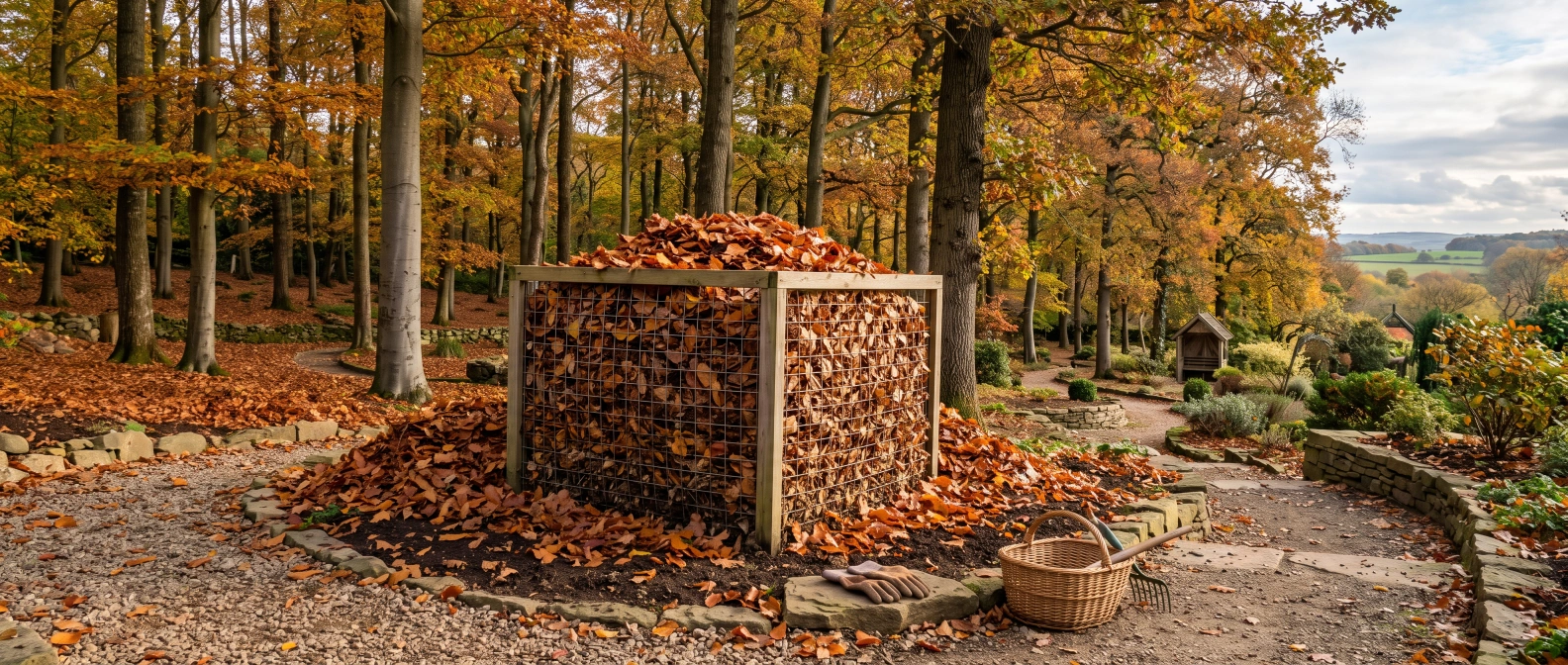
Leafmould is made by a slow, cool, fungal process rather than the hot bacterial process that drives an active compost heap, the same process that builds the rich duff layer on a forest floor. It needs almost no management, just a container, patience, and leaves, and this climate hands over the leaves in genuinely dramatic quantity each autumn (see Chapter 1).
Given how much leaf volume this climate genuinely produces every autumn, a household here can often make several years' worth of leafmould from a single season's leaf-fall. That's a real opportunity worth taking full advantage of rather than only lightly touching, filling every cage or bag available rather than stopping at one.
Making Leafmould
- Simple containment -- a wire mesh cage or a perforated bag both work well. Given the volume available here, several cages or a whole run of bags is often realistic in a single autumn.
- Most deciduous leaves work well and break down over one to two years depending on the leaf type.
- Oak and beech leaves -- genuinely common across this climate's hardwood forests, are tougher and slower to break down, but produce a particularly fine end product, well worth the extra patience they demand.
- Use with caution: black walnut -- per the input materials reference (Chapter 5), black walnut leaves contain juglone, an allelopathic compound that inhibits the growth of other plants. Black walnut is far more common across this climate than a maritime one, so avoid its leaves or use them very sparingly rather than piling them in with everything else.
- Keep moist, don't turn -- the fungal process needs steady dampness, not the aeration a hot heap needs; turning disrupts it by introducing bacteria and cooling the mass.
- After one to two years -- dark, crumbly leafmould ready for mulching, digging in, or, once well rotted, seed sowing and potting mixes.
When to Collect
Autumn is a genuinely major season in this climate's compost calendar (see Chapter 13), and leaf collection is a big part of why. Gather leaves as they fall rather than waiting for every last one to drop, filling cages or bags through the season rather than in one rushed pass, and get collection done before the ground genuinely freezes and the working season closes for winter.
Frequently Asked Questions
Why does leafmould fit a temperate continental climate so well?
Because of the sheer scale of autumn leaf-fall here. The US Midwest and Northeast's classic autumn colour season, Central and Eastern Europe's beech and oak forests, and similar continental hardwood regions produce enormous volumes of fallen leaves every single autumn, often more dramatically and in far greater volume than a milder maritime climate's more scattered leaf drop. Of every zone this guide covers, this is arguably the best fit of all for making leafmould.
Do oak and beech leaves work for leafmould here?
Yes, and they're genuinely relevant given how common both are across this climate's hardwood forests. Most deciduous leaves break down well into leafmould. Oak and beech leaves are tougher and take longer, but they produce a particularly fine end product, well worth the extra patience.
Are any leaves risky to use in this climate?
Black walnut is the one to watch, and it's a genuinely relevant caution here, since black walnut is far more common across much of this climate zone than in a maritime one. Its leaves contain juglone, an allelopathic compound that actively inhibits the growth of other plants, so they should be avoided or used only very sparingly in a leafmould batch, rather than piled in freely with everything else.