
This is the closest thing in the whole 8-zone guide to a classic, textbook four-season composting calendar. Spring, summer, autumn and winter are each genuinely distinct here, and roughly equal in weight across the year, rather than one extreme dominating the way it does in every other zone built so far. Working with that real rhythm, not against it, is the whole approach.
Spring: Thaw and Restart
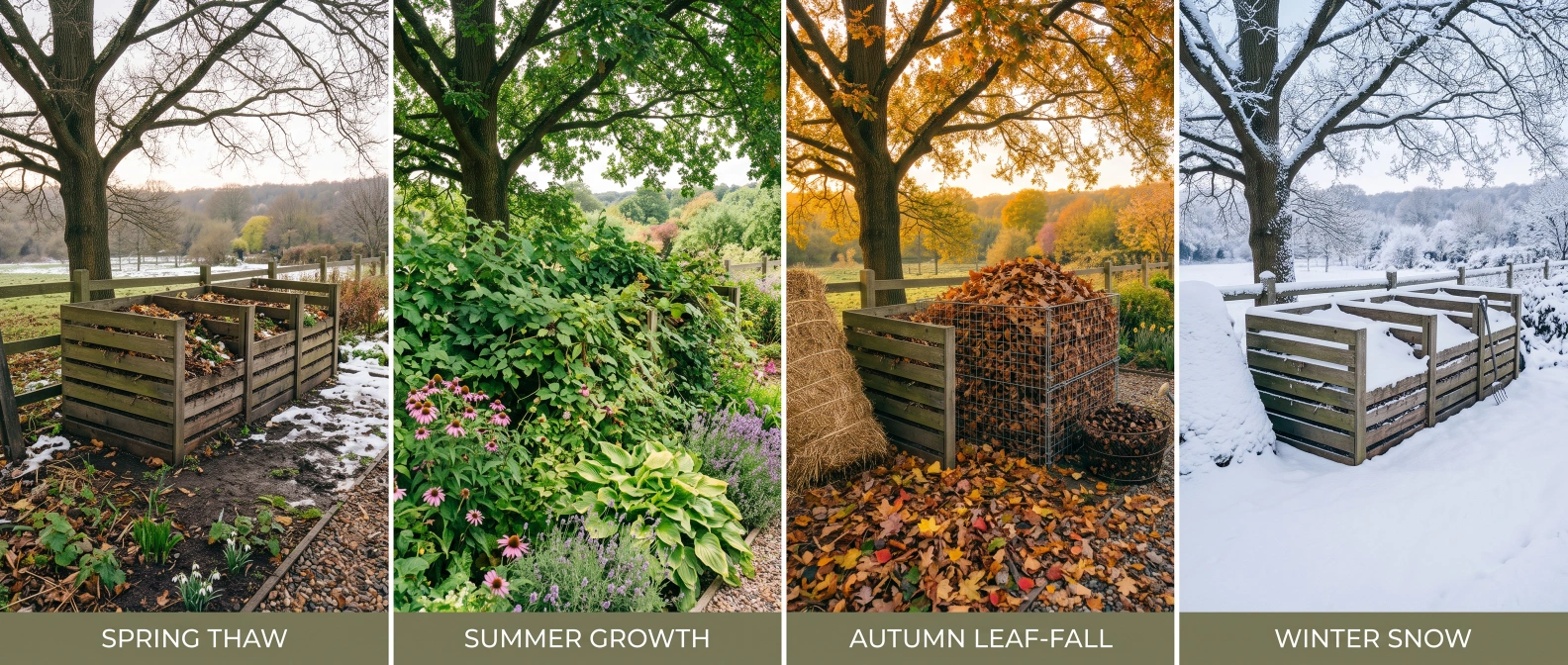
Spring means managing the thaw and restarting whichever chamber rested over winter (see Chapter 3). Check for meltwater pooling or saturating material that's still too cold to process properly, a genuine but usually brief bout of mud before full activity resumes. A dose of activator helps get things moving again after the dormant months (see Chapter 8).
Summer: The Main Productive Season
Summer is the main hot, productive stretch of the year, with plenty of fresh green material from a long growing season keeping a heap well fed. Watch for both failure modes this season brings, drying out fast in genuine heat between rain events, and sudden waterlogging from an intense summer thunderstorm (see Chapter 1). The two can arrive within the same week, so check moisture regularly rather than assuming one steady condition all summer.
Autumn: The Busiest Season
Autumn is a genuinely major season here, unlike most other zones in this guide. This is when the dramatic deciduous leaf-fall arrives, the single biggest free carbon input this climate offers (see Chapter 11), and when crop stubble and garden residue peaks right after harvest (see Chapter 6).
It's also the last real window to act before the ground freezes: a final activator push (see Chapter 8) and proper winterizing preparation both need to happen now, not once the freeze has already set in.
Winter: Genuine Dormancy
Winter brings genuine dormancy for a real stretch of months, not the brief pause a milder climate sees. The heap needs checking only occasionally rather than active management. The worm bin should already be safely relocated indoors by this point, not left to face the freeze outside (see Chapter 10). And the two-chamber system's resting chamber simply sits undisturbed through this stretch, waiting for spring.
Frequently Asked Questions
How is this climate's compost calendar different from other zones in this guide?
It's the closest thing in the whole guide to a classic, textbook four-season calendar. Most other zones are dominated by one extreme, a boreal climate's brief summer against a long winter, or a Mediterranean climate's dry summer against a wet winter, essentially two-season patterns either way. Here, spring, summer, autumn and winter are each genuinely distinct and roughly equal in the year, so the calendar has four real chapters rather than one extreme overshadowing the rest.
Why is autumn such a major season for composting here?
Because three things land at once. This is when the dramatic deciduous leaf-fall arrives, the single biggest free carbon input this climate offers. It's also when crop stubble and garden residue peaks after harvest. And it's the last real window for a final activator push and winterizing preparation before the ground genuinely freezes, making autumn arguably the busiest and most consequential season in the whole year here.
What should happen to the heap and worm bin over winter?
Genuine dormancy for a real stretch of months. The heap needs checking only occasionally rather than actively managed, the two-chamber system's resting chamber sits undisturbed through this period, and the worm bin should already be safely relocated indoors by the time hard freeze sets in, not left outside to face it.