
Composting worms such as red wigglers (Eisenia fetida) will die if they actually freeze, and this climate's genuine hard winter freeze (see Chapter 1) makes that a real constraint here too. But the answer isn't Boreal's full months-long indoor relocation. This zone's winter, while real, is typically shorter and less extreme, so a worm bin needs a genuine but shorter indoor stint, not a season-long move.
Through the Growing Season: Outdoors Is Fine
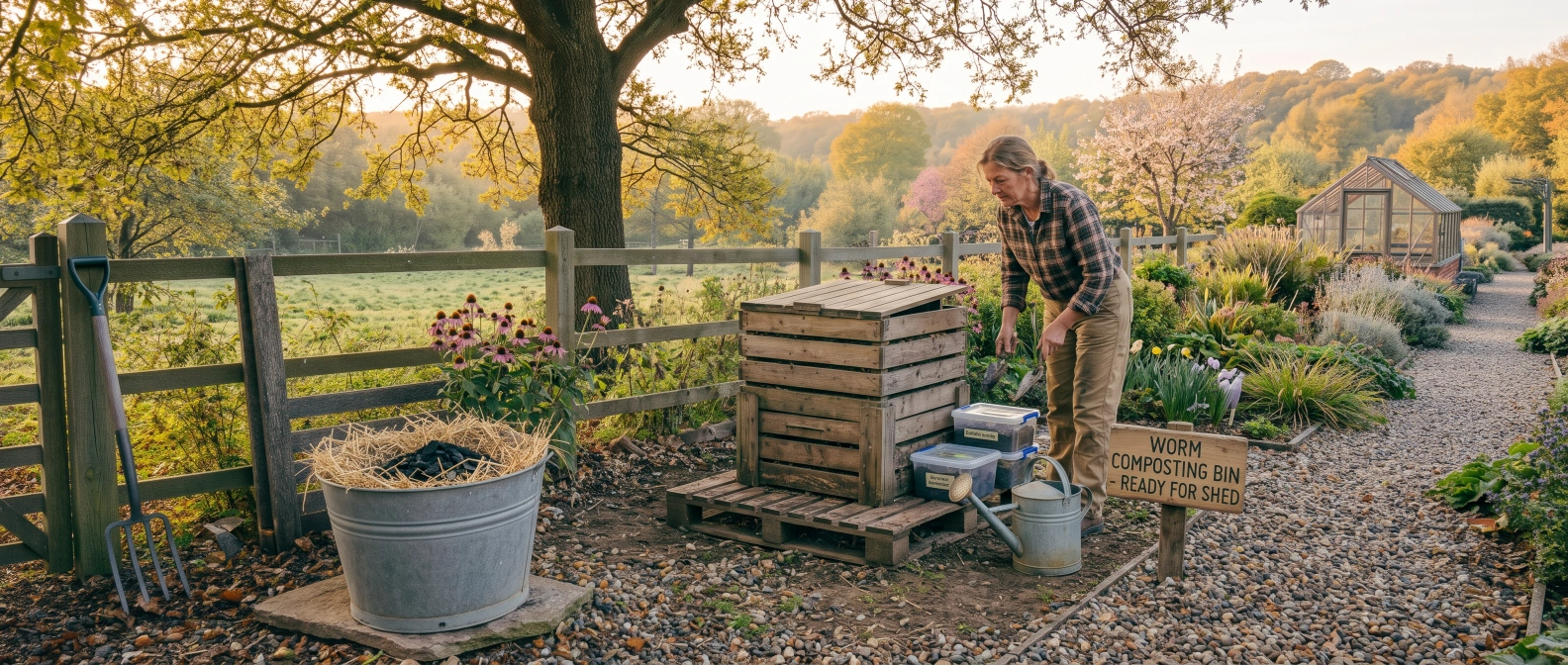
For the long spring-through-autumn stretch, a worm bin outdoors generally works well with the same normal management a milder climate uses year-round: bedding kept damp like a wrung-out sponge, not dripping and not dry, and a location out of direct sun. In genuine summer heat, well above 30°C at times, some added shade matters, similar to how a bin would be managed through the active season in a temperate maritime or Mediterranean climate.
This is the bulk of the year, and it's productive: a long, hot season with plenty of fresh material gives the worms far more to process than a short boreal summer ever allows. The rhythm here echoes the two-chamber system's own seasonal fill-and-rest pattern (see Chapter 3), active through the warm months, then a genuine pause.
Late Autumn: A Shorter Indoor Stint, Not Boreal's Full Winter
As a genuine hard freeze approaches in late autumn, the bin needs to move somewhere that reliably stays above freezing for the winter stretch: an unheated garage, shed, basement, or similar space works well. This is a real relocation, worms are still killed by an unprotected outdoor bin once the ground and air genuinely freeze, but it's a shorter one than a boreal climate demands, because this zone's freeze, though real, doesn't hold on for anywhere near as long.
That's the genuinely different call to make compared to a boreal climate: it's a question of how long the indoor stint needs to run, not whether one is needed at all. Time the move against the same seasonal calendar that governs the rest of the system (see Chapter 13), moving the bin in before the first hard freeze rather than after it.
Spring: Moving Back Outside
Once the hard freeze has genuinely passed, the bin can move back outside. Check bedding moisture carefully after the move, conditions may have changed considerably during the indoor stint, and a bin kept evenly damp indoors through a stable winter can dry out fast or waterlog just as fast once it's exposed to outdoor spring weather again, including any meltwater lingering from the thaw.
Frequently Asked Questions
Do worm bins need to come indoors for the whole winter here, the way they do in a boreal climate?
No, and that's the genuine difference from a boreal climate. Composting worms still die if they actually freeze, so an unprotected outdoor bin is still lethal to them once the hard freeze arrives, but this zone's winter, while real, is typically shorter and less extreme than a boreal one. The practical answer is a shorter indoor stint covering roughly the genuine freeze stretch, not the full months-long relocation a boreal winter demands.
Can a worm bin just stay outdoors through the growing season here?
Yes. Through the long spring-summer-autumn growing season, an outdoor worm bin generally does fine with normal moisture management and, in genuine summer heat, some shade, much like how a bin would be managed through the active season in a temperate maritime or Mediterranean climate. It's only the approach of a genuine hard freeze in late autumn that changes anything.
When should the bin move back outside in spring?
Only once the hard freeze has genuinely passed, not at the first mild day. Check bedding moisture carefully after moving the bin back outside, since conditions may have changed considerably during the indoor stint, and a bin that was kept evenly moist indoors can dry out or waterlog fast once it's exposed to outdoor weather again.