
A green manure builds soil fertility by growing it in place rather than importing it, and in this climate the fast-growing species available make it an unusually quick, effective tool. Where a temperate green manure might need a full season, several genuinely tropical-appropriate species here can produce a usable cut within weeks, given the heat and rain driving growth.
How Green Manures Build Fertility
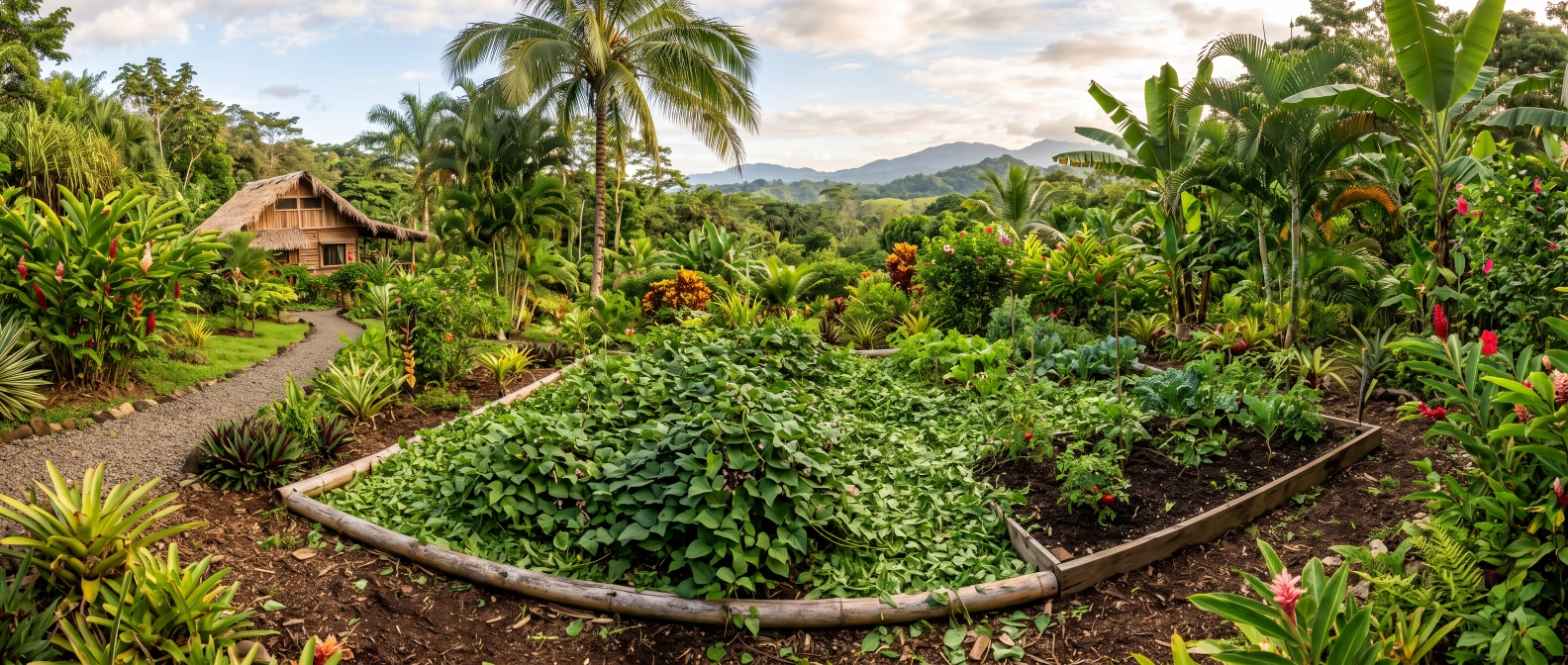
Nitrogen fixation and soil structure, from a crop you don't harvest
Legume green manures fix nitrogen via root nodules, pulling it from the air into a form plants can use, while most species also build organic matter and soil structure through their root systems as they grow. The plant is then cut and either dug in or, preferably following the no-dig principle covered in Chapter 18, left as a surface mulch to break down in place.
Genuinely fast tropical species
Mucuna (velvet bean), sunn hemp (Crotalaria) and pigeon pea are classic, widely used tropical legume green manures. Mexican sunflower (Tithonia diversifolia) is worth including too, it isn't a legume, but it's a genuine nitrogen-accumulating chop-and-drop plant, pulling nutrients up from deeper in the soil and concentrating them in fast-growing leafy biomass. All four can produce a usable cut within weeks given tropical heat and rain, far faster than temperate green manure equivalents.
Chop and Drop: A Double Benefit in This Climate
Chop and drop, cutting the green manure and leaving it where it falls as a surface mulch, is the default method here, and it delivers a genuine double benefit specific to this climate. It builds fertility as the material breaks down, and at the same time acts as protective mulch against the leaching and erosion problem covered in Chapter 11, absorbing the force of rain and slowing water's path into the soil. Using green manures to fill the gap between main crop plantings, rather than leaving beds bare, keeps that protection in place continuously rather than only when a main crop happens to be established, and ties directly into the planting calendar in Chapter 17.
Frequently Asked Questions
What is a green manure and how does it build soil fertility?
A green manure is a crop grown specifically to build soil fertility and structure rather than to harvest. Legume species fix nitrogen through root nodules, and most species also build organic matter and soil structure through their root systems as they grow. The plant is then cut and either dug in or, preferably, left as a surface mulch to break down.
Which green manures are genuinely fast-growing enough for a tropical climate?
Mucuna (velvet bean), sunn hemp (Crotalaria), pigeon pea and Mexican sunflower (Tithonia diversifolia) are classic, widely used tropical options. Given tropical heat and rain, all of them can produce a usable cut within weeks, far faster than temperate green manure equivalents.
What does chop and drop mean, and why is it the default method here?
Chop and drop means cutting the green manure and leaving it where it falls as a surface mulch, rather than digging it in. It's the default method here because it delivers a genuine double benefit specific to this climate, building fertility as it breaks down while also acting as protective mulch against the leaching and erosion caused by tropical rain.