
No-dig gets framed around moisture retention in a dry climate, but here the case for it is different: it's about erosion and leaching protection against a genuinely destructive force, the tropical downpour.
Why It Matters Here
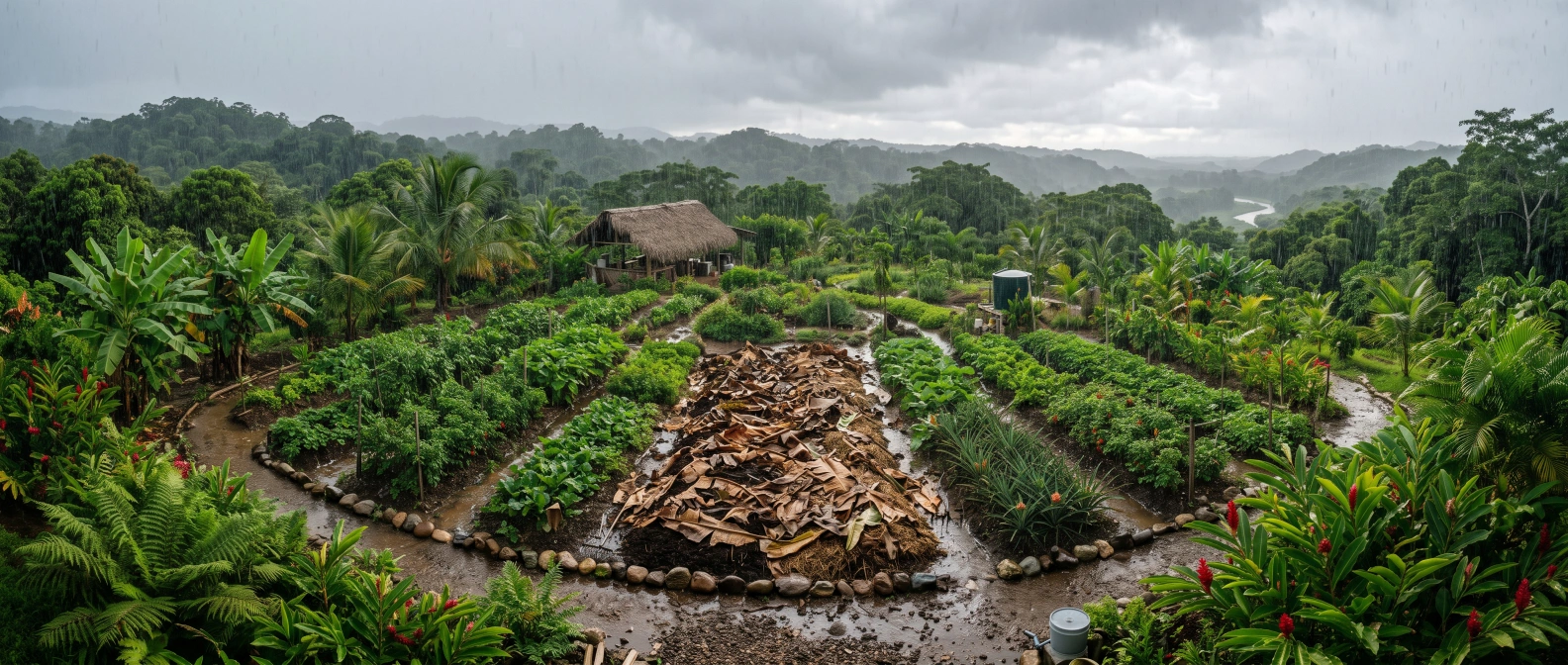
Bare, dug soil exposed to a tropical downpour erodes and loses nutrients fast, the structure broken up and washed away almost as soon as the rain starts. A mulched, undisturbed surface behaves completely differently: it absorbs the force of heavy rain and slows water's path down through the soil, giving roots and soil life far more chance to capture nutrients before they wash past reach. This is the same "protect from rain" philosophy that runs through this whole guide (see Chapter 3), applied directly to the soil surface, and it reinforces the leaching protection covered in Chapter 11.
The Method
The core method stays the same as anywhere: a thick layer of compost and mulch applied to the surface, cardboard or a fast-establishing green manure (see Chapter 12) to suppress weeds and protect bare soil, and planting directly into that surface layer rather than digging it in.
Fast Compost Still Needs Mulch
Because compost finishes fast here, feeding a no-dig system with fresh batches is more achievable than in a slower climate. Even so, mulch material such as dried banana leaves, coconut husk and chop-and-drop green manure should still be used generously alongside compost rather than relying on compost alone, both to stretch supply further and because mulch provides an erosion-protection benefit that raw compost by itself doesn't.
Frequently Asked Questions
Why does no-dig matter in a climate that's already wet enough?
Here it's primarily erosion and leaching protection, not moisture retention. Bare, dug soil exposed to a tropical downpour erodes and loses nutrients fast, while a mulched, undisturbed surface absorbs the force of heavy rain and slows water's path through the soil, giving roots and soil life more chance to capture nutrients before they wash past reach.
What does a no-dig system actually involve here?
The same core method used anywhere: a thick layer of compost and mulch applied to the surface, cardboard or a fast-establishing green manure to suppress weeds and protect bare soil, and planting directly into that surface layer rather than digging it in.
Since compost finishes so fast here, can I rely on compost alone instead of mulch?
No, mulch should still be used generously alongside compost. Fast batches make feeding a no-dig system more achievable than in a slower climate, but materials like dried banana leaves, coconut husk and chop-and-drop green manure stretch supply and provide the specific erosion-protection benefit that mulch offers and raw compost alone doesn't.