
Knowing when compost is ready is only half of it here. Because a downpour can wash exposed nutrients away almost as fast as a batch finishes, how quickly and how carefully you get it into the ground matters just as much as the compost itself.
Knowing When It's Ready
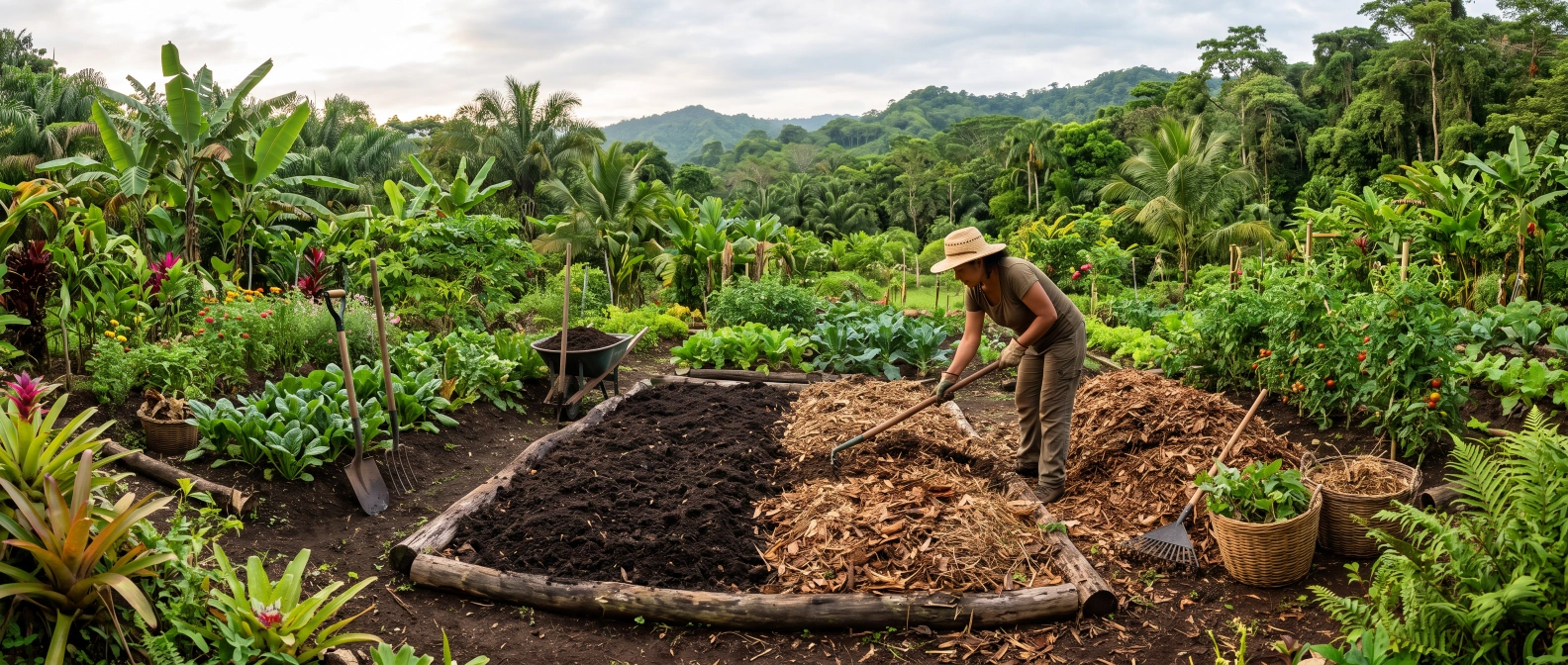
The signs are the same universal ones any climate relies on: finished compost is dark, crumbly and smells like rich earth, with none of the original materials still recognisable as themselves. Given how fast decomposition runs here, that point often arrives sooner than gardeners used to a cooler climate expect, so check regularly rather than assuming a batch needs as long as it would elsewhere.
Applying It Before Rain Gets There First
Apply and incorporate compost promptly once it's ready. Work it lightly into the surface, or cover it with a layer of mulch, rather than leaving it exposed, since bare, uncovered nutrients are exactly what the next downpour is waiting to wash away (see Chapter 11). Applying it just ahead of or alongside mulch (see Chapter 18) means the nutrients are protected by a covering layer from the moment they go into the ground.
Because batches finish so fast here, a rhythm of small, frequent applications timed to planting can work better than stockpiling one large batch and applying it all at once, keeping fresh material moving into covered ground rather than sitting exposed while it waits.
Sieved vs Unsieved
Sieve finished compost when you need a fine, even seed-starting mix. For general bed use, coarser unsieved compost works well too, and can double as part of a protective mulch layer on the surface rather than needing to be worked in at all.
Frequently Asked Questions
How do I know when my compost is actually ready to use?
Look for the same universal signs any climate relies on: it should be dark, crumbly and smell like rich earth, with none of the original materials still recognisable. In this climate that point often arrives faster than gardeners expect, so check regularly rather than assuming it will take as long as it would elsewhere.
Why does it matter how quickly I apply compost once it's ready?
Finished compost left exposed on the surface is vulnerable to the next downpour washing its nutrients away before plants get any benefit from them. Applying it promptly and covering it with mulch, or working it lightly into the surface, protects those nutrients from the moment they're in the ground rather than leaving them exposed and waiting to be leached.
Should I stockpile compost or apply it in smaller batches?
Because batches finish so fast in this climate, a rhythm of small, frequent applications timed to planting often works better than stockpiling one huge batch and applying it all at once. It keeps fresh compost moving into the ground and under cover regularly, rather than sitting around exposed to rain while it waits to be used.