
Beetroot, chard and perpetual spinach are all the same species grown for different parts of the plant -- one for the swollen root, two for the leaves -- which is the crossing risk most gardeners never expect. Perpetual spinach in particular catches people out: despite the name, it isn't true spinach at all, it's a leaf beet. If you grow any of these together and let them flower, you get an unpredictable hybrid instead of true seed from any of them.
New to terms like isolation distance or outcrossing? See the Seed-Saving Glossary.
Seed-Saving Difficulty
How It's Pollinated
Wind-pollinated (high outcrossing)
(High crossing risk)
Scientific name: Beta vulgaris
Domestic Crops It Can Cross With
- Other beet varieties flowering at the same time
- Chard / Swiss chard -- same species (Beta vulgaris) and will cross freely. See our Chard page for the same relationship from the other side
- Perpetual spinach -- despite the name, this is a leaf beet, also Beta vulgaris, and will cross with both beetroot and chard
Wild Relatives & Feral Species
- Wild sea beet, the ancestor of cultivated beet, grows on many coastlines and will cross if present nearby
Separation Distances Required
Minimum: 500m between varieties
Recommended: 800m-1km for reliable purity
Strict: Bag and hand-pollinate flower spikes for guaranteed purity
Seed-Saving Strategies
- Biennial -- overwinter roots (mild zones) or lift and store, replant in spring
- Allow seed spikes to dry brown on the plant
- Strip seed clusters by hand once fully dry
- Store dry -- viable 4-5 years
Why Beet and Chard Can't Be Grown for Seed Together
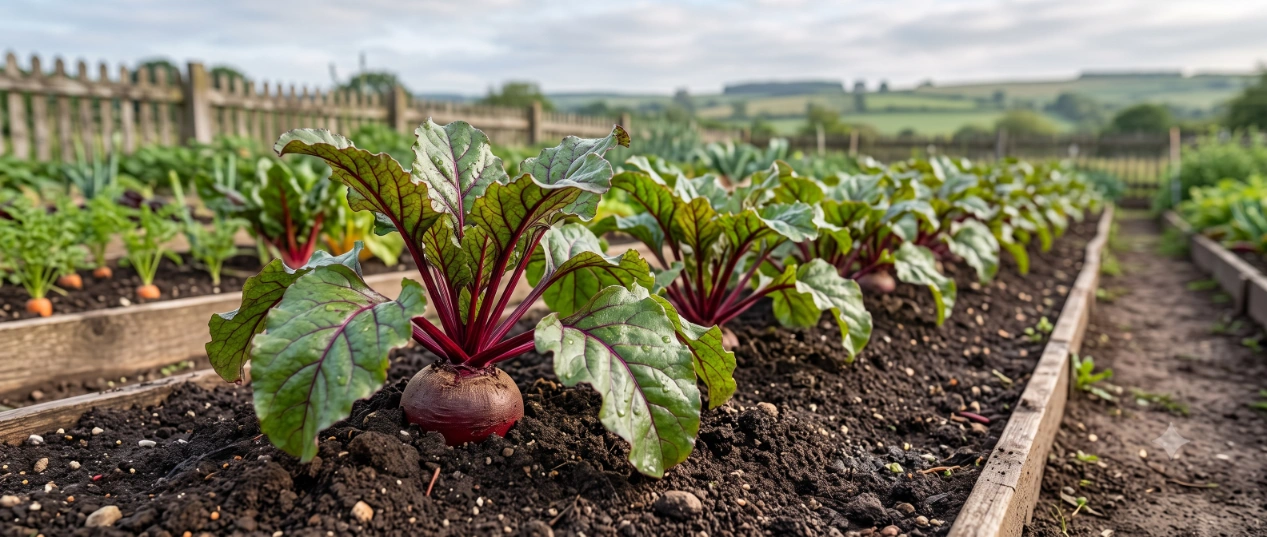
It's easy to think of beetroot and chard as completely different vegetables -- one is a root crop, one is a leafy green -- but botanically they're a single species split into different uses. Left to flower in the same season, wind carries pollen freely between them, and the resulting seed produces plants with a confusing mix of root and leaf traits from both parents. The fix is simple once you know about it: only let one flower per season, or keep the other 800m-1km away.