
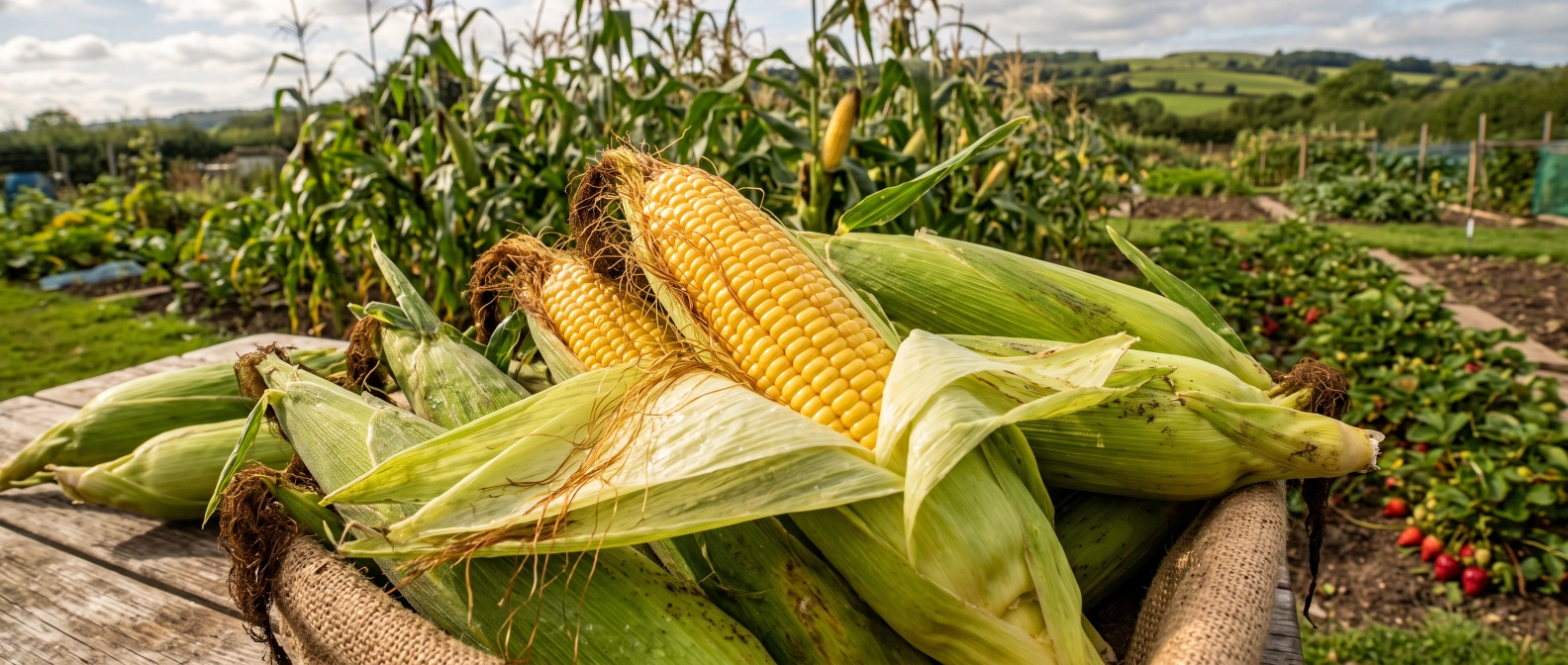
A fresh-eating variety of the exact same species as this site's flour maize, per the crop database's own description -- needs block planting for reliable pollination, and is ready to pick once the silks turn brown. Its calorie figure sits well ahead of most other fruiting vegetables here, closer to a genuine staple than a garnish crop.
Water need
Needs consistent moisture through tasseling and cob fill, the same critical window as flour maize -- drought stress right then genuinely costs yield.
Calories at a glance
860 kcal/kg -- genuinely high for this category, well above tomato, pepper or squash, though still short of flour maize's dried-grain density (scale is log-based across all 55 core crops in the calculator).
Temperature Range by Month
Month on the bottom, temperature up the side. The pale green background is what the plant can survive at all -- fatal above or below it, labelled directly on the chart where that applies to your zone. The coral band is its ideal range, and only fades in during the months this zone would actually have the crop in the ground -- reusing the exact same sowing/harvesting data as the calendar further down the page. The blue line is real monthly climate data (not a modelled estimate) for a representative rural/agricultural location in this zone -- a small farming town or agricultural research station rather than a major city, to avoid the warmer bias city weather stations have. For the actual verdict on how well this crop does in your zone, see the badge at the top of the page -- that's based on the site's own researched yield figures, not this chart.
Quick Start: Sowing to Storage
- Sow once the soil is genuinely warm. Sow direct once frost risk has passed and the soil has warmed -- sweet corn germinates poorly and slowly in cold soil.
- Plant in a block, not a single row. Arrange plants in a block of at least several short rows rather than one long line -- this is what lets wind pollination fill out the cobs reliably.
- Keep it away from flour corn / maize. If you're also growing this site's flour maize, keep the two apart or stagger their flowering -- they're the same species and will cross-pollinate, affecting sweet corn's eating quality the same season.
- Watch the silks for ripeness. Pick when silks turn brown and dry while the husk is still green, per the crop database's own marker -- a quick test is puncturing a kernel to check for milky (ready) rather than clear (early) or thick (past its best) sap.
- Eat or preserve as soon as possible after picking. Sweet corn's sugars start converting to starch within hours of picking -- cook, freeze or otherwise preserve it as close to harvest as you can for the best flavour and texture.
Sowing & Harvesting Calendar
Pick your zone under "Temperature Range by Month" above and this updates too. Boreal and Alpine show no window at all -- this site's own yield data marks sweet corn as not viable in either, the same as flour maize.
Calories & Yield
Tropical gives the best yield here, with Subtropical and Mediterranean close behind.
| Climate Zone | Yield per plant | Calories per plant | Viability |
|---|---|---|---|
| Tropical / Humid | 8.0 kg | 6,880 kcal | Viable -- best yield |
| Subtropical | 7.0 kg | 6,020 kcal | Viable |
| Mediterranean | 7.0 kg | 6,020 kcal | Viable |
| Temperate Maritime | 2.4 kg | 2,064 kcal | Challenging (60% yield) |
| Temperate Continental | 6.0 kg | 5,160 kcal | Viable |
| Cool / Boreal | -- | -- | Not viable |
| Arid / Semi-Arid | 2.4 kg | 2,064 kcal | Challenging (60% yield) |
| Highland / Alpine | -- | -- | Not viable |
Figures per plant sown, from the site's own crop database. Maritime and Arid already reflect the 60% penalty applied to challenging zones.
Varieties Worth Knowing
Sweet corn varieties differ in kernel type and how long the harvest window runs. All the varieties below are open-pollinated (OP), meaning seed saved from them breeds true and is worth keeping under this site's seed-saving approach; none are F1 hybrids.
Seed Saving -- Quick Guide
Sweet corn is wind-pollinated and crosses freely with every other type of corn -- popcorn, flour corn, flint corn, dent corn -- not just other sweet corn varieties. It needs the largest isolation distances of any crop on this site, or hand-pollination in a small garden.
SERVINGS, NOT DAILY CALORIES This works out plate-sized servings of sweet corn from your seed during its fresh harvest window only, not your group's full daily calorie needs. For that, use the main calculator.
Estimated for your selected zone above, using this site's own germination, loss and yield figures for sweet corn -- a helping is roughly what you'd put on a plate as part of a meal with other veg. Treat it as a planning estimate, not a promise.
Storage & Preservation
Fresh sweet corn doesn't store long -- its sugars convert to starch within hours of picking, so eating or preserving it the same day gives noticeably better results than even a day or two in the fridge.
For longer-term storage, blanching and freezing (whole cobs or cut kernels) is the standard route, keeping usable corn on hand for months without specialist equipment.
Growing Sweet Corn Without Bought Inputs
Genuinely hungry for nutrients over its growing season -- a good feed of compost or well-rotted manure worked in before planting makes a real difference to cob size.
Corn earworm and birds are the main threats to ripening cobs, the same pest pressure flour maize faces.
Netting over ripening cobs, and companion planting with beans and squash (Three Sisters), are simple, genuinely effective input-free measures.
Frequently Asked Questions
Is sweet corn the same species as flour corn / maize?
Yes -- genuinely, not just a close relative. Sweet corn and this site's flour maize are both Zea mays, the exact same species, just bred for different traits: sugar-rich kernels eaten fresh versus starchy kernels dried for flour. They are wind-pollinated and will cross-pollinate exactly like any two maize varieties grown too close together.
What happens if sweet corn crosses with flour corn?
The eating quality of the sweet corn itself can be affected in the very same season, not just in seed saved for next year -- a real phenomenon seed growers call xenia. Kernels that get cross-pollinated by starchy field or flour corn pollen can turn noticeably starchier and less sweet, even on an otherwise sweet-corn cob. Keep the two apart, or stagger their flowering, if you're growing both.
Why does sweet corn need to be planted in a block?
The crop database is explicit: needs blocks for pollination. Corn is wind-pollinated, and a block of several short rows lets pollen drift reliably onto every plant's silks. A single long row often pollinates poorly, leaving cobs with gaps and missing kernels.