
An activator is anything added in a small, concentrated dose specifically to kick a heap into active heating, on top of the carbon and nitrogen balance covered in Chapter 4. In this climate, which activators are available and when changes sharply across the year, and getting the timing right matters as much as choosing the right ones.
Urine -- The Year-Round Standby
Urine is a free, always-available, high-nitrogen liquid activator, diluted roughly 1:10 with water before it's applied to a heap. It's useful year-round, but it earns its place most clearly in summer, when fresh plant-based activators are scarce and drought-stressed, and it doesn't depend on rainfall or growing season at all to be available.
Comfrey & Nettles -- Wet-Season Tools
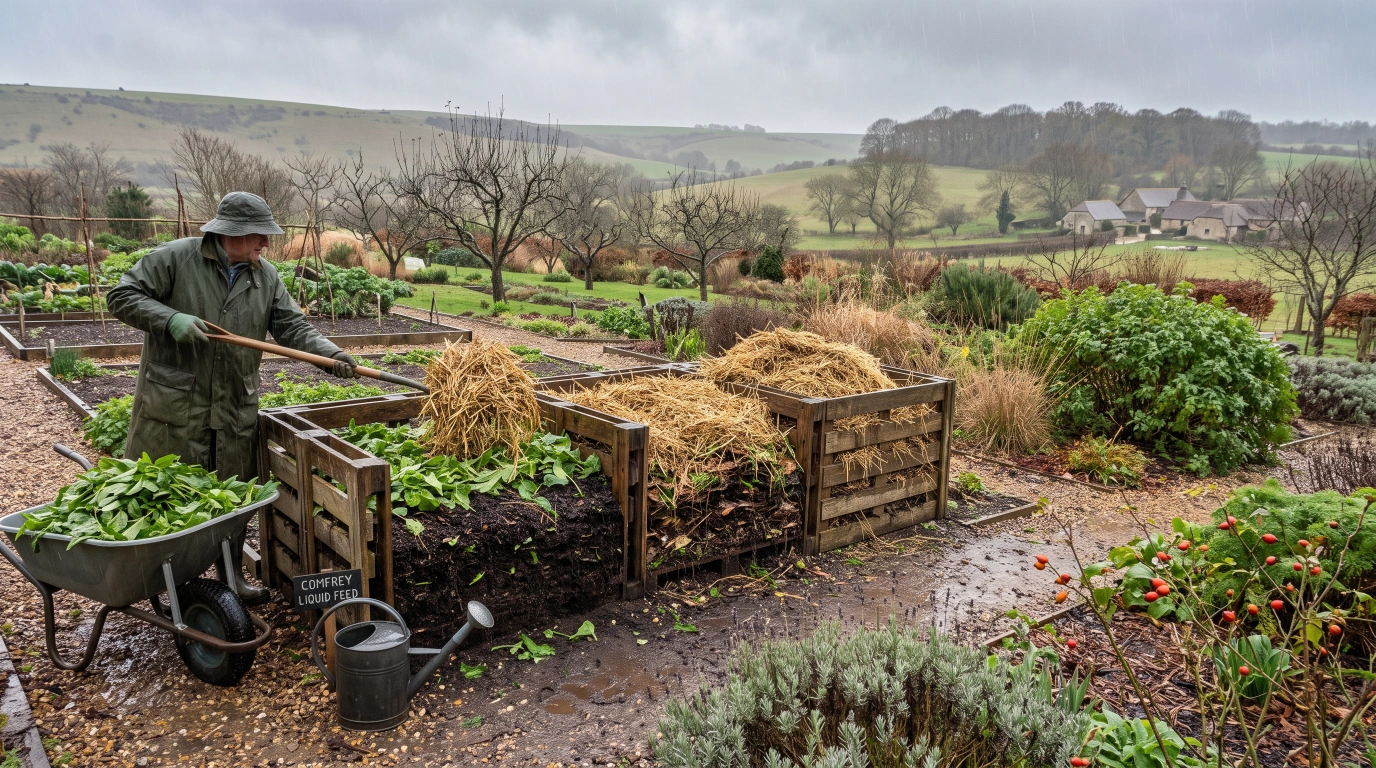
Both comfrey and nettles grow well here through the mild wet season, and both make classic chop-and-drop activators, cut fresh and layered straight into a heap while they're actively growing. The key is to think of them as winter-and-spring tools, not something to count on through summer. Without irrigation, both plants can struggle badly in the dry months, so expecting them to perform through summer drought the way they do in a wetter climate is a mistake worth avoiding.
Cut and use them fresh while the wet season lasts, and don't hold off, waiting for growth that a drought-stressed plant may not deliver once summer sets in.
Front-Load Activation Early in the Wet Season
This is the strategic point specific to this climate, and it's worth planning around deliberately. Because the wet season is when fresh nitrogen-rich growth is genuinely abundant here, the biggest return comes from using that window hard, not spreading activation thinly across the year. Build and activate heaps early in the wet season, rather than waiting, so a batch has the best possible chance of being well underway, actively heating and breaking down, before summer drought slows everything to a crawl.
This is similar timing logic to the short-season strategy covered in the Cool & Boreal guide, front-loading effort into the window that actually supports it, just applied here to a mild wet season rather than a short warm one. See Chapter 13 for how this fits into the wider seasonal rhythm.
Frequently Asked Questions
Is urine a genuinely useful compost activator here?
Yes, and it's especially valuable in this climate because it's free, always available, and doesn't depend on the season the way fresh plant material does. Diluted roughly 1:10 with water before applying, it's a high-nitrogen liquid activator that works year-round, but it matters most in summer, when fresh plant-based activators like comfrey and nettles are scarce and struggling with drought themselves.
Can comfrey and nettles be relied on through the summer here?
Not reliably. Both grow well through the mild wet season and make classic chop-and-drop activators cut and used fresh while actively growing in winter and spring, but they themselves may struggle without irrigation once the summer drought sets in. Treat them as a wet-season tool rather than something to count on through summer, and lean on urine or stored activators once the dry season begins.
Why does timing matter so much for activators in this climate?
Because the wet season is when fresh nitrogen-rich growth is genuinely abundant here, and that window doesn't last. The strategic move is to front-load heap-building and activation early in the wet season, so a batch is well underway and already breaking down before summer drought slows everything, rather than starting late and losing most of the active window to the dry months that follow.