
Composting worms, typically red wigglers or brandling worms (Eisenia fetida), work well here through most of the year. The challenge they face is a genuinely different shape to what worms deal with in either an arid climate or a boreal one: not constant heat, not a hard winter freeze, but a defined few months of summer drought that demand real attention while the rest of the year asks comparatively little.
Through the Mild Wet Season
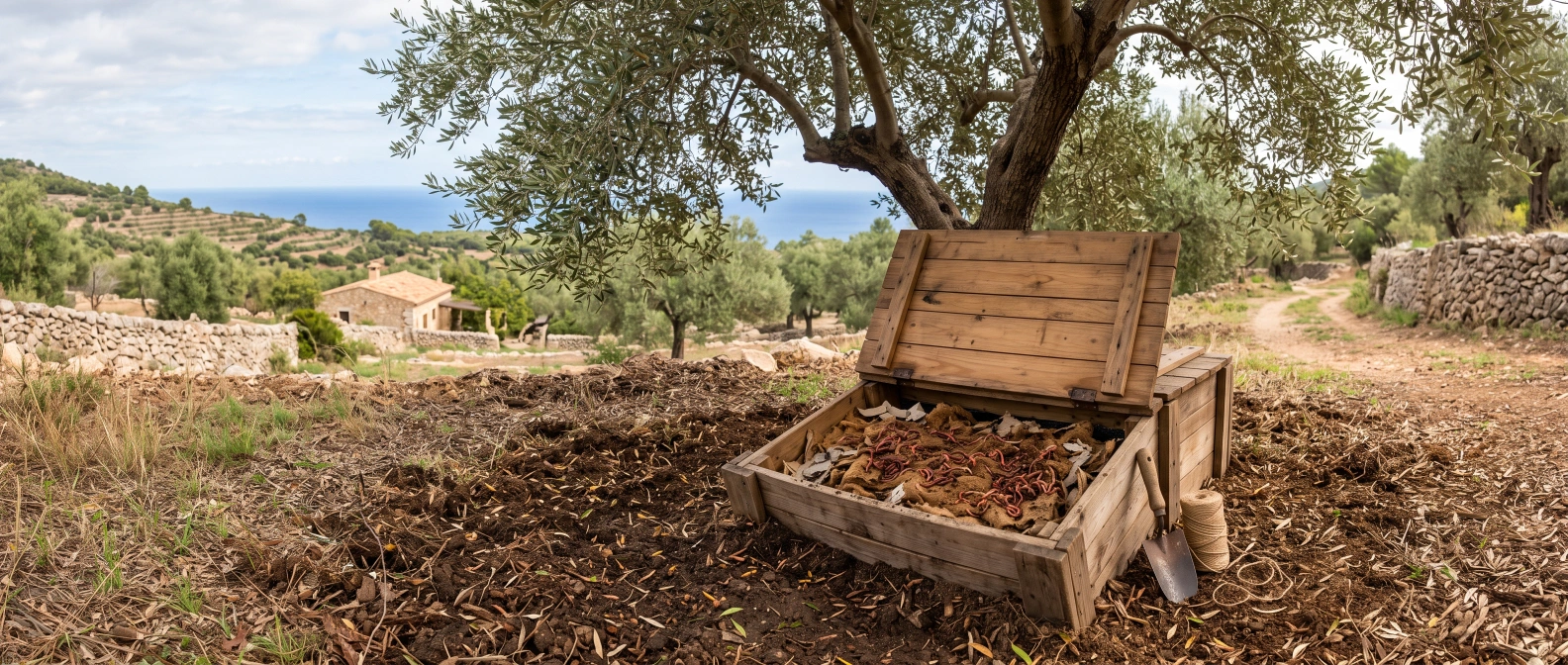
From autumn through winter and into spring, an outdoor worm bin generally does fine here with normal moisture management. Rain keeps ambient humidity reasonable, temperatures stay mild rather than freezing, and the main job is simply the standard squeeze test on the bedding every so often: it should feel like a wrung-out sponge, damp but not dripping.
This is a genuinely easier stretch of the year for worm care than either the arid or boreal equivalents. There's no need to bring the bin indoors the way a boreal grower would for a hard freeze, and there's no constant year-round battle against evaporation the way an arid grower faces. Feed the bin regularly with kitchen scraps and soft plant material, keep an eye on bedding moisture, and otherwise the worms largely manage themselves.
The Summer Challenge
Summer is different, and it's where real vigilance matters. Worms are highly sensitive to both temperature and moisture, and a long, essentially rainless summer with strong sun can dry a bin's bedding out fast, in principle the same underlying problem the whole heap faces (see Chapter 11), just concentrated in a smaller, more delicate system that dries out even faster than a full-sized heap.
If the bin isn't already sited in shade, move it into shade before summer sets in, or at minimum shade it for the hottest part of the day. Check and rewet bedding more frequently than the rest of the year, since it can dry out within days rather than weeks. Partially burying the bin in shaded soil, or insulating it with a thick straw or mulch layer around and over it, helps buffer both heat and moisture loss, mirroring the broader mulch-cap and shade strategies used on a full heap through the same season.
Practical Summer Checklist
- Shade first. A bin in full summer sun can overheat and dry out within a single hot day; deep, reliable shade is the single biggest protection (see Chapter 2).
- Check moisture more often. A weekly check is often enough the rest of the year; through summer, check every few days using the squeeze test.
- Consider partial burial. Sinking a bin partway into shaded soil buffers both temperature swings and moisture loss far better than a bin left fully exposed above ground.
- Time feeding to activity. Worms slow their feeding in extreme heat; don't overload the bin with scraps that will simply rot unprocessed if the worms have retreated to cooler, damper pockets.
- Watch for a mass exodus. Worms migrating to the very bottom or edges of a bin, or trying to escape it, are a clear sign conditions have become too hot or too dry and need immediate correction.
Frequently Asked Questions
Do composting worms need to come indoors for winter in a Mediterranean climate?
Generally no. Winters here are mild rather than genuinely cold, so an outdoor worm bin usually keeps working through the wet season with only normal moisture management. This is a real difference from a boreal climate, where a hard freeze makes an indoor move necessary, and it makes worm care here noticeably simpler for most of the year.
What's the biggest risk to a worm bin here, and when does it happen?
The long, dry summer. Worms are moisture- and temperature-sensitive, and two to four rainless months with strong sun can dry bedding out fast, in principle the same problem an arid climate faces, but concentrated into a few months here rather than lasting all year. Outside summer, an outdoor bin with normal moisture checks generally does fine.
How do I check if worm bedding is too dry or too wet?
Use the standard squeeze test: pick up a handful of bedding and squeeze it. It should feel like a wrung-out sponge, damp enough to hold together with no free water dripping out. If it crumbles and won't hold its shape, it's too dry and needs rewetting. If water runs out when squeezed, it's too wet and needs more dry bedding material mixed in.