
Biochar is charcoal produced specifically for incorporation into soil, made by pyrolysis: burning woody material with restricted oxygen, then quenching it with water to stop the burn at the charcoal stage rather than letting it turn to ash. The result is stable, porous carbon that persists in soil for centuries. Nowhere does that matter more than here, this is literally the origin story of the technique, and the reason it was invented is a problem this climate still has today.
Why Biochar Matters Enormously Here
As covered in Chapter 1, much of the humid tropics sits on heavily leached, naturally low-fertility soil. Laterite and oxisol-type soils are common across large parts of the tropics, low in organic matter to begin with and prone to rapidly leaching away any nutrients added to them, by rain, by fertiliser, or by ordinary compost, before plants ever get the full benefit. Biochar's stable, porous structure resists this leaching in a way ordinary compost alone simply cannot, holding onto nutrients in its microscopic pore structure rather than letting rain wash them straight through.
This isn't a new idea. It's the exact basis of terra preta, the pre-Columbian Amazonian dark earths built by indigenous communities through this technique over centuries, in a region otherwise known for poor, heavily leached tropical soil. Those soils remain measurably more fertile than the surrounding land today, hundreds of years later, standing as genuine, long-running evidence for what biochar does in exactly this kind of climate.
- Nutrient retention against leaching -- the single most valuable property here, holding nutrient ions in place against relentless tropical rain.
- Permanent structure -- doesn't break down like compost, so every addition is a lasting improvement in soil that would otherwise need constant replenishing.
- Microbial habitat -- pore structure gives soil bacteria and fungi a protected home, valuable in soils that start out biologically poor.
- Long-term rebuilding -- connects directly to the wider soil-health project covered in Chapter 19.
Making Biochar From Coconut Shell and Dense Woody Waste
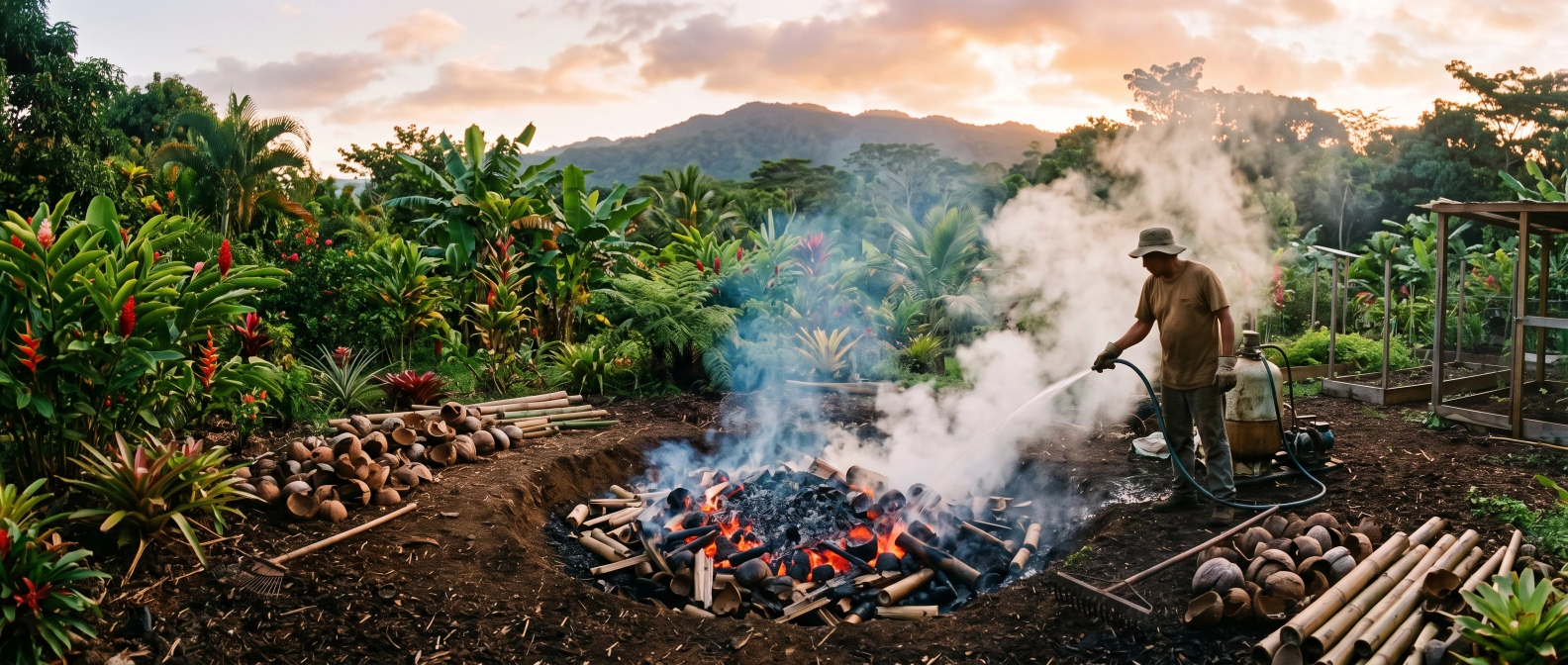
Coconut shell, covered in Chapter 6, is an excellent, widely available biochar feedstock precisely because it barely breaks down through ordinary composting at all. Rather than fighting it in a compost heap, converting it to biochar turns a genuinely awkward, slow-rotting waste material into one of the most valuable long-term soil amendments available in this climate. Other dense woody material and bamboo offcuts work equally well, anything too hard, dense or slow to compost normally is a candidate.
Dig a shallow trench or pit and build a fire with the dense material, letting it burn down to glowing coals. Before the coals turn to grey ash, extinguish immediately by dousing with water, quenching the burn at the charcoal stage rather than letting it continue to ash. The result is a stable, porous black material, distinct from ordinary charcoal ash, ready to be charged before use.
Charging Biochar Before Use
Raw biochar can actually rob soil of nutrients initially, its empty pore structure draws nutrients in to fill itself rather than releasing anything useful, so it should never be applied raw and unamended.
- Soak in compost tea -- steep biochar in finished compost tea for several days to weeks before use.
- Soak in diluted urine -- the 1:10 dilution covered in Chapter 8 works well for charging biochar as well as feeding plants directly.
- Mix into finished compost -- combine biochar with finished compost at roughly one part biochar to four parts compost, leave several weeks before applying to soil.
Frequently Asked Questions
Why does biochar matter so much in a tropical climate?
Much of the humid tropics sits on heavily leached, naturally low-fertility soil, laterite and oxisol-type soils common across large parts of the tropics, low in organic matter and prone to rapidly leaching away any nutrients added by rain. Biochar's stable, porous structure resists this leaching in a way ordinary compost alone cannot, holding nutrients in place instead of letting them wash straight through.
What is terra preta and why does it matter here?
Terra preta is the name given to the pre-Columbian Amazonian dark earths built by indigenous communities through exactly this technique, mixing charcoal into otherwise poor tropical soil. Those soils remain measurably more fertile than surrounding land centuries later, in a region otherwise known for poor, heavily leached soil, and it's the historical basis for why biochar is worth the effort in this climate specifically.
What's the best biochar feedstock in a tropical garden?
Coconut shell is an excellent, widely available feedstock given how slowly it breaks down through ordinary composting, converting it to biochar turns a genuinely awkward waste material into one of the most valuable long-term soil amendments available. Other dense woody material and bamboo offcuts work well too.