
This closing chapter is about the bigger picture behind everything else in this guide: not just getting one good batch of compost, but genuinely rebuilding fertility in soil that the region's own climate constantly strips bare.
The Tropical Soil Paradox
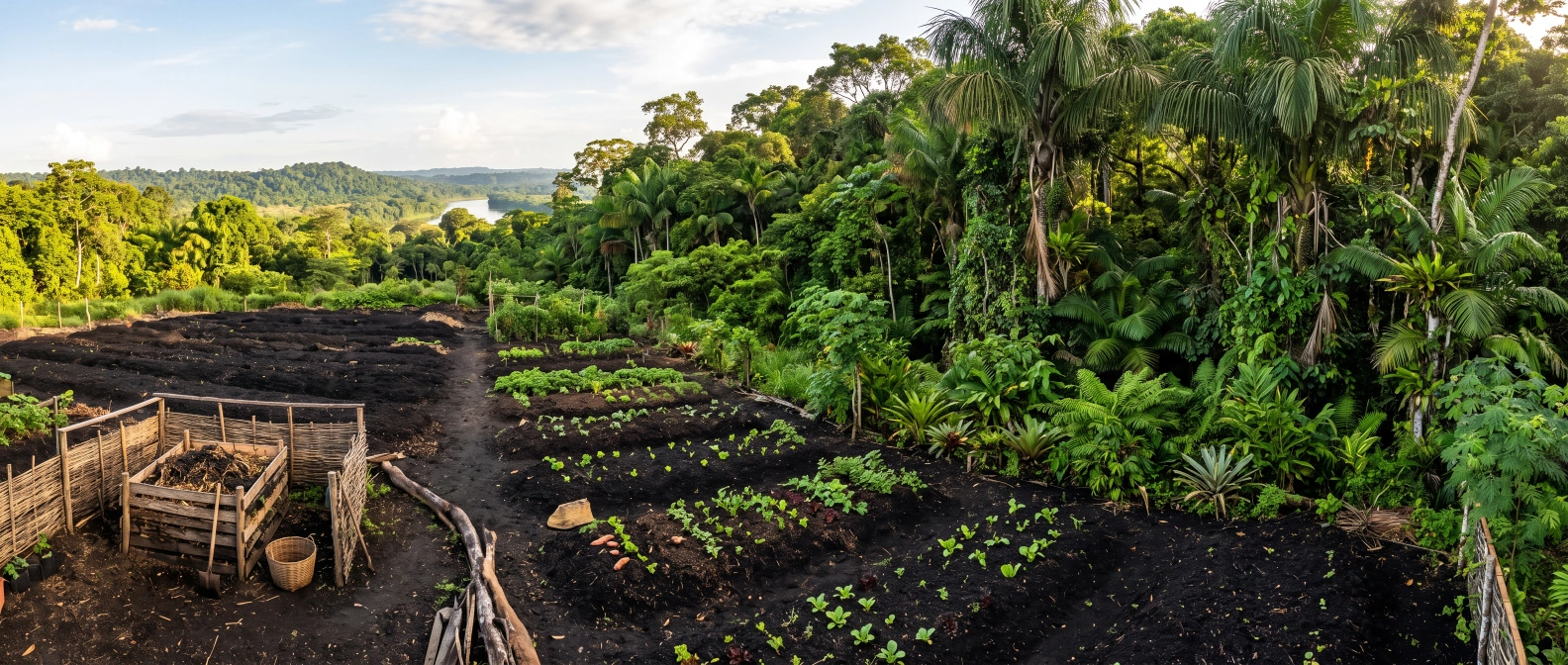
Much of the humid tropics carries a genuine paradox worth naming outright: lush, abundant vegetation growing on soil that is often naturally low in organic matter and heavily leached. The reason is that the region's nutrients cycle mainly through living plant matter rather than accumulating in the ground the way they do in cooler, slower-decomposing climates, where organic matter builds up over years rather than being reabsorbed by plants almost as fast as it releases. Consistent, well-protected composting is one of the few practical ways a household can break that cycle and actually build reserves of fertility in the soil itself, rather than simply cycling nutrients through it.
Diversity of Inputs Matters Here Too
A wide mix of inputs feeds soil biology and structure in ways no single material can match on its own: banana and coconut waste (see Chapter 6), humanure handled safely, biochar (see Chapter 9), chop-and-drop green manures (see Chapter 12) and ordinary kitchen scraps all have a part to play in building both fertility and structure over time.
The Terra Preta Story
The clearest proof that this approach works comes from exactly this kind of setting. Pre-Columbian Amazonian communities built terra preta soils through long-term, deliberate addition of charcoal and organic matter, working with the same heat, humidity and heavy rain a modern tropical household still contends with, and those soils remain measurably more fertile than the surrounding ground centuries later. It stands as lasting proof that even naturally poor, heavily leached tropical soil can be transformed by exactly this kind of consistent practice, not a one-off fix but a habit kept up over years.
Speed and Protection, Together
This guide has really been about two themes working in tandem. Each batch of compost, however fast it's made, only builds lasting fertility if it's protected from the rain that would otherwise wash it straight back out. Speed without protection just produces fertility that leaches away as quickly as it forms, and protection without speed leaves you short of material to protect in the first place. Kept together, season after season, they're what let the gains actually accumulate rather than simply cycle through and disappear.
Frequently Asked Questions
How can tropical vegetation be so lush if the soil beneath it is poor?
This is the tropical soil paradox: much of the humid tropics carries lush, abundant vegetation on soil that is naturally low in organic matter and heavily leached, because the region's nutrients cycle through living plant matter rather than accumulating in the ground the way they do in cooler, slower-decomposing climates. Consistent, well-protected composting is one of the few practical ways a household can break that cycle and actually build reserves of fertility in the soil itself.
What does terra preta prove about tropical soil?
That even naturally poor, heavily leached tropical soil can be transformed by consistent practice. Pre-Columbian Amazonian terra preta soils were built through long-term charcoal and organic matter addition directly in this kind of climate, and they remain fertile centuries later, proof that the effort compounds rather than washing away if it's kept up.
What's the single most important principle to take from this whole guide?
Speed and protection have to work together. Each batch of compost, however fast it's made, only builds lasting fertility if it's protected from the rain that would otherwise wash it straight back out. Neither one alone is enough, but together they let the gains actually accumulate season over season.