
Most Mediterranean compost problems are seasonal in character, not constant. A heap that's thriving in March can be bone dry by August and waterlogged again by December, so the fix depends on knowing which season caused the problem and why, rather than reaching for one generic remedy.
Problem: The Heap Dried Out Over Summer
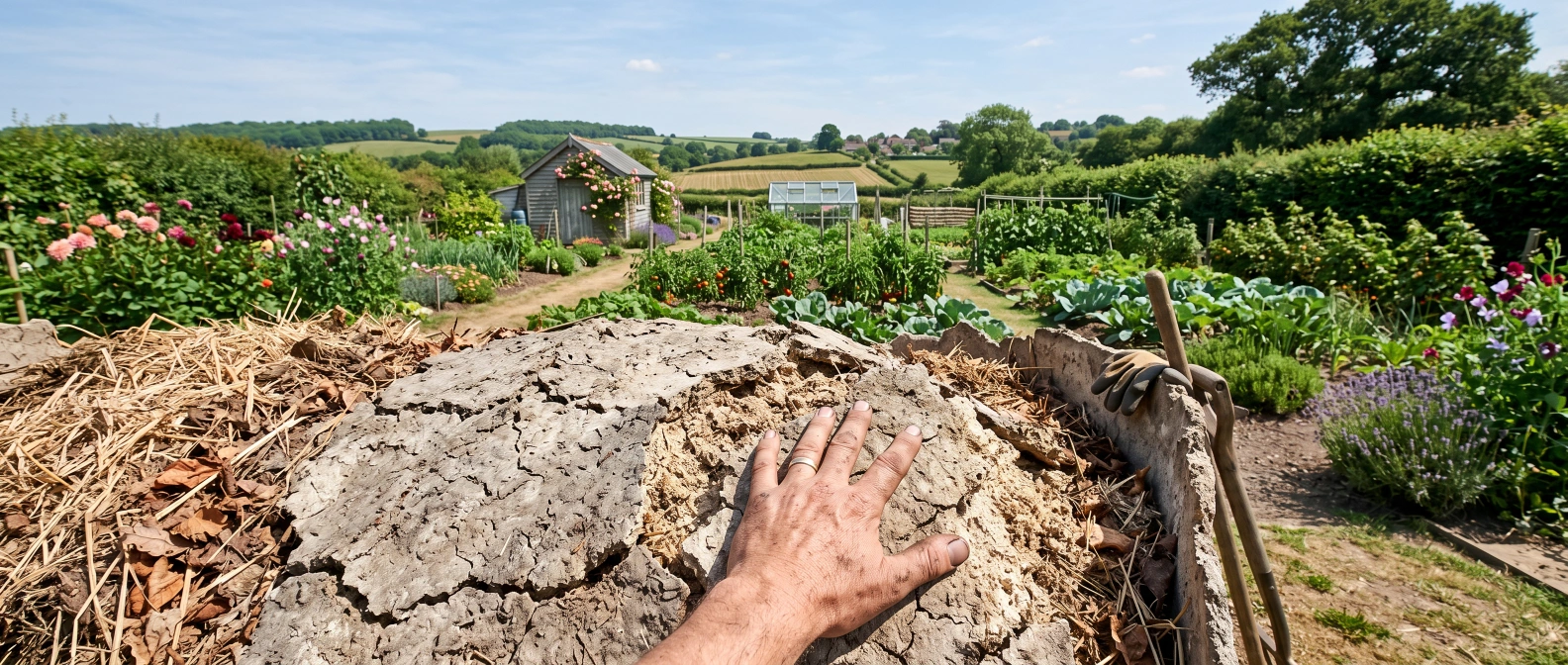
This is the single most common failure in this climate, and it isn't a sign of doing anything badly wrong, it's simply what two to four rainless months does to an unprotected pile. Work through the drought-management steps in Chapter 11: check moisture with the squeeze test at several depths, water deeply rather than just wetting the surface (a light sprinkle does almost nothing to a heap this dry), and add a fresh mulch cap of dry leaves, straw or shredded prunings to slow the next round of drying.
Recovery is genuinely slow. A heap that has been dry and dormant for weeks doesn't spring back to full heat overnight, it can take a week or more of consistent moisture before microbial activity really picks up again. Be patient rather than repeatedly disturbing it looking for progress.
Problem: Waterlogged After Heavy Winter Rain
After a long dry summer, the first real winter downpour often doesn't soak in gently, ground baked hard by months of drought can initially shed water rather than absorb it, which is why the first heavy rain of the season tends to cause more waterlogging than later ones once the soil has re-softened.
Improve drainage at the base of the heap per the siting advice in Chapter 2, and turn the pile once conditions allow to reintroduce air through material that has gone anaerobic and started to smell sour. Also check the site itself isn't simply collecting runoff from a slope above it, since no amount of turning fixes a heap sited where water naturally pools.
Problem: Mostly Woody Prunings, Barely Breaking Down
Unshredded olive or grape wood is tough and slow, whole prunings can sit in a heap for years with barely a visible change. Run woody material through a shredder or chipper before adding it, as covered in Chapter 6, to expose far more surface area to the microbes doing the breaking down.
If the material is already shredded and it's still stalling, the more likely cause is simply too much brown material relative to the nitrogen available at the time, a carbon-to-nitrogen imbalance rather than a size problem. Rebalance with a genuinely nitrogen-rich input per Chapter 4.
Problem: A Spring-Flush Heap That Stalls Hard in Summer
A heap built during the spring flush of green material, when everything is growing and going in fresh, can look great for a few months and then stall hard the moment summer heat arrives, simply because no dry carbon reserve or watering plan was in place before the rain stopped. This is fundamentally a timing problem, not a materials problem. The fix isn't rescuing this heap so much as building earlier in the wet season next time, and mulching and watering proactively from the first hot weeks rather than reacting once the pile has already dried out.
Problem: Ants and Other Pests
Ants and other insects are drawn to a drying, food-scrap-heavy heap in the dry summer heat, a dormant pile is exactly the warm, sheltered, undisturbed environment they look for. Bury fresh scraps well under existing material rather than leaving them near the surface, and keep the heap appropriately moist. A properly damp, active heap is naturally far less attractive to ants than a dry, stalled one, so solving the moisture problem usually solves the ant problem alongside it.
Frequently Asked Questions
My heap has gone bone dry over summer. Is it dead?
No, but it is dormant, not working, and it needs deliberate rewetting rather than patience alone. Use the squeeze test through the pile, aim for the texture of a wrung-out sponge, water deeply rather than just wetting the surface, and add a fresh mulch cap to slow the next round of drying. Recovery is genuinely slow, sometimes a week or more before you see real heat return, so don't judge it too early.
Heavy winter rain has left my heap waterlogged. What now?
First check that the site itself isn't collecting runoff from higher ground nearby, since that will keep undoing any fix. Improve drainage at the base of the heap and turn it once conditions allow, to reintroduce air through material that has gone anaerobic. Ground baked hard by a long dry summer can initially resist absorbing sudden heavy rain, which makes the first downpour of the season worse than later ones, so this is often a one-off problem rather than a recurring one.
Why is my heap mostly woody prunings that just won't break down?
Almost always because the wood, especially olive or grape prunings, went in unshredded, or because there is simply too much brown material relative to the nitrogen available at the time it was added. Whole branches and canes can take years to break down on their own. Shredding or chipping woody material before adding it, and rebalancing with a genuinely nitrogen-rich input, are the fix.